Remember . . . (Addendum)

Every Wind of Doctrine p6.3 Remember the Sabbath Day

Here is my current conclusion on ‘Remember the Sabbath Day.’ i will begin my conclusion with two quotes one from John Wesley, and this one from a Mr. John William De La Flechere, this quote recorded in a memoir written by John Wesley from the late 1700. “Our national depravity turns greatly on these two hinges, the profanation of the Lord’s day, and the neglect of the education of children.” He later states, “. . . well be a warning to us, to consider a religious observation of the Lord’s day as the best preservative of virtue and religion, and the neglect and profanation of it as the greatest inlet to vice and wickedness.”

John Wesley himself says, regarding the Scripture, “Remember the Sabbath-day, to keep it holy.” He writes, “Have you forgotten who spoke these words? Or do you set Him at defiance? Do you bid Him do His worst? Have a care. You are not stronger than He. ‘Let the potsherd strive with the potsherds of the earth; but woe unto the man that contendeth with his Maker. He sitteth on the circle of the heavens; and the inhabitants of the earth are as grasshoppers before Him!’” Later he writes, “Shall a man then rob God? And art thou the man? Consider, think what thou art doing! Is it not God who giveth thee all thou hast? Every day thou livest, is it not His gift? And wilt thou give Him none? Nay, wilt thou deny Him what is His own already? He will not, He cannot, quit His claim. This day is God’s. It was so from the beginning. It will be so to the end of the world. This He cannot give to another. O ‘render unto God the things that are God’s,’ now; ‘Today, while it is called today!’” Let me conclude Wesley’s portion of my post with this; “The Lord hallowed the Sabbath day, but he hath also blessed it. So that you are an enemy to yourself. You throw away your own blessing, if you neglect to ‘Keep this day holy.’ It is a day of special grace.” [From his sermon: A Word to a Sabbath-Breaker]

In all of my study and research on the Sabbath day it is safe to conclude these historic truths. The theological shift within the Christian churches observance from Saturday to Sunday began in the late first century to late second century. Historically it is linked to the first day of the week, Sunday, because the tomb of our blessed Messiah was discovered empty on the morning of. The Roman Catholic Church formalized this change at the Council of Laodicea (circa 363-364 AD) In the decree it is expressly written along with many other degrading statements toward the Jewish community, “Christians should work on Saturday but rest on Sundays.” Did they forget that the Messiah was an Israelite? That all of Scripture is written around the Hebrew people. That the promise of the coming Messiah would one day sit on the throne as King of Israel? These changes are based on assumed Papal authority of which there is non and the Protestants continued adherence only furthers this delusional belief.

The shift was gradual historically. And overtime we can see that we have drifted from Elohim. As did the people of Israel. In fact any honest reading of the Scriptures will reveal that much of Israels struggles were due to their drift from the Sabbath day. Which lead only to other areas of life becoming lukewarm, until eventually they were sent into exile. The shift away from YHWY was within a generation! Look what happen within a generation of Messiah Yahoshua’s resurrection, we began a slow slip from the Way by profaning the Sabbath. Now the Church has come to believe in a hyper grace movement that leaves out the very real nature of Elohim. His desire, His will, His governance. If the Sabbath day is to be observed in Heaven, doesn’t that mean that it should be observed here on earth? “Your Kingdom come, Your will be done, on earth as it is in Heaven.” These are the words of Yahoshua when asked by His disciples, “Teach us to pray?” But no we only say the words but for the majority of believers today they will claim their right to lawlessness based on hyper grace and misunderstanding Paul as Peter writes, “He writes this way in all his letters, speaking in them about such matters. Some parts of his letters are hard to understand, which ignorant and unstable people distort, as they do the rest of the Scriptures, to their own destruction.” (2 Peter 3:16)

It is therefore my understanding and now solid belief that we are to observe the Sabbath day and to keep it holy. It is for all people established at creation, set forth in the Ten Commandments, given to all people who would join to Israel. Yahoshua, is the Messiah of Israel and the nations, He will return as King of Israel in Jerusalem where we will make a pilgrimage three times a year throughout the millennium reign of Messiah here on earth. Any other day, any other belief, is, by the Word, the working of the lawless one who seeks to deceive humanity into worshiping him by worshipping themselves and placing the traditions of man above the very Word of Elohim.

Remember the Sabbath Day, to keep it Holy.

You are loved,
cj

Remember . . . (1/2)

Every Wind of Doctrine p6.1 Remember the Sabbath Day

Thus the heavens and the earth were finished, and all the host of them. And on the seventh day Elohim finished His work that He had done, and He rested on the seventh day from all His work that He had done. So Elohim blessed the seventh day and made it holy, because on it Elohim rested from all His work that He had done in creation.” Genesis 2:1-3

Remember the Sabbath day, to keep it holy. Six days you shall labor, and do all your work, but the seventh day is a Sabbath to Yahweh your Elohim. On it you shall not do any work, you, or your son, or your daughter, your male servant, or your female servant, or your livestock, or the sojourner who is within your gates. For in six days Yahweh made heaven and earth, the sea, and all that is in them, and rested on the seventh day and made it holy.” Exodus 20:8-11

The Catholic Mirror September 9, 1893– “We deem it necessary to be perfectly clear on this point — The Bible — the Old Testament — confirmed by the living tradition tradition of weekly practice for 3383 years by the chosen people of God, teaches, then, with absolute certainty, that God had, Himself, named the day ‘To be kept holy to Him’ – that the day was Saturday, and that any violation of that command was punishable with death.”

Peter Geiermann, C.S.S.R., The Converts Catechism of Catholic Doctrine Third Edition Question: Which is the Sabbath day? Answer: Saturday is the Sabbath day. Question: Why do we observe Sunday instead of Saturday? Answer: We observe Sunday instead of Saturday because the Catholic Church in the Council of Laodicea, transferred the solemnity from Saturday to Sunday.

Don’t you find it interesting that the one commandment that specifically states, “REMEMBER” is the very commandment that has been abandoned by the majority of professing believers in Jesus? Some will say every day is Sabbath in Jesus. Others still not of Catholic faith directly but indirectly as they follow many of its traditions hold to a Sunday Sabbath. John Wesley, although he observed Sunday, said, “But, the moral law contained in the Ten Commandments, and enforced by the prophets, he [Christ] did not take away. It was not the design of his coming to revoke any part of this. This is a law which never can be broken . . . Every part of this law must remain in force upon all mankind, and in all ages; as not depending either on time or place, or any other circumstances liable to change, but on the nature of God and the nature of man, and their unchangeable relation to each other.” There are various opinions on why Wesley spoke so highly of the Sabbath but yet observed Sunday. But by the boldness of his statement one would think we ought to honor the true Sabbath. What is the true Sabbath? Well, as quoted above for 3383 years (roughly 3514 years now) the chosen people of Elohim have observed Saturday or its equivalent as the Sabbath Day.

Throughout history there have been calendars with 10, 12, and 13 months. Some of the earliest were the Sumerian calendar, followed by the Egyptian, Assyrian and Elamite calendars and more recently switched from a the Julian to the Gregorian calendar in 1582. In these various calendars, months have different names, days are labeled differently as well, but with the exception of the Egyptian calendar (and a few localized regional calendars) they had one thing in common, they were based on 7 day periods. It’s almost as if all things had a common origin. Perhaps they did— “IN the Beginning Elohim created…and on the seventh day He rested.”

Clovis G. Chappell, another Methodist, in his —Ten Rules for Living— wrote, “The reason we observe the first day instead of the seventh is based on no positive command. One will search the Scriptures in vain for authority for changing from the seventh day to the first.”
Dwight L. Moody in his writing, Weighed and Wanting, wrote— “The Sabbath was binding in Eden, and it has been in force ever since. This fourth commandment begins with the word ‘remember,’ showing that the Sabbath already existed when God wrote the law on the tablets of stone at Sinai. How can men claim that this one commandment has been done away with when they will admit that the other nine are still binding?”

i write this for your consideration, for you to begin to ask the question and to be a Berean and search the whole of Elohim’s Word for the answer. What does Elohim have to say about the Sabbath? Yahoshua, said, “Do not think that I have come to abolish the Law or the Prophets; I have not come to abolish them but to fulfill them. For truly, I say to you, until heaven and earth pass away, not an iota, not a dot, will pass from the Law [Torah = Instruction] until all is accomplished. Therefore whoever relaxes one of the least of these commandments and teaches others to do the same will be called least in the Kingdom of heaven, but whoever does them and teaches them will be called great in the Kingdom of heaven.Matthew 5:17-19

So what is the spirit behind the change? There is an answer found in Scripture. Daniel writes, “He shall speak words against the Most High, and shall wear out the saints of the Most High, and shall think to change the times and the law; and they shall be given into his hand for a time, times, and half a time.” 9Daniel 7:25) This is the working of the Lawless one, the son of perdition, the anti-Messiah. 2 Thessalonians 2:9-12 warns, “The coming of the lawless one is by the activity of Satan with all power and false signs and wonders, and with all wicked deception for those who are perishing, because they refused to love the truth and so be saved. Therefore Elohim sends them a strong delusion, so that they may believe what is false, in order that all may be condemned who did not believe the truth but had pleasure in unrighteousness.”

Josephus, a Jewish historian, Priest, and member of the Pharisees, born roughly four years after the death and resurrection of Yahoshua had a unique perspective of the early believers and the sect of Judaism known as the Nazarenes. In Josephus’s discourse concerning Hades, he writes, “And now, if you Gentiles will be persuaded by these motives, and leave your vain imaginations about your pedigrees, and gaining of riches and philosophy, and will not spend your time about subtleties of words, and hereby lead your minds into error, and if you will apply your ears to the hearing of the inspired prophets, [the prophets being referred to here is those of the Torah and the Tanakh] the interpreters, both of God and of His Word, and will believe in God, you shall both be partakers of these things, and obtain the good things that are to come, you shall see the ascent into the immense heaven plainly, and that kingdom which is there; for what God hath now concealed in silence (will be then made manifest) what neither eye hath seen, nor ear hath heard, nor hath it entered into the heart of man the things that God hath prepared for them that love Him.”

In my next post we will look at Saint Augustine and look at a passage from his journal, Saint Augustine Confessions. i would write it here but this post is already too long. Let me leave you with this, ask yourself this question, if you ask someone to remember something that requires an action, when you say “remember” what is your expectation?

You are loved,
cj

The 9 Commandments

1. Thou shalt have no other gods before Me.
2. Thou shalt not make unto thee any graven image.
3. Thou Shalt not take the name of the Lord thy God in vain.
4. Honor thy father and thy mother
5. Thou shalt not kill.
6. Thou shalt not commit adultery.
7. Thou shalt not steal.
8. Thou shalt not bear false witness against thy neighbor.
9. Thou shalt not covet . . . anything that is thy nieghbors.

It seems fitting to take out the commandment about honoring the Sabbath and keeping it holy since we have thrown it aside anyway. After all, we have made every excuse in the book to remove any need to honor it, even replacing it haphazardly without honor, certainly not holy, and filled it with worldly pleasure.

One, at this point, might label me a legalist. Ok, fair enough. Yet, if i am a legalist, then would i also be labeled a legalist if i said, “you shouldn’t kill someone?” Or that “you shouldn’t commit adultery?” Or any of the other commandments. The answer is obviously NO, so why is one labeled a legalist if they call for the observance of the Sabbath? Maybe someone can enlighten me. Of course, there are the scriptures that talk about how they gathered on the first day of the week, that being Sunday. However, it also says they gathered all the time; we don’t do that! It also says they took communion A LOT! Some are content to take it once a quarter, and still some not at all!

Part of loving God with our whole being as Jesus declared, “You shall love the Lord your God with all your heart and with all your soul and with all your mind” is honoring Him. i am not saying that you cannot honor God on Sunday, or Monday, Tuesday, Wednesday, Thursday, or Friday . . . what i am saying is that God clearly cuts out Saturday and says, this is the Sabbath, and you should honor it and keep it holy.” So the next question is, how do we honor it, how do we keep it holy?

The Pharisee’s obviously were missing the boat on this as Jesus clearly rebuked them for how they had turned it into something that it wasn’t. So what is it? “Thus, the heavens and the earth were finished, and all the host of them. And on the seventh day, God finished His work that He had done, and He rested on the seventh day from all His work that He had done. So God blessed the seventh day and made it holy because, on it, God rested from all His work that He had done in creation.” God took the seventh day, and He rested. We can rest on any day of the week, i get it, but there is something to this seventh-day rest if it weren’t so the devil wouldn’t care to distract us from it!

i have been taking Saturday and resting. i try to do as little as possible. i refrain from shopping because that requires someone to not be at rest so that i can shop. i don’t do this out of legality but in honor of both God and others as i wish for them to honor the Sabbath day. i am still figuring out what it means to keep the Sabbath, but i spend time with the Lord. i read Scripture, listen to sermons, pray continuously, and seek to honor God by honoring the Sabbath. i believe this is what God desires of all of us. i would love to hear your thoughts on the idea.

You are loved,

cj

i am becoming one of “those” . . .

i am becoming one of “those” . . .

But the hour is coming, and is now here, when the true worshipers will worship the Father in spirit and truth, for the Father is seeking such people to worship Him. God is spirit, and those who worship Him must worship in spirit and truth.” John 4:23-24

This passage from Jesus’ encounter with the woman at the well is highly regarded as justification for Christians to say, “I am doing this in worship of the Father, the other things don’t mean anything. I love God.” or some variation of the same. But, i ask you what Jesus was referring too here? It was customary for Jews to travel to Jerusalem to worship on particular feasts, Passover, Weeks, and Tabernacles. There are seven Hebraic Feasts; i say Hebraic lightly i will get to that in a bit.

Jesus, in His referring to worshiping in spirit and truth, was prophetic, in that He was the Messiah, and therefore He is the feasts. Thus, the location of worship was shifting from a physical place to a spiritual place . . . One primary reason is that Jerusalem was in the hands of the Romans and would soon destroy the Temple, the reason for the pilgrimage. He, in no way, was saying, anything goes, instead expressing a more personal focus because the relationship was about to become intimate.

Let’s take a look at each of the three pilgrimage feasts. First, Passover, they would come to present their sacrifice to the priests, and the Passover lamb would be sacrificed. It was to commemorate or remember the Exodus from Egypt, where those who had the blood on the doorpost were passed over by the angel of death. The final plague before Pharoah would let the people go. John the Baptist proclaimed, “Behold the Lamb of God who takes away the sin of the world.” This was Jesus, the Lamb of God. In observing Passover in real-time, in that year, Jesus, as the Lamb, fulfilled the Feast. We should honor it today as a remembrance of our Passover Lamb, who takes away our sin.

Second, The Feast of Weeks occurs seven weeks or 50 days after the Sabbath of Passover. The interesting thing about this feast, it is a remembrance of the receiving of the law, and with the law comes the knowledge of sin. Its institution was to celebrate the ripening of the wheat harvest. Which is even more interesting! Think of it, Jesus said, “the harvest is plentiful, the workers are few, pray that the Lord of the harvest would send workers.” (Luke 10:2) Here is the cool thing, just as they received the law on Mt Sinai accompanied by smoke, fire, and clouds; so on the day of Pentecost 50 days from the Sabbath of Passover the disciples were gathered, and tongues of fire with a rushing wind came as they received the law written on their hearts as the Holy Spirit was given. We are the workers in the field that God has given.

Third, Tabernacles, this feast was in remembrance of the Hebrew nations wandering in the desert living in temporary shelters. They would again make their pilgrimage to Jerusalem and worship there. Looking to the future, it is symbolic of the return of the King and Jesus ruling and reigning among His people as we tabernacle together with the King of kings and the Lord of lords. Here’s a cool fact, the Feast of Tabernacles was open to all people and nations to come and be with the Lord. Reminds me of the Sabbath day and the Day of Atonement, another feast in which it is stated that even the foreigner within your gates should do no work. As Jesus declared, “the Sabbath was made for man, not man for the Sabbath,” so we should consider the Sabbath God made for us, to rest and reflect on the goodness of our Lord.

Each of the other feasts is equally significant, and in Leviticus, we read that they are not Hebraic but rather God’s feasts.

The Lord spoke to Moses, saying, ‘Speak to the people of Israel and say to them, These are the appointed feasts of the Lord that you shall proclaim as holy convocations; they are My appointed feasts.‘” Leviticus 23:1-2

But we don’t really celebrate these feasts, we pass them off as being strictly Hebraic. However, that isn’t even implied in Scripture, for it is Israel who was to be God’s mouthpiece to the world. And as the writer of Hebrews tells us, we are all grafted in together as one people before God. Again here in Galatians 3:28, “There is neither Jew nor Greek, there is neither slave nor free, there is no male and female, for you are all one in Christ Jesus.” The intention of the feasts, most certainly the final one known as the Feast of Tabernacles, is to unify us in the worship of God. To draw our attention to the Most High.

If God, so intently, marked out His desired Feasts, for His people to honor Him. He was even reminding them that these were forever feasts, being both remembrance and prophetic. If Jesus observed the Feasts and the early church followed the Feasts, i feel it right to do so now.

Now let me ask you; if you were one of the first century Christians, and as such, you, as they did, observe the Feasts with both the remembrance factor and the prophetic one in mind. Looking back and looking ahead, would you allow for a mingling of pagan cultural practices to interfere with those feasts? Would you desire to take on the worship of pagan gods to enhance the worship of God? i hope that your answer is NO WAY! It certainly is God’s answer:

You shall not worship the Lord your God in that way, for every abominable thing that the Lord hates they have done for their gods, for they even burn their sons and their daughter in the fire to their gods. Everything that I command you, you shall be careful to do. You shall not add to it or take from it.” Deuteronomy 12:31-32

Now, therefore, fear the Lord and serve Him in sincerity and in faithfulness. Put away the gods that your fathers served beyond the River and in Egypt, and serve the Lord. And if it is evil in your eyes to serve the Lord, choose this day whom you will serve, whether the gods your fathers served in the region beyond the River, or the gods of the Amorites in whose land you dwell. But as for me and my house, we will serve the Lord.” Joshua 24:14-15

(Note, read all of 1 Corinthians 10) “Therefore, my beloved, flee from idolatry.” . . . “Shall we provoke the Lord to jealousy? Are we stronger than He?” 1 Corinthians 10:14 & 22

We are to flee anything evil. We are not to intermingle pagan worship with the worship of God. These things have not changed, and yet we do. The majority of Christians in the west and some beyond do. Christmas and Easter both have their origins in paganism. These have been central holidays within the church for centuries. Why did the church allow this to happen? How did they not see? Why am i just now waking up to the truth? This isn’t an undue hardship or yoke, this is central to the Worship of God. i am not talking diets or fabrics or circumcision, i am speaking to what the Lord desires and what we were ultimately created for . . . Worship. If you think it is evil to worship the Lord, then don’t, as Joshua said.

Now to Halloween, i once thought it was actually the one rooted most in the faith with All Saints Day, but i was wrong there too. It is ripe with its roots in paganism, and there is no redeeming it, nor should we try. There is no need for an alternative either, for we have seven feasts to the Lord, and each one is a party, a grand celebration! We are called to be different, to come out of the culture and be the Kingdom here and now. When Jesus said we were to Worship in Spirit and in Truth, i am certain He didn’t include pagan rituals in there regardless of your “intent.”

In my next few postings, i will be touching on Halloween and its true origins and then Christmas in the same way. i hope to show why i am choosing to walk away from these traditions. i will also write again about Easter, although i have already done that if you go back in my history of posts. This is a massive step for me, it hasn’t been easy, but it is right. i am becoming one of “those” Christians, and it is not a burden placed on me . . . It is actually a point of self-denial to put away the ways of the world that i might honor the Lord. To love Him with my whole heart, soul, mind, and strength. Yes, i am becoming one of those Christians, the one i should have been from the beginning. And you should too!

You are loved,

cj

Jude (Part 1)

Jude (Part 1)

Let me start here: if you have not read Jude (an introduction), stop now and go read it . . . it will make more sense that way. However, as a reminder to those who did read it let me refresh your memory. Jude is one of four brothers of Jesus and at some point led the Church in Jerusalem. He came to faith after Jesus’ resurrection. This same Jude then pens this letter and it is powerful! As a call to repentance, as a reminder of judgment, and as a warning to stay alert as we contend for the faith.

He doesn’t waste time with small talk, antidotes, or gibber, he is very matter-of-fact. In the verses, we will look at this week, we will see his heart, and his understanding as the brother of Jesus and leader of the Church. Let’s look at verse 5, “Now I desire to remind you, though you know all things once for all, that the Lord, after saving a people out of the land of Egypt, subsequently destroyed those who did not believe.” Here is an interesting point, there are a couple manuscripts out there as well as a few versions of the Bible that use “Jesus” in place of “the Lord”. Could these early manuscripts be more accurate to Jude’s point? i think so. Jude had come to an understanding of who Jesus was and was not ashamed of it.

We love grace, i love grace. We preach grace, i preach grace, and it is glorious! However, we mustn’t lose sight of Jesus. Jesus, actively a part of the Old Testament, who is the same yesterday, today and forever, saves us by His cross. He leads us free from the chains of sin, out of bondage and into freedom. As the Israelites out of Egypt and still, subsequently (lit. the second time) He destroys those who did not believe. Folks, there is judgment. There is a hell and it has been preached since the formation of the Church. Do not be led astray. We must continue to contend for the faith in a world that would pervert the grace of God, even some in the Church.

Now I desire to remind you, though you know all things once for all, that [e]the Lord, after saving a people out of the land of Egypt, [f]subsequently destroyed those who did not believe. And angels who did not keep their own domain, but abandoned their proper abode, He has kept in eternal bonds under darkness for the judgment of the great day, just as Sodom and Gomorrah and the cities around them, since they in the same way as these indulged in gross immorality and went after [g]strange flesh, are exhibited as an [h]example in undergoing the punishment of eternal fire. (NASB)

Now I want to remind you, although you once fully knew it, that Jesus, who saved[c] a people out of the land of Egypt, afterward destroyed those who did not believe. And the angels who did not stay within their own position of authority, but left their proper dwelling, he has kept in eternal chains under gloomy darkness until the judgment of the great day— just as Sodom and Gomorrah and the surrounding cities, which likewise indulged in sexual immorality and pursued unnatural desire,[d] serve as an example by undergoing a punishment of eternal fire. (ESV)

Pray with me for insight, for understanding, for fresh revelation into God’s Word. Let the Spirit of God speak to our hearts through these words written by Jude inspired by the Spirit. May we grow in wisdom and faith, as we seek to walk humbly with Jesus, contending for the faith. Until next week . . .

you are loved,

cj

Praise the Lord!

Praise the Lord!

The shortest chapter in the Bible is Psalm 117, it is just two verses. Yet these two verses are immensely profound in their simplicity. You want to boil things down to the minimum and just look at the core of human existence? Then here you go:

“Praise the Lord, all you nations! Worship Him, all you peoples! Because God’s faithful love towards us is strong, the Lord’s faithfulness lasts forever! Praise the Lord!”

It doesn’t get much simpler than this, Praise the Lord. Worship Him. Because, He is faithful. His love is strong towards us and He is forever faithful. Thus, we should, Praise the Lord! No matter what you are facing, no matter what difficulties or trials befall you, Praise the Lord! In the good and in the bad, Praise the Lord! In the sun and in the rain, Praise the Lord! In life and in death, Praise the Lord! In sickness and in health, Praise the Lord! In the hardest of times and in the best of times, Praise the Lord! Praise the Lord!

Praise the Lord,

you are loved,

cj

The Cross

The Cross

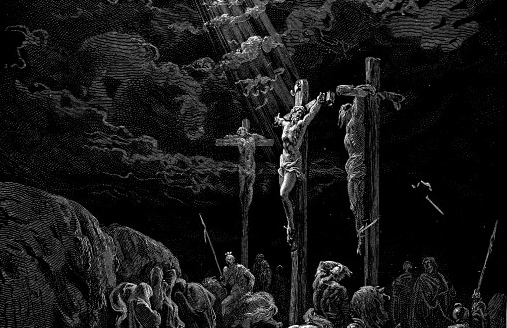
The cross was a Roman form of torture and death. Jesus found innocent by both Herod and Pilate was still sent to death by crucifixion with the shouts of the people. An innocent man put to death because the “Religous” feared Him. “I have examined him thoroughly on this point in your presence and find him innocent. Herod came to the same conclusion and sent him back to us. Nothing this man has done calls for the death penalty.” ~Pilate Said. Still, with the shouts of the crowd, “Crucify him! Crucify him!” Pilate allowed it. Little did they know that His death was for the sin of the world and what looked like defeat was actually the victory the world needed.

When Jesus cried out His last few words, “It is finished,” He breathed His last. Soon the guards would recognize Jesus had died, the few faithful that remained asked for His body. Placing Him in a tomb, they went home to observe the Sabbath and to mourn. The darkest day of their lives, filled with shocked silence, quiet weeping, peppered with mournful cries and shouts of agony. Everything they thought, hoped for, dreamed about was pulled down from a crucifix dead, wrapped, and laid in a tomb.

They didn’t have the benefit of this side of Sunday, the third day. They didn’t have the benefit of seeing the completion of the promise. They didn’t have the benefit we do. Perhaps that is part of the reason our response to Sunday pails in comparison to theirs. So maybe, just maybe, if we sit in darkness as they sat in darkness, with mournful hearts, we too can rise on Sunday, hear of the Resurrection and run to the empty tomb in search for Jesus!

Matthew 27:45-61 NLT

the-crucifixion

The Death of Jesus

45 At noon, darkness fell across the whole land until three o’clock. 46 At about three o’clock, Jesus called out with a loud voice, “Eli, Eli,[a] lema sabachthani?” which means “My God, my God, why have you abandoned me?”[b]

47 Some of the bystanders misunderstood and thought he was calling for the prophet Elijah. 48 One of them ran and filled a sponge with sour wine, holding it up to him on a reed stick so he could drink. 49 But the rest said, “Wait! Let’s see whether Elijah comes to save him.”[c]

50 Then Jesus shouted out again, and he released his spirit. 51 At that moment the curtain in the sanctuary of the Temple was torn in two, from top to bottom. The earth shook, rocks split apart, 52 and tombs opened. The bodies of many godly men and women who had died were raised from the dead. 53 They left the cemetery after Jesus’ resurrection, went into the holy city of Jerusalem, and appeared to many people.

54 The Roman officer[d] and the other soldiers at the crucifixion were terrified by the earthquake and all that had happened. They said, “This man truly was the Son of God!”

55 And many women who had come from Galilee with Jesus to care for him were watching from a distance. 56 Among them were Mary Magdalene, Mary (the mother of James and Joseph), and the mother of James and John, the sons of Zebedee.

guards.jpg

The Burial of Jesus

57 As evening approached, Joseph, a rich man from Arimathea who had become a follower of Jesus, 58 went to Pilate and asked for Jesus’ body. And Pilate issued an order to release it to him. 59 Joseph took the body and wrapped it in a long sheet of clean linen cloth. 60 He placed it in his own new tomb, which had been carved out of the rock. Then he rolled a great stone across the entrance and left.61 Both Mary Magdalene and the other Mary were sitting across from the tomb and watching.

You are Loved,

cj