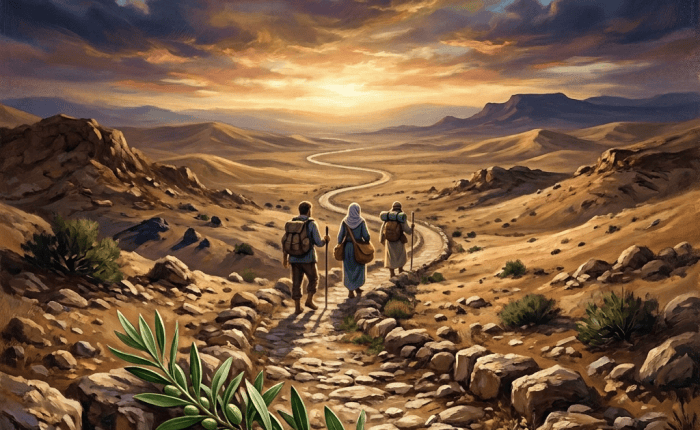
Podcast Episode: Navigating Life with Zeal and Purpose

Podcast Episode: Navigating Life with Zeal and Purpose

Pip: There's a particular kind of person who takes notes at church camp in junior high — not because anyone told them to, but because someone they admired was doing it. That person grew up to write for The Way of the Rabbi, and honestly, the notes never stopped.

Mara: This episode follows cj through one post that doubles as a live notebook — questions written during a Sabbath teaching, worked through in public, on the theme of zeal, purpose, and what it actually costs to lead with passion. Let's start with that question: who are you a hero to?

Navigating Life with Zeal and Purpose

Pip: The post opens with a question a pastor asked mid-sermon, and it lands differently than most sermon prompts because the writer admits it cracked something open — a lifelong hero complex, relationships damaged by the need to fix, and the double-edged nature of passion itself.

Mara: The post frames it directly: "Passion and zeal are a double-edged sword. You will either be admired or despised because of it."

Pip: That's the honest tension at the center of everything that follows — zeal is not automatically a virtue. The motivation is what determines whether passion serves God or serves the self.

Mara: David becomes the pivot point here. The post quotes Psalm 119:57 — "Indignation has taken hold of me because of the wicked who forsake Your Torah!" — and the argument is that David's passion was finally oriented toward what God desired, not toward David's own need to be the hero. That reorientation is what earns him the "heart after God's own heart" description.

Pip: So the question shifts from "am I zealous?" to "what is my zeal actually for?" And the post works through that honestly — naming gossip, hurtful speech, the temptation to enforce rather than witness.

Mara: The temple scene from John 2 does real work in that argument. Yahoshua's action there wasn't impulsive; it was proportional to the location, the violation, and the stakes. Time and place matter, the post says. Zeal without that discernment is just force.

Pip: And then the post turns inward — fear of failure, fear of other people's opinions, doubt in past failures. The quip writes itself, but the list is genuinely searching.

Mara: It lands on legacy. The closing questions are for the children watching: not followers, but servant leaders. "Act Justly, Love Mercy, Walk Humbly." And the final line leans on Proverbs — trust, submit, and the path gets made straight.

Pip: Zeal pointed inward corrodes; zeal surrendered outward builds something. That's the distinction worth sitting with.


Mara: The questions in this post aren't rhetorical — they're the kind you write down and carry home.

Pip: Right. A junior high kid saw someone taking notes and started taking notes. That's how it spreads. More from The Way of the Rabbi next time.

Navigating Life with Zeal and Purpose

Navigating Life with Zeal and Purpose

I am a learner. When people are teaching or I think they have knowledge that will help me, I listen. I don’t pretend to have all the answers or that I know everything. I will challenge someone and their thoughts if they are using passages out of context or making arguments for something with no new information than I already have. But I am teachable, if you are right I will prayerfully change my mind with new understanding. However, I am not one to be whisked away, blown about by every wind of doctrine or “new revelation” someone one has.

When in a teaching service I take notes. I have always taken notes. Something I learned from my jr. high camp counselor. I don’t remember much about him but I do know that I looked up to him, I admired him. So much so that when I saw him taking notes during chapel, I took notes during chapel. One thing that he told me was “write questions” if you want to learn, write down questions that stir in your mind as you listen. Then after, find the answers. This is how you grow.

This past Sabbath while I sat and listened my mind was full of questions. The first question that I wrote down was given by the Pastor. “Who are you a hero to?” I need to be totally honest here, although I was listening and relating to the message, many of my thoughts and attention were drawn to more and more questions. Some admittedly prompted by the message others prompted by the questions themselves.

This post is going to be different than the majority of my posts because I am going to ask you the questions I was prompted to write. I will include the answers that I wrote, even the partial answers, if I have them. I am still working through these thoughts, after all this was just yesterday that I wrote them down.

The message text was the Torah portion Numbers 25-29. The hero in the text is Phineas. The prompt, “Who are you a hero to?” My next note was ‘who do I want to be a hero for/to?’ This resinated with me because I have for much of my life had a hero complex. I wanted to be the hero. I tried to fix problems even if the person didn’t want me doing anything. My desire to be needed and a hero won out every time and it killed many relationships. Passion and zeal are a double-edged sword. You will either be admired or despised because of it.

David was passionate in many areas some good and some not so good, depending on human nature. In the end king David was said to have a heart after Gods own heart. That’s pretty high praise. David writes in Psalm 119:57, “Indignation has taken hold of me because of the wicked who forsake Your Torah!” The thing about David is in the end his desire was for what God desired. This puts into perspective the idea of being a hero and answers what being a hero looks like. The motivation is key, am I the motivation or is God the motivation?

What am I indignant about? Do I have a zeal and passion for Torah? Does it motivate me? Certainly, the majority of my posts since 2020 have revolved around being observant of Gods instruction rooted in the Tanakh. What stirs my passion and zeal in the Kingdom of God? Clearly, a desire for those who call themselves Christian to walk in the ancient paths. In life there are times when heroism is needed. A train is speeding down the rails and someone is stuck on the track. A hero is needed, get the person off the track! Someone is struggling in their understanding, struggling in a sin or rebellious spirit, instruct, persuade, but you cannot force someone. Let your own zeal and passion be a witness not the enforcer.

This begs the question: “What topics does one hear coming out of my mouth?” When in conversation am I joining in on the gossip? Am I adding to hurtful speech? What is my response to these things happening around me? It depends on the location, and the circumstances, as it does in most instances. In John 2 we read about Yahoshua’s visit to the Temple. “In the temple courts He found people selling cattle, sheep and doves, and others sitting at tables exchanging money. 15 So He made a whip out of cords, and drove all from the temple courts, both sheep and cattle; He scattered the coins of the money changers and overturned their tables. 16 To those who sold doves He said, “Get these out of here! Stop turning My Father’s house into a market!” 17 His disciples remembered that it is written: “Zeal for Your house will consume Me.

Time and place matter. Here in the above passage they are in the Temple. In the Torah, how we are to treat the Temple and use the Temple is explained in detail. They weren’t even close and Yahoshua acted on the zeal He had for His Father’s house. We read in Acts 21:20 that those coming to faith in Yahoshua, were, “all zealous for the Torah.” In a letter to Titus, Paul writes, “. . . who gave Himself for us to redeem us from every Torah-less deed, and purify for Himself a people for His own possession, zealous for good deeds.”

So what keeps me from being zealous today? What keeps me from observing Torah? Is it temptation, surely, the temptation of the flesh. As the Scriptures say, our spirit and our flesh are at odds. Do we give into the flesh? We shouldn’t. In fact we should do what we can to die to ourselves and put on the new man. For we are new creations in Messiah Yahoshua. Does that mean temptations stop, that the great seducer just stops whispering in our ear? Absolutely not, if anything he fights even harder. Therefore we must fight harder by surrendering to the will of God in Messiah Yahoshua. “If you love Me, obey My commandments.” This can be a fearful thing which brings us to another question.

What fears are keeping me down? For me right now I would say, fear of failure, fear of other’s opinions, doubt in myself, in my knowledge and ability. Even fear of and in my past failures. Are these fears stronger than my Messiah? “Fear not for I am with you.” That’s what Yahoshua says. So why am I running from my fears rather than chasing them off? “I can do all things through Messiah who strengthens me.”

Who have we been made to be? Revelation 5:9-10 says; “. . . with Your blood You purchased for God persons from every tribe and language and people and nation. You have made them to be a kingdom and priests to serve our God, and they will reign on the earth.” We are in Messiah Yahoshua a kingdom of priests to serve our God! We are to lead others in honoring the Sabbath Day, the Feast Days, the Torah!

What legacy am I leaving for my children? What I hope is to leave them an example: Don’t be a simple follower of Yahoshua, but servant leaders. Love God, Love your neighbor. Act Justly, Love Mercy, Walk Humbly. This is what I hope my kids see in me. When life knocks you down, when temptation grips your heart, when the spiritual battle around you seems too over whelming: “Trust in Adonai with all your heart and lean not on your own understanding; in all your ways submit to Him, and He will make your paths straight.”

You are loved,
cj

Podcast Episode: The Ancient Paths: Following God’s Word in Modern Times

Podcast Episode: The Ancient Paths: Following God’s Word in Modern Times

Pip: There is a woman in a crowd who interrupts a sermon to compliment the speaker's mother, and somehow that two-thousand-year-old moment becomes the sharpest possible diagnosis of where religious attention goes wrong. That is the kind of move cj makes on The Way of the Rabbi.

Mara: This episode follows one extended argument about obedience, distraction, and what it actually means to believe — tracing from the Gospels through the Torah and back to a crossroads in Jeremiah. Let's start with the ancient paths themselves.

The Ancient Paths: Hearing, Believing, Doing

Pip: The post opens with a scene most readers would gloss over — a woman in the crowd praising the mother of Yahoshua — and uses it to ask a harder question: what pulls our attention away from the instruction itself and toward the person delivering it?

Mara: The anchor is Luke 11:28, and the post frames it as a corrective: "blessed are those who hear the word of God and keep it." That word "keep" is doing real work here, and the post unpacks exactly why.

Pip: The upshot is that hearing alone is not enough. The post argues that Yahoshua is consistently calling people back to active obedience — not passive acknowledgment — and that the distractions are everywhere, from elevated figures to misread letters.

Mara: The linguistic argument is where this gets precise. The Aramaic word for "believe" used by Yahoshua is "haymen," rooted in the Hebrew "aman" — the same root that gives us "amen." The post defines it plainly: "to support, prop up, or make firm. It is NOT passive, rather it is indeed, active."

Pip: So when Yahoshua says "believe," he is not describing a feeling. He is describing something you do with your feet.

Mara: Exactly, and the post applies that reading across several passages in John — 6:29, 6:38 through 40, and 6:47 — each time returning to the same Aramaic root to make the case consistent. The companion piece, Understanding Faith Beyond Faith and Action, develops this thread further for readers who want to stay in it.

Pip: The Jeremiah crossroads image is where it lands — stand at the ancient paths, ask which is the good way, take it. The post notes the answer given in Jeremiah is not a triumphant yes. It is "We will not take it."

Mara: And that refusal is what the post calls the real distraction: not wickedness in some dramatic sense, but simply declining to seek the instruction and walk in it.


Pip: A crowd shouts praise at the wrong thing, and the Teacher redirects to the Word. That tension has not resolved in two thousand years.

Mara: More to come from The Way of the Rabbi — same crossroads, next episode.

The Ancient Paths: Following God’s Word in Modern Times

The Ancient Paths: Following God’s Word in Modern Times

This short statement was made by Yahoshua. It was in response to a woman who essentially interrupted His teaching with her own statement. “As Yahoshua was saying these things, a woman in the crowd raised her voice and said, “Blessed is the womb that bore You, and blessed are the breasts that nursed You!” Recorded in the previous verse. This statement is clearly a distraction from the intention of the passage. It takes the eyes and ears off the intended purpose, “hear and obey,” and places them on a person.

This reminds me of when Yahoshua was taken into the wilderness to be tempted by Satan. Satan says, “if you bow down to me, all this can be yours.” The temptation to look away from the Father. Many have fallen for this distraction. As it is presented in many different ways today. Anything that keeps one from hearing the word of God and keeping it, is that distraction. Whether it be in the person of Mary; Yahoshua’s mother, as something otherworldly. Or Paul the Apostle, as somehow greater than Yahoshua, carrying in him greater authority. Elevating his words, twisting them, and holding those misinterpreted, above that of Gods instruction.

In John 5:24 Yahoshua is recorded as saying; “Very truly I tell you, whoever hears my word and believes Him who sent Me has eternal life and will not be judged but has crossed over from death to life.” Yahoshua spoke Aramaic, it is rooted in the same Semitic language structure and meaning as Hebrew. The word ‘believe’ in Aramaic is ‘haymen’ ܗܝܡܢ which has its root in the Hebrew word ‘aman’ אָܡܢ. Where we get the word amen, said following a prayer or in agreement with a statement. It means, ‘so be it’ or ‘let it be’, the idea of putting action to the statement, in support, to prop up, to make firm. (i recently wrote some similar thoughts on faith here: Understanding Faith Beyond Faith and Action, or if you prefer to listen to an overview listen here: Podcast Episode).

Here is the idea, we are called by Yahoshua to both hear and obey, believe, do, the Word of God. The Word of God whenever referenced in Scripture by Yahoshua or even Paul, is the Tanakh, with emphasis on the Torah. The title most have come to know is “the law.” In the gospels it is repeatedly called the “Law of Moses,” or referenced, “Moses wrote.” In the Gospels, if one reads them with this understanding it becomes clear that Yahoshua not only was the Word made flesh. He was calling Israel back to it, the Word, and therefore to Himself.

Luke chapter eleven is all about stepping into covenant, guarding your house, hearing Gods word and obeying it. Standing in the ancient path. Jeremiah 6:16 says, “Here is what Yahweh says: ‘Stand at the crossroads and look; ask about the ancient paths, ‘which one is the good way?’ Take it, and you will find rest for your souls. But they said, ‘We will not take it.”” The distraction comes from the world crying out, blessed is this thing or that thing, rather than Blessed be the One from Whom it was created.

In the Luke 11 Yahoshua had just finished talking about cleaning your house, and warning that if it isn’t filled with the Light of the Word but only swept out. The demon which was cast out may return with others and the state of that man will be worse than it was at first. Right here is where the woman cries out, “Blessed is the womb . . .”. Immediately, Yahoshua states, “blessed are those who hear the Word, and keep it.” The focus of Yahoshua’s teachings has always been obedience to Gods Word, nothing more and certainly nothing less.

Clearly, Paul, understood this for he wrote to the Thessalonians, “When this man who avoids Torah (Lawless One, Torahless One) comes, the Adversary will gibe him the power to work all kinds of false miracles, signs and wonders. He will enable him to deceive, in all kinds of wicked ways, those who are headed for destruction because they would not receive the love of the truth that could have saved them. This is why God is causing them to go astray, so that they will believe the Lie. The result will be that all who have not believed the truth, but have taken their pleasure in wickedness (lawlessness), will be condemned.

The mark of those in darkness is that they practice lawlessness, in other words they do not practice, the Torah. They refuse to walk on the ancient paths; “But they said, ‘We will not take it.'” It really boils down to whether or not one is willing to seek out the instruction of God, believe it and thereby keep it. In so doing they put that belief into action, supporting the Scriptures through their daily walk. Propping the Word up, not tearing it down and calling it “Old” or “obsolete.” They indeed make firm the covenant by walking in its statutes and commands. Seeking with their whole heart the Father and His Kingdom, becoming ambassadors to the King in a fallen world.

Let me wrap this up by looking at a couple verses in the Gospel of John. (John 6:29, 38-40, and 47) –

29 Yahoshua answered, “The work of God is this: to believe in the one he has sent.” Again Yahoshua speaking Aramaic would have used the word ‘haymen’ ܗܝܡܢ which again has its root in the Hebrew word ‘aman’ אָܡܢ. Simply, it means to support, prop up, or make firm. It is NOT passive, rather it is indeed, active.

38 For I have come down from heaven not to do My will but to do the will of Him who sent Me. 39 And this is the will of Him who sent Me, that I shall lose none of all those he has given Me, but raise them up at the last day. 40 For my Father’s will is that everyone who looks to the Son and believes in Him shall have eternal life, and I will raise them up at the last day.” Again Yahoshua speaking Aramaic would have used the word ‘haymen’ ܗܝܡܢ which again has its root in the Hebrew word ‘aman’ אָܡܢ. Simply, it means to support, prop up, or make firm. It is NOT passive, rather it is indeed, active.

47 “Very truly I tell you, the one who believes has eternal life.” Again Yahoshua speaking Aramaic would have used the word ‘haymen’ ܗܝܡܢ which again has its root in the Hebrew word ‘aman’ אָܡܢ. Simply, it means to support, prop up, or make firm. It is NOT passive, rather it is indeed, active.

A calling to seek with your whole heart the Father and His Kingdom, becoming an ambassador to the King in a fallen world. The question, is will you listen and obey? Will you hear the word, and keep it? Will you sweep out the old life and fill the house with light of the world?

You are loved,
cj

Podcast Episode: Reflections on Family and Faith in Daily Life

Podcast Episode: Reflections on Family and Faith in Daily Life

Pip: There’s a site called The Way of the Rabbi, and it turns out the way involves grandchildren, wood stoves, and the early church — sometimes in the same paragraph.

Mara: cj’s recent writing pulls those threads together deliberately — family life as a lens for early Ekklesia practice, and what it might look like to strip tradition down to something simpler. Let’s start with exactly that territory.

Reflections on Family and Faith in Daily Life

Pip: The post opens with a vacation, but it isn’t really about a vacation. It’s asking whether the thing the early church had — that magnetic, communal pull — is something ordinary people still stumble into without naming it.

Mara: The setup is a visit to two adult sons, watching them work side by side on each other’s projects. Then the post pivots to Acts 2, and the quote lands hard: “They devoted themselves to the apostles’ teaching and to the fellowship, to the breaking of bread and to prayer. All the believers were together and had everything in common. Selling their possessions and goods, they shared with anyone who was in need.”

Pip: So the upshot is that the early community wasn’t a program — it was a household logic applied outward, and watching his sons operate that way made the ancient description feel less like history.

Mara: That’s the connection the post is making. Those early believers weren’t called Christians — the post notes that term was a mocking insult. They were “Followers of the Way,” meeting in homes, sharing meals at sundown on Friday, attending synagogue on the Sabbath. The structure was relational before it was institutional.

Pip: And the post doesn’t let that observation sit comfortably. It turns to the Pharisees and quotes Jesus directly on why his disciples didn’t fast: “Besides that, after drinking old wine, people don’t want new: because they say, ‘The old is better.'”

Mara: Right, and the application is pointed — not just at first-century religious leaders but at the church today, which the post argues has layered on its own traditions in the same way. The Bereans get cited again, as they have in recent posts: receiving the message with eagerness and examining Scripture daily to test what they were taught.

Pip: The whole piece lands on a question rather than a conclusion — what do you want others to see in you — and the answer offered is deliberately spare: simplicity, humility, a reflection of Messiah.

Mara: That word “simplicity” is doing a lot of work. The post frames it as stripping away pomp and circumstance to look, as it puts it, “beyond the torn veil into the perfect instruction of God” — in community, not in isolation.


Pip: Old wine, new systems, wood stoves — the resistance to change is remarkably consistent across centuries.

Mara: What the post keeps returning to is whether the early church’s attractiveness was a strategy or just a byproduct of people genuinely living it. Worth sitting with until next time.

Read the entire post here: Reflections on Family and Faith in Life

Reflections on Family and Faith in Daily Life

Reflections on Family and Faith in Daily Life

Quick life update before we dive into the current post. i took a vacation. A much needed visit to see two out of my three adult sons. As well, their amazing wives and my now three grandchildren, with a fourth on the way. It was an amazing week in a beautiful part of the world. The grandkids are growing like weeds. my boys continue to make me proud, as they have grown into great men, husbands, and fathers. They help each other out on projects as they live 15 minutes apart. While i was there my middle son helped by oldest put up a new stove pipe for a wood stove and my oldest son helped my middle son with some landscaping work, putting in a pad for a fifth wheel trailer with full hookups. The way they worked together, communicated, asked questions, gave advice, and sought outside input from others was so impressive and inspiring to me.

The earliest “Christians” as you may know were not call themselves Christians. Although, the term Christian means “little christ” it was used as a mocking term. An insult. Believers, were known in Judaism as the Sect of the Nazarene. “Followers of the Way”, was another name in which one would be known by within the early Church. It was a family. Sabbaths, began with a meal at sundown on Friday, known then as the “day of preparation.” These meals were in homes with like minded family, friends, and neighbors. They then would attend Synagogue on the Sabbath day, we call Saturday. This was the custom. It didn’t stop there as they were all excited for life in Messiah they met as often as they could.

We read in Acts 2 this description; “They devoted themselves to the apostles’ teaching and to the fellowship, to the breaking of bread and to prayer. A sense of awe came over everyone, and the apostles performed many wonders and signs. All the believers were together and had everything in common. Selling their possessions and goods, they shared with anyone who was in need. With one accord they continued to meet daily in the temple courts/ and to break bread from house to house, sharing their meals with gladness and sincerity of heart, praising God and enjoying the favor of all the people. And Adonai added to their number daily those who were being saved.”

This eagerness to be apart and to learn and grow in Messiah was infectious. As we read, “And Adonai added to their number daily those who were being saved.” A desire to be like Messiah was the heart of those in Berea, as we read in Act 17 (which I have shared numerous times over the past few posts) “Now the Bereans were more noble-minded than the Thessalonians, for they received the message with great eagerness and examined the Scriptures every day to see if these teachings were true.”

This is what i was reminded of this past week and a half. i watched my boys (now men), live out early Ekklesia life. Throughout history, culture, and community, there have been pockets that mirror this life. There is a glimmer of The Way. It sparks a desire within those partaking to commitment, one to one another, as a collective. While simultaneously sparking the interest of those on the outside looking in.

They say old habits die hard. It isn’t because there isn’t a desire for change, but routine is comfortable. Braking out of routine was the problem the Pharisee’s and the Religious leaders had. Their way of life was being challenged, their understanding was being challenged, their traditions were being challenged. When Yahoshua (Jesus) was talking about why His disciples didn’t fast He says this in particular to make His point: “Besides that, after drinking old wine, people don’t want new: because they say, ‘The old is better.'”

This is true with many things in life. Recently, the company that I work for as means to pay bills has been updating their computer system. With every update it will be heard, “I liked it better the old way!” I have probably said it a time or two. Yet, the more I use the new system the less I feel that way. The Pharisee’s had been doing things one way their whole lives, and in so doing adding more and more man made traditions. It is the same with the Church today, they have been doing things one way their entire lives, and following the traditions of man in the process.

my desire has always been to strip away the pomp and circumstance for simplicity. To look beyond the torn veil into the perfect instruction of God. To test what I have been taught and to seek Gods truth above all else. And to do it in community with other Followers of the Way, the sect of the Nazarene. To mirror the early Ekklesia, in fellowship and in attractiveness. So that those who see from the outside, see a group of people, loving God with all their heart, soul, mind, and strength. And likewise, loving their neighbor as themselves. Seeking to live lives pleasing to the Father by imitating the Son.

What is your desire? How do you want to be seen? And who do you want others to see in you?
For me– simplicity, just, loving, humble, a reflection of my Messiah.

You are loved,
cj

Podcast Episode: Embracing a Lifestyle Beyond Religion

Podcast Episode: Embracing a Lifestyle Beyond Religion

Pip: Religion, relationship, or something else entirely — cj has been working through a question that sounds simple until you actually sit with it.

Mara: The Way of the Rabbi this week lands on a third option: lifestyle. We're looking at what that word does that the other two can't, and why it matters for how faith actually gets lived.

Pip: Let's start with the case for moving past both labels.

Embracing a Lifestyle Beyond Religion

Mara: The tension here is one most people in Christian circles have heard: "not a religion, a relationship." The post takes that motto seriously before pushing past it — asking whether relationship alone captures what following Yahoshua actually demands.

Pip: The turn comes through John 15:15, which the post reads closely: "I no longer call you servants, because a servant does not know his master's business. Instead, I have called you friends, for everything that I learned from my Father I have made known to you."

Mara: That verse does real work. Friendship implies mutuality, knowing, being let in on something. It's a different posture than mere compliance.

Pip: But the post doesn't stop there — because friendship, as the post illustrates with a casual exchange between two friends deciding their evening, implies autonomy. Two people, two wills, loose plans. And the question the post is quietly raising is whether that's quite right either.

Mara: Right — and the post surfaces the complication directly. Just before verse fifteen, Jesus says "you are my friends if you do what I command." So the friendship is real, but it's not without shape.

Pip: Which is where the post reaches back through Scripture — Adam recognizing God's footsteps in the garden, the Angel sharing a meal with Abraham, Moses at the burning bush, David's raw plea in Psalm 4. The throughline is that God has always wanted proximity, but proximity with purpose.

Mara: Micah gets quoted on exactly that tension: "O man, you have already been told what is good, what Adonai requires of you — no more than to act justly, love mercy, and walk humbly with your God." That's not a checklist. It's a way of moving through the world.

Pip: So religion gives you rules, relationship gives you warmth, and the post argues neither word carries the full weight. Lifestyle does — because a lifestyle is the habits, attitudes, and moral standards that together constitute how someone actually lives.

Mara: The post lands it this way: entering covenant means agreeing to live by a set standard, taking on the lifestyle of Yahoshua — ambassador, royal priesthood, set apart, marked by obedience. The phrase the post settles on is "a lifestyle not a religion," and it's deliberate: a lifestyle, unlike a label, outlives every era it moves through.

Pip: That's the practical upshot — if what you're carrying is a lifestyle, it travels with you into every room, every relationship, every ordinary Tuesday.

Mara: Which is exactly the kind of whole-life integration the next territory opens up.


Pip: What stays with me is that third word — lifestyle — doing the work that the other two couldn't quite finish.

Mara: Act justly, love mercy, walk humbly. That's the shape of it. More on how it gets lived, next time.

Embracing a Lifestyle Beyond Religion

Embracing a Lifestyle Beyond Religion

Religion, relationship, or lifestyle? The motto for many Christians is; “Christianity isn’t a religion, it’s a relationship.” And they get this idea from Jesus Himself. He calls His followers, friends and brothers. The “Church” is described as the “Bride of Christ.” So there is good reason to use a motto that pulls on the idea of relationship. Religion in our culture has become a byword for rigidity, ritual, rules and regulations, requiring strict adherence. So yes when you put the two side-by-side, relationship is far more appealing than religion.

The definition of religion is: a set of beliefs concerning the cause, nature, and purpose of the universe, especially when considered as the creation of a superhuman agency or agencies, usually involving devotional and ritual observances, and often containing a moral code governing the conduct of human affairs; the practice of religious beliefs; ritual observance of faith; strict faithfulness; devotion.

The definition of relationship is: a connection, association, or involvement; connection between persons by blood or marriage; an emotional or other connection between people.

When one reads John 15:15; “I no longer call you servants, because a servant does not know his master’s business. Instead, I have called you friends, for everything that I learned from my Father I have made known to you.” It is easy to see the idea of relationship. Also, the idea of relationship makes it feel like a partnership. In a partnership there are two-sides, generally equal and therefore autonomous, moving freely, within the relationship.

Two friends are having a conversation, “What are you doing tonight?” friend one asks friend two. “I don’t have any plans, just gonna go home and watch TV, maybe get takeout on my way.” Friend two reply’s. “You want to grab a bite together and then hit up downtown, there’s a block party tonight?” He asks, adding, “And I don’t want to go alone.” Friend two hesitates, “Come on, it will be fun.” Friend one pushes. Finally, friend two relents, “Ok, I’ll go.” Regardless of how this conversation ends up it is two individuals, making individual decisions.

Religion is as defined a rigid devotion to the rules. If the religious leader says, do this, a good devout religious person, will do it. Wash your hands this way, before eating. In order to join our order you must do this or that in this order, no exception. You must follow these rules precisely or you will need to ritually cleanse yourself. It is focused and it is one-way. One is simply an observer in a collective observance of said religious practices. A participant in the pre-ordained ritualistic rites. No conversation, no friendship, just instruction.

But what does Scripture teach us about the dynamics of this faith that we have? In the beginning, we read that there was a relationship so close-knit that Adam recognized the footsteps of God in the garden. We see the Angel of the God having a meal with Abraham. Even disclosing what was about to take place, the judgement of Sodom and Gomorrah. We see a burning bush and Moses, then later a pillar of fire by night and cloud by day. We see a covenant established between God and the people of Israel. A set of instructions given that if they obeyed them they would be blessed. But, if they did not obey them they would be cursed.

Israel was to be the Nation to the nations, a city set on a hill that drew all nations to God. A priestly nation, each with a particular part based on the tribe they were from. Yet, even it what appears to be the establishment of Religion we see that it was still wrapped in a fundamental desire to have a relationship. David, who is said, “a man after God’s own heart,” writes in Psalm 4 a plea.

O God, my vindicator! Answer me when I call! When I was distressed, you set me free; now have mercy on me, and hear my prayer.” This is not the cry of religion this is the cry of a relationship. He continues, “Men of rank, how long will you shame my honor, love what is vain, case after lies? Understand that Adonai sets apart the godly person for Himself; Adonai will hear when I call to Him. You can be angry, but do not sin! Think about this as you lie in bed, and calm down. Offer sacrifices rightly, and put your trust in Adonai.”

This reminds me of what the Prophet Micah wrote; “With what can I come before Adonai to bow down before God on high? Should I come before Him with burnt offerings? with calves in their first year? Would Adonai take delight in thousand of rams with ten thousand rivers of olive oil? Could I give my firstborn to pay for my sin, the fruit of my body for the sin of my soul? O man, you have already been told what is good, what Adonai requires of you – no more than to act justly, love mercy, and walk humbly with your God.

David finishes Psalm 4 with this: “Many ask, ‘Who can show us some good?’ Adonai, lift the light of Your face over us! You have filled my heart with more joy than all their grain and new wine. I will lie down and sleep in peace; for, Adonai, you alone make me live securely.

Adonai Elohim, has always desired relationship with His creation. He does however do so with a purpose. There is order, there is righteousness, there is Holiness. He being loving, made away for Israel and later to all the world through Messiah Yahoshua. So this beings us back to the religion or relationship? And to that I say, yes! We began with John 15:15 “I no longer call you servants, because a servant does not know his master’s business. Instead, I have called you friends, for everything that I learned from my Father I have made known to you.” However, just before this He says, “You are my friends if you do what I command.

If we take religion and relationship we get a lifestyle. The definition of lifestyle is: the habits, attitudes, tastes, moral standards, economic level, etc., that together constitute the mode of living of an individual or group.

This is why I have chosen “a lifestyle not a religion” over the common catchphrase, “not religion but a relationship.” Some would say this is simply semantics, and they wouldn’t be entirely wrong. However, like the conversation between two individual friends, there is autonomy. However, when we enter into covenant with the Father we are agreeing to live by a set standard. We are taking on the lifestyle of Yahoshua, “fixing our eyes on the Initiator and Completer of that Faith, Yahoshua – who, in exchange for obtaining the joy set before Him, endured death on a tree as a criminal, scorning the shame, and has sat down at the right hand of the throne of Elohim.”

It is His lifestyle that we are to carry. We are called to be Ambassadors of the Kingdom. Living in the world but not of the world. We are to be the shining city on a hill, that beacon of light that draws the nations back to Elohim. We are His chosen people, a royal priesthood, ministering to the poor and needy, the nobles and the kings. Living set apart lives as Adonai instructed in His Word. That same Word taught by the Apostles. One continuous letter to humanity, from the Creator of all things. His call for us to return to His Way. Dying to ourselves we put on the new self, the lifestyle of our King Yahoshua, that is marked by obedience.

John 15:9-14 –
“As the Father has loved Me, so have I loved you. Now remain in My love. If you keep My commands, you will remain in My love, just as I have kept My Father’s commands and remain in His love. I have told you this so that My joy may be in you and that your joy may be complete. My command is this: Love each other as I have loved you. Greater love has no one than this: to lay down one’s life for one’s friends. You are my friends if you do what I command.”

The way of the Rabbi, a lifestyle not a religion, for a lifestyle outlives every label.

You are loved,
cj

Podcast Episode: Understanding Faith: Beyond Belief and Action

Podcast Episode: Understanding Faith: Beyond Belief and Action
Olive tree with extensive exposed roots illuminated by sunset light on rocky hillside
A twisted olive tree with glowing roots stands on a hillside at sunset

Pip: There’s a light switch somewhere in this metaphor, and whether you flip it turns out to be the whole argument.

Mara: That’s actually the opening image from a post by cj on The Way of the Rabbi. Today we’re working through what faith actually requires — the Hebrew and Greek roots, the tension between belief and action, and what Paul’s warnings in Colossians have to do with how we read scripture now.

Pip: Let’s start with what faith is, and what it isn’t.

Understanding Faith: Beyond Belief and Action

Mara: The post opens with a distinction that shapes everything that follows: belief is intellectual, faith is active. Belief alone, as the post puts it, gets you nowhere if it is not active.

Pip: And to make that concrete, the post gives us the light switch. You can believe the switch works, believe the lights are functional — but if you don’t flip it, the room stays dark. Belief without action is just standing in the dark with a correct opinion.

Mara: The Hebrew word for faith is אֱמוּנָה — Emunah — and the post defines it precisely: “It means a steadiness, as in a steady walk of obedience. A steadfastness, faithfulness in keeping the ordinances of God.”

Pip: So Emunah isn’t a feeling or a declaration. It’s a gait. The way you actually move through the world.

Mara: And then the post turns to the Greek counterpart, pistis. The argument is that pistis carries a different weight — “faith without power, faith without substance, a mental understanding without an outward expression.” That’s the lens through which James’s line about faith without works gets reread: James is combining two Greek words to express one Hebrew truth.

Pip: Works here is ergon — occupation, undertaking. So James isn’t adding a checklist to faith. He’s saying faith and its expression are inseparable. You can’t have one without the other showing up somewhere.

Mara: The post then moves to Paul’s warning in Colossians, and this is where the argument gets pointed. Paul writes: “See to it that no one takes you captive by philosophy and empty deceit, according to the human tradition, according to the elemental spirits of the world, and not according to Messiah.”

Pip: The post reads that warning not as a release from God’s instruction but as the opposite — a caution against Greek philosophical culture and man-made tradition displacing Torah observance.

Mara: Right. The argument is that when Paul mentions food, drink, festivals, new moons, and Sabbaths in that same chapter, he’s defending those who keep them, not dismissing the practices. The post draws a direct line from that first-century tension to the present: the same argument about which observances are binding is still being made today.

Pip: And the post ends where it began — back to Emunah. Not perfection, but a steady walk. The question it leaves open is whether you want human tradition or God’s instruction.

Mara: That question is the whole episode in miniature.


Pip: Flip the switch or don’t — but the post is clear that calling it faith while leaving your hand in your pocket is a category error.

Mara: The roots of these words carry the whole argument. Next time, we’ll see where that steady walk leads.

Understanding Faith: Beyond Belief and Action

Understanding Faith: Beyond Belief and Action

What does it mean to have faith, to truly have faith? Often faith and belief are incorrectly considered interchangeable. Belief, is intellectual. It is said, “that even the demons believe and tremble.” Belief isn’t the problem. Many say they believe in an afterlife, even belief in a higher power. That belief gets you nowhere if it is not active. That is where faith comes in. When I enter a room I can believe the lights work, that the switch works, that if I flip the switch it will turn on the light; But, if I don’t actually flip the switch nothing will happen. Or the oven, I know that the oven will cook my food but if I do not turn it on nothing will happen.

When we read about faith in the Tanakh, (Old Testament) we see it as active obedience. Hebrews 11 gives us a quick account of the pillars of Faith. The writer makes it a point to say, by Faith, “By Faith, Noah . . . in reverent fear constructed”, “By Faith, Abraham, obeyed . . .”. The word Faith in Hebrew is אֱמוּנָה – Emunah. It means a steadiness, as in a steady walk of obedience. A steadfastness, faithfulness in keeping the ordinances of God.

The Greek counterpart is πίστις – pistis. The Greek culture was known and is still known for its philosophers, and artisans of various types and skill. Just take a look at any capital city and for the most part you will see a Greco-Roman influence. Rome simply adopted the majority of Greek culture. So when the Apostles wrote their letters, mostly in Greek the word they had for faith was pistis. Having no other real viable choice. Pistis, is faith without power, faith without substance, a mental understanding without an outward expression.

Perhaps this is why James writes pistis, without works is dead. Works in this greek context is Ergon and it means occupation, employment, undertaking. So James is combining two Greek words in order to present one Hebrew truth, Faith is active, it requires action, one cannot say they believe and not show it by their undertakings.

Paul is recorded in Acts as telling those in Ephesus about being watchful for ravenous wolves coming into the flock and deceiving many. Just before that warning he talks about his lifestyle, how he conducted himself and told those under his care to do likewise. He said that he was instructed both the Jew and the Greek (gentile). Now what do you think ravenous wolves would look like? Would you say that they would draw men unto themselves to practice ways foreign to God or do you think ravenous wolves would teach obedience to God?

Before you answer Pharisee, remember Yahoshua (Jesus) called out the Pharisees for teaching the doctrines of man. The message has always been one of repentance, a turning from disobedience to obedience. Turning from the ways of man to the instruction of Elohim. Some will point out Colossians 2:16 and say they aren’t required to keep the ordinances of God any longer. They do so without considering the culture in which this letter was being written. It was a Greek philosophical culture mixed with a sect of Judaism bound in mans traditions. Both equally astray from אֱמוּנָה – Emunah, Faith in YHWH.

Just look at Pauls warning earlier in that same chapter. “Therefore, as you received Messiah Yahoshua your Adonai, so walk in Him, rooted and built up in Him and established in the Faith, just as you were taught, abounding in thanksgiving. See to it that no one takes you captive by philosophy and empty deceit, according to the human tradition, according to the elemental spirits of the world, and not according to Messiah.”

So when Paul is talking about food and drink, or festivals and new moons or Sabbaths he is drawing a contrast between the culture and God’s instruction. He is actually calling on those who would be otherwise chastised for keeping them to do so without condemnation. The Pharisees who were surely to judge the gentile for keeping them and the pagan culture around them for keeping what was considered a “Jewish thing”. Sound familiar? It should because it is the same argument being made today. Sadly, the greek influenced church is the pagan voice today.

Think about it, Paul warns not to be taken captive by philosophy, a major part of Greek culture. Deceit, something Yahoshua also warned about in Matthew 24:4 essentially saying, “Don’t let anyone deceive you.” According to human tradition, now let me ask you, are Christmas, Easter, Sunday, a human tradition or a Scriptural one? In contrast are the Feasts of Elohim; Passover, First Fruits, Pentecost, Atonement, Trumpets, Tabernacles, Sabbath, are they God’s instruction? The Church will fight tooth and nail for human tradition while calling God’s Feasts a thing of the past. Do you think that is according to the elemental spirits of the world?

Certainly not according to Messiah who was the Passover Lamb, the Word (Torah) made flesh, Adonai of the Sabbath, Light of the World, The Way, The Truth and The Life . . . all of which the Torah is described. He is the First Fruits, He is both the Torah revealed to Moses at Mt. Sinai on the Feast of Weeks, Pentecost as well, through Him the gift of the Holy Spirit was given on Pentecost, a.k.a. Feast of Weeks. He is our Atonement, He is coming with a Trumpet blast, He is coming to Tabernacle with us for a Millenia. Are you seeing a pattern?

The devil is a copycat. He has mimicked and attempted to mirror celebrations but he cannot duplicate perfection which is what Torah is. God’s Word is true and He calls us to walk in its light. It isn’t about perfection it is about Faith, Emunah. A steadiness, as in a steady walk of obedience. A steadfastness, faithfulness in keeping the ordinances of God. Do you want human tradition or God’s perfect instruction? Only you can answer that question.

You are loved,
cj