
Pip: If you’ve ever wondered whether the Sermon on the Mount and a wineskin have anything to do with each other, you’re either confused or you’re about to have a very good week.
Mara: This episode draws on cj’s writing at The Way of the Rabbi, working through what Jesus actually taught about Torah, righteousness, and what it means to repent — and why the new wine metaphor is almost always read too fast.
Pip: Let’s start with the Sermon on the Mount and what Yahoshua said before anyone brought up the wineskins.
New Wine, Old Torah: Righteousness and What It Demands
Mara: The central question here is whether Jesus came to replace the Torah or to embody it — and the post argues that nearly everything depends on getting that distinction right.
Pip: The text goes straight to Matthew 5, and the quote is worth sitting with: “Do not think that I have come to abolish the Torah or the Prophets; I have not come to abolish them but to fulfill them. For truly, I say to you, until heaven and earth pass ways, not an iota, not a dot, will pass from the Torah until all is accomplished.”
Mara: So the upshot is that fulfillment here means bringing the Torah to life, not retiring it. And the bar is set explicitly higher than the scribes and Pharisees, not lower.
Pip: What makes this land differently is the framing around who is speaking. Yahoshua comes straight out of the desert, fresh from resisting Satan’s offer to make things easier. That context is doing real work.
Mara: Right — and the post connects that temptation directly to the message that follows. Satan’s pitch was essentially that Yahoshua had the authority to step outside Yahweh’s instruction. The response is the Sermon on the Mount.
Pip: Then there’s the word “repent.” It gets treated as a simple moral pivot, but the post reads it as a return — to the instruction, to the Torah — and ties it to John’s description of Yahoshua as the Word made flesh.
Mara: Which reframes “I am the Way, the Truth, and the Life” considerably. If Yahoshua is the Word incarnate, then coming to him and returning to the instruction are not two different things.
Pip: That’s also why the earliest followers were called Followers of the Way — not a coincidence the site is named for it.
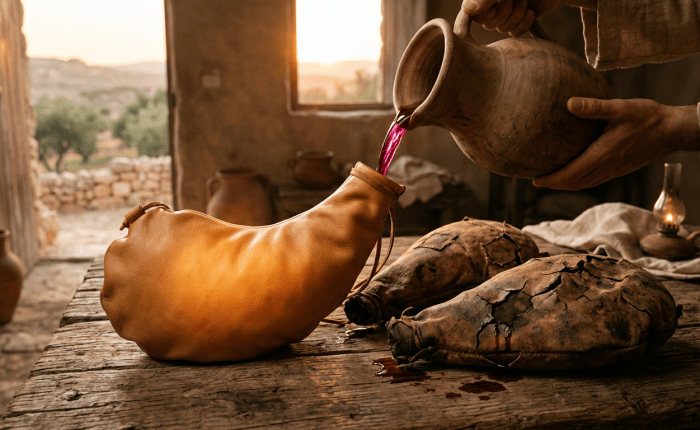
Mara: The post then turns to the wineskins passage in Matthew 9, where John’s disciples ask why Yahoshua’s followers aren’t fasting. The answer involves the bridegroom metaphor, and the wine and patches illustrations follow from that — they’re about timing, not about replacing the old system.
Pip: New wine into new skins isn’t abolition — it’s a measured beginning. The end result is still wine.
Mara: The Acts 15 council reinforces this. The four instructions given to Gentile converts — abstaining from food polluted by idols, sexual immorality, strangled meat, and blood — are all drawn from Torah. And the often-skipped verse 21 notes that Moses was being read in the synagogues every Sabbath, meaning the new converts were expected to keep learning.
Pip: The new patch and the new convert were both expected to be worn into something fuller over time. That’s the argument.
Mara: And the post closes by defining righteousness plainly: doing what God has commanded. The call is to imitate Yahoshua — who, as the post puts it, was not a walking contradiction but a walking, talking Torah scroll.
Pip: Which leaves the question entirely personal. That’s where this lands — not as doctrine delivered, but as questions only the reader can answer for themselves.
Mara: The thread running through all of this is that the message hasn’t changed — only the vessel and the entry point.
Pip: Repent, return, imitate. Apparently the instructions were always there; we just kept reading around them.
Read the full blog post here: New Wine, Old Torah: What Jesus Really Meant About Righteousness
You are loved,
cj

