Podcast Episode: He Will Never Fail You: Trust, Obedience, and Psalm 118 Hope

Podcast Episode: He Will Never Fail You: Trust, Obedience, and Psalm 118 Hope

Pip: There is a genre of writing that takes an ancient promise, traces it through three thousand years of Scripture, and lands it in your inbox on a Tuesday. cj writes that genre, and writes it well.

Mara: This episode follows one sustained meditation — on trust, obedience, and what Psalm 118 actually asks of the people who lean on it. Let’s start with that promise and what comes attached to it.

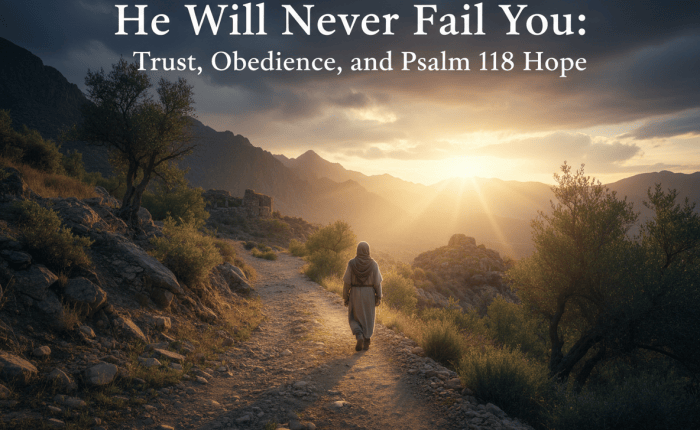
He Will Never Fail You: Trust, Obedience, and Psalm 118

Pip: The phrase “He will never fail you or abandon you” gets repeated in Christian circles often enough to lose its edges. This post is interested in restoring those edges — asking what the promise actually includes, and what it assumes about the one receiving it.

Mara: Psalm 118 opens the argument, and the post quotes it at length. Here is the spine of it: “From my being hemmed in I called on Yah; He answered and gave me more room. With Adonai on my side, I fear nothing — what can human beings do to me?”

Pip: That image of being hemmed in and then given room is doing real work. It is not a promise that the pressure disappears — it is a promise that the space expands. The stakes are different from what the comfort-poster version implies.

Mara: The post traces that promise backward through Deuteronomy, where Moses charges Joshua before the crossing: “Adonai — it is He who will go ahead of you. He will be with you. He will neither fail you nor abandon you, so don’t be afraid or downhearted.” But the post is careful to note what immediately follows in Joshua’s own commissioning.

Pip: Right — and here is where the post sharpens. The promise in Joshua comes bundled with an instruction: follow the Torah, do not turn from it left or right, keep it on your lips and meditate on it day and night. The assurance and the obedience are not separable.

Mara: That is the post’s central move. It defines righteousness directly from Scripture as obedience to the instruction of Elohim, and argues that the new covenant does not dissolve that obligation — it internalizes it. Matthew 5 is quoted: “Don’t think that I have come to abolish the Torah or the Prophets. I have come not to abolish but to bring to fullness.”

Pip: The name change from Hoshea to Yahoshua — Salvation to Yah is Salvation — gets its own moment here, and it earns it. The argument is that redemption is encoded in the name before the story is told.

Mara: The post closes with Hebrews 13, which loops the Psalm back to the present: “God Himself has said, ‘I will never fail you or abandon you.’ Therefore, we say with confidence, ‘Adonai is my helper; I will not be afraid.'” The promise is ancient, the application is immediate, and the obedience is the condition that holds it together.

Pip: Trust and obey — the post ends with exactly those words. Not as a cliché, but as a conclusion the whole reading earns.


Mara: What stays with me is that the promise and the instruction travel together — you cannot lift one out without the other flattening.

Pip: Ancient text, Tuesday morning, same hemmed-in feeling, same offered room. More of that next time.

Read the whole post here: He Will Never Fail You: Trust, Obedience, and Psalm 118 Hope

He Will Never Fail You: Trust, Obedience, and Psalm 118 Hope

He Will Never Fail You: Trust, Obedience, and Psalm 118 Hope

He will never fail you or abandon you. He, is God, and His promises are true.

Give thanks to Adonai, for He is good, for His grace endures forever.
Now let Israel say, “His grace endures forever.”
Now let the house of Aaron say, “His grace endures forever.”
Now let those who fear Adonai say, “His grace endures forever.”

From my being hemmed in I called on Yah; He answered and gave me more room.
With Adonai on my side, I fear nothing – what can human beings do to me?
With Adonai on my side as my help, I will look with triumph at those who hate me.

It is better to take refuge in Adonai than to trust in human beings;
better to take refuge in Adonai than to put one’s trust in princes.

The nations all surrounded me; in the name of Adonai I cut them down.
They surrounded me on every side in the name of Adonai I cut them down.
They surrounded me like bees but were extinguished [as quickly] as fire in thorns;
in the name of Adonai I cut them down.

You pushed me hard to make me fall, but Adonai helped me.
Yah is my strength and my song, and He has become my salvation
.
Psalm 118:1-14

As the world steps more and more into uncertainty let me remind us; those of us who call on the name of Yahoshua Messiah (Jesus), who seek the Father by way of His Son; we CAN rest in His promise that He will never fail us or abandon us. Psalm 118 is a great reminder of this and it begins by reminding us that we need to GIVE THANKS to Adonai, for HE IS GOOD, for HIS GRACE ENDURES FOREVER.

This understanding goes back, way – way back. We see it present through out Genesis and throughout the succession of leadership. Moses said to Joshua, “Be strong, be bold, for you are going with this people into the land Adonai promised to their ancestors He would give them. You will be the one causing them to inherit it. But Adonai – it is He who will go ahead of you. He will be with you. He will neither fail you nor abandon you, so don’t be afraid or downhearted.” Deuteronomy 31:7-8

This is the message many Christians love to repeat, and it is true. However, each time this promise is given there is a reminder, just as Elohim tells Joshua; “Just as I was with Moses, so I will be with you. I will neither fail you nor abandon you. Be strong, be bold; for you will cause this people to inherit the land I swore to their fathers I would give them. Only be strong and very bold in taking care TO FOLLOW ALL THE TORAH (Instruction) which Moses My servant ordered you to follow; do not turn from it either to the right or the left; then you will succeed wherever you go. Yes, keep this book of the Instruction (Torah) on your lips, and meditate on it day and night, so that you will take care to act according to everything written in it. Then your undertakings will prosper, and you will succeed. Haven’t I ordered you, ‘Be strong, be bold?’ So don’t be afraid or downhearted, because Adonai your Elohim is with you wherever you go.” So He tells you and i.

Psalm 118 continues:
The sound of rejoicing and victory
is heard in the tents of the righteous:
“Adonai’s right hand struck powerfully!
Adonai’s right hand is raised in triumph!
Adonai’s right hand struck powerfully!”

I will not die; no, I will live and proclaim the great deeds of Yah!
Yah disciplined me severely, but did not hand me over to death.

Open the gates of righteousness for me; I will enter them and thank Yah.
This is the gate of Adonai; the righteous can enter it.
I am thanking You because You answered me; You became my Salvation.

The very rock that the builders rejected has become the cornerstone!
This has come from Adonai, and in our eyes it is amazing.
This is the day Adonai has made, a day for us to rejoice and be glad.
Psalm 118:15-24

A few things to point out here as this Psalm is so rich in content. Joshua son of Nun, was originally named Hoshea, that was his birth name. Names have meaning and significance throughout Scripture and cultures for that matter. Hoshea, means ‘Salvation’. When Hoshea’s name was changed it was changed to Yahoshua, meaning, YAH is Salvation. This is significant in that it is the story of redemption told in a single name. Man cannot save themselves, we need a savior. Yah is our salvation. This name of course would come back into play, as Yahoshua son of Nun led the Israelites into the promised land so Yahoshua the Son of Elohim, leads His people into the Kingdom.

Righteous or righteousness as defined by Scripture means; one who is obedient to the instruction of Elohim. Another way to say it, ‘those things commanded by Elohim to be obeyed by man’. This didn’t change under the new covenant as the new covenant is simply the ‘old’ covenant written on our hearts. It is written there by the Holy Spirit, through the finishing work of Yahoshua, Yah’s Salvation, the Word made flesh as John writes in his gospel recording.

Yahoshua does not diminish the responsibility for obedience. He made several references to the ongoing need to walk according to the commands of Elohim. Matthew records Messiah saying: “Don’t think that I have come to abolish the Torah (Instructions of Elohim) or the Prophets. I have come not to abolish but to bring to fullness. Yes indeed! I tell you that until heaven and earth pass away, not so much as a dot or a stroke will pass from the Torah – not until everything that must happen has happened. So whoever disobeys the least of these commandments and teaches others to do will be called least in the Kingdom of Heaven. But whoever obeys them and so teaches will be called great in the Kingdom of Heaven.” (Matthew 5:17-19)

Yahoshua Messiah also said:

“But why do you call Me ‘Adonai, Adonai,’ and not do the things which I say?” Luke 6:46

“If you love Me, you will obey My commandments.  I will ask the Father, and he will give you another helper who will be with you forever.  That helper is the Spirit of Truth. The world cannot accept him, because it doesn’t see or know him. You know him, because he lives with you and will be in you.” John 14:15-17

Remember that Yahoshua is the WORD made flesh, He is the Torah, He is the written instruction and He is commanding us to obey. Not without help, He is providing the Holy Spirit who not only writes the instruction on our hearts but also enables us to live obedient lives IF we listen, for He doesn’t force obedience, He encourages it. Even more of His own He demands it.

Some say it is too hard to keep the commands of Elohim. Yet, we read in His word that His Word is not too cumbersome. Who is telling the truth, man or God? There is only one right answer, “Let God be true, even if every man is a liar.” Psalm 118 concludes:

Please, Adonai! Save us! Please, Adonai! Rescue us!
Blessed is he who comes in the name of Adonai. We bless you from the house of Adonai.

Adonai is God, and He gives us light. Join the pilgrim festival with branches all the way to the horns of the altar.

You are my God, and I thank You. You are my God; I exalt You.
Give thanks to Adonai; for He is good, for His grace endures forever.
Psalm 118:25-29

The writer of Hebrews records this in the thirteenth chapter beginning with verse five; “Keep your lives from the love of money; and be satisfied with what you have; for God Himself has said, ‘I will never fail you or abandon you.’ Therefore, we say with confidence, ‘Adonai is my HELPER; I will NOT be afraid – what can a human being do to me?'”

By God’s grace He has made away for salvation through His Son Yahoshua. Yah is Salvation, for all those who call upon the Name of Adonai Yahoshua Messiah. The very Word made flesh, who like the finger of Elohim, wrote the Ten Commandments on tablets of stone, so too He writes the Commandments of God on our hearts. Who then shall we fear? We trust only in the God of Heaven, by faith in Messiah Yahoshua, guided by the Holy Spirit – the promised HELPER.

Trust and Obey for there’s no other way to be happy in Yahoshua, than to trust and obey.

You are loved,
cj

Podcast Episode: The Transformative Power of Music: Healing Through Frequency

Podcast Episode: The Transformative Power of Music: Healing Through Frequency

Pip: There is a particular kind of rabbit hole that starts with live music on a street corner and ends at the fall of Lucifer — and somehow the journey makes complete sense.

Mara: That is exactly the territory cj maps out in this episode’s post, moving from the healing properties of musical frequency through scripture, ancient cosmology, and the question of what we let shape us from the inside out.

Pip: Let’s start with the music itself — and what it actually does to a person.

The Transformative Power of Music: Healing Through Frequency

Mara: The central tension here is deceptively simple: music is powerful, and that power cuts both ways — it heals, it seduces, it shapes the listener whether they intend it or not.

Pip: The post anchors that claim in a quote from composer Jacob Collier, framed around a teaching session in Australia: “As a teacher, as a performer, as a parent, you are only as powerful as you make other people feel.”

Mara: And the post immediately connects that to the golden rule — loving your neighbor as yourself. The upshot is that music is not just aesthetic; it is relational, and its power is measured in what it does to the person receiving it.

Pip: Which is where frequency enters the conversation — and it gets specific. Researchers at MIT and the National Institute of Health have published on how particular frequencies influence the mind and body, and the post points readers there without overclaiming what it can explain on its own.

Mara: The scriptural grounding runs deep. First Samuel 16 describes David playing the harp before King Saul: “And whenever the spirit from God came upon Saul, David would pick up his harp and play. Then Saul would find relief and feel better, and the spirit of distress would depart from him.” That is a clinical description wrapped in ancient language.

Pip: Three thousand years before the NIH study, someone noticed that sound moved a man’s inner state — and wrote it down.

Mara: The post also interrogates the popular image of angels singing at the nativity. Luke 2:13 uses the Greek word legō — meaning to say or speak — not to sing. The post raises this not to diminish music but to sharpen the focus on frequency and spoken word as equally potent carriers.

Pip: Then comes the Lucifer thread — Ezekiel 28 describes timbrels and pipes prepared in him on the day of his creation, which is where the theory of heaven’s fallen choir director originates. It’s speculative, the post says so plainly, but the implication lands: if music could draw a third of the angels into rebellion, it deserves more than casual listening habits.

Mara: The post closes personally — soft jazz at work as “serenity music in the midst of chaos,” and a prayer drawn from Psalm 40: that Adonai would put a new song in the mouth, one not borrowed from the world’s playlist.


Pip: What stays with me is the image of Jacob Collier conducting an audience that didn’t know they were about to become an orchestra — no script, just presence and gesture.

Mara: That is the post’s real argument: frequency shapes us whether we consent or not, so the question worth asking is whose song we are actually carrying.

Pip: And for that we have to make sure that we are filtering the frequencies we allow ourselves to hear.

Mara: Precisely, this post has so much to offer its worth reading in its entirety at thewayoftherabbi.com until next time.

The Transformative Power of Music: Healing Through Frequency

The Transformative Power of Music: Healing Through Frequency

Most people who know me, know that I love music. Once, I was out to dinner and the conversation was on music. I was asked, “What about you?” I responded, “I just like live music.” To clarify, it is music of all sorts. It could be a guy on the corner playing a one string guitar, I would stop and listen. If someone is doing what they love and making music to entertain others, I appreciate it. I appreciate them and I show it by stopping and listening and if they are asking I give them money.

I recently stumbled upon a young composer named Jacob Collier . . . a brilliant musical mind, almost too brilliant, really. I was watching one of his teaching sessions from Australia and this quote from him hit me. So, I thought I would pass it on here with a note. He said, “As a teacher, as a performer, as a parent, you are only as powerful as you make other people feel.” It reminded me of the golden rule. “Do unto others what you would have them do to you.” Or “Love your neighbor as yourself.” These principles are what make a person successful. Life is about relationships, be relational, be intentional, love always, forgive often.

I don’t know about power or making people feel powerful, but forgiven, loved, hopeful, encouraged. These are right and good. Music, is a powerful influencer. Frequencies, are known to heal and harm. Now I don’t know enough about it to tell you anything specific or matter-a-fact. But, different frequencies have been used scientifically to influence the mind and body. Researchers at MIT and the National Institute of Health have articles on the subject if the idea intrigues you beyond what I have to say here.

As well, people have been influenced by the music they listen to throughout time. Young David, would play the harp before King Saul when he was being tormented and it would sooth his spirit. 1 Samuel 16:22-23 – “Then Saul sent word to Jesse, saying, ‘Let David remain in my service, for I am pleased with him.’ And whenever the spirit from God came upon Saul, David would pick up his harp and play. Then Saul would find relief and feel better, and the spirit of distress would depart from him.”

Some believe that music is a form of spell casting, or that it can be used in such away. Jacob Collier, mentioned above said that when he was a kid he would watch his mother conduct the orchestra and that it looked like she was casting a spell. He was referring to her hand gestures and the way her body moved as she conducted. He described it as ‘mesmerizing’. Music is a powerful tool.

It is often depicted as a choir of angels appearing to the shepherds in the field to tell them that Yahoshua (Jesus) was born. The actual reference in Luke 2:13-14 says: “And suddenly there appeared with the angel a great multitude of the heavenly host, praising God and saying: ‘Glory to God in the highest, and on earth peace to men on whom His favor rests!‘” The word ‘lego’ being translated here as ‘saying‘ according to Strongs G3004 means exactly that, ‘say, speak, call, tell’. It is the same word legō that is used in Revelation 4:8 which tells of the angels around the Throne of God. “And the four living creatures, each of them with six wings, are full of eyes all around and within, and day and night they never cease to say, “Holy, holy, holy, is Adonai Elohim Almighty, who was and is and is to come!”

There are plenty of musicians who incorporate the spoken word into musical rhythms. So I don’t say this to detract from the idea of music but perhaps to more focus on the frequency than how the words of a melody are presented. One thing that fascinated me about Jacob Collier is his ability to create melody with the voices of people who had no idea he was going to do such a thing. At a jazz festival, he got the audience involved with just their voices, no knowledge before hand, no script, he just simply gave them the example. He gave out different parts to sections of the audience and then by simply gesturing to them he created a melodic sound so captivating the people were left in awe. That is the power of music, melody, and frequency.

It is said that Satan, aka Lucifer, was the choir director or orchestra conductor in heaven before his fall. Whether or not this true there isn’t definitive proof. However, in Ezekiel 28 there is perhaps a hint. A hint great enough to create the theory. Ezekiel is directed by Elohim to write a lament for the king of Tyre. Ezekiel 28:11-15 says:

“Again the word of Yahweh came to me, saying, “Son of man, take up a lament for the king of Tyre and tell him that this is what Yahweh Elohim says: ‘You were the seal of perfection, full of wisdom and perfect in beauty. You were in Eden, the garden of God. Every kind of precious stone adorned you: ruby, topaz, and diamond, beryl, onyx, and jasper, sapphire, turquoise, and emerald. Your mountings and settings were crafted in gold, the workmanship of your timbrels and of your pipes were prepared in you in the day that you were created, prepared on the day of your creation. You were anointed as a guardian cherub, for I had ordained you. You were on the holy mountain of God; you walked among the fiery stones. From the day you were created you were blameless in your ways—until wickedness was found in you.”

Timbrels: Translated from a Hebrew word (toph) typically meaning a hand drum, tambourine, or percussive instrument.
Pipes: Translated from a less clear Hebrew word (neqeb) that some scholars and historic translations interpret as flutes, wind instruments, or hollow cavities meant for sound.

Understanding now both the beauty Lucifer is described with and the potential ability to conduct music, one can see how great the potential for pride there was. Look at the music industry today, the pride, and the superficial emphasis on beauty. There are very few ‘ugly’ frontmen in the music industry. Obviously, beauty is in the eye of the beholder, and I am not saying they don’t exist but they are far and few between. Forest Frank, not too long ago ruffled a few feathers when he refused to attend an award show and receive an award for his music. Essentially saying, he didn’t want the credit for his music but rather that the glory should go to God alone. Needless to say that was not a popular opinion amongst his peers.

Music is powerful, it is seducing in its appeal, it draws the heart and the mind. If the theory of Satan/Lucifer is true and he was the director/conductor of music we can certainly see how it was possible to draw a third of the angels with him. A third is not a small number. If someone is polling at 33% they are considered a threat in politics. There had to be some sort of influence being wielded about to garner 33% allegiance from his fellow angels. Strong enough to cause them to join his rebellion. Imagine that if you will and then consider what influence music has over you.

As I stated in the beginning, I love music. I enjoy listening to live music. I will go out of my way to support musicians. Especially, if I know them and if their music lightens my mood. I often play soft jazz in the background at work. I call it my serenity music in the midst of chaos. I certainly notice when it isn’t playing and there is a higher level of stress in the work place. So perhaps I am simply writing to myself, to caution myself to the power of music, to its influential powers, and hypnotic potential. As they say, ‘garbage in, garbage out.’

So, I am constantly asking Adonai to fill me with His melody. To place His song in my heart and mind and lips. As the Psalmist says 48:1-5:

I waited patiently for Adonai;
And He inclined to me and heard my cry.
2 He brought me up out of the pit of destruction, out of the miry clay,
And He set my feet upon a rock making my footsteps firm.
3 He put a new song in my mouth, a song of praise to our God;
Many will see and fear
And will trust in Adonai.

4 How blessed is the man who has made Adonai his trust,
And has not turned to the proud, nor to those who lapse into falsehood.
5 Many, O Adonai my God, are the wonders which You have done,
And Your thoughts toward us;
There is none to compare with You.
If I would declare and speak of them,
They would be too numerous to count.

May our hearts cry, be that Adonai Elohim fill us with His song, His music, His lyric, His melody, His frequency, that we would not be influenced by the worlds music but by His alone. May we seek to love our neighbors, to do for others what we would have them do for us. To seek first the Kingdom of Elohim and His righteousness. To live out the example set out for us in Messiah. Above all, to love Elohim with our whole heart, soul, mind, and strength. Singing unto Him all the praise and honor due His Name.

You are loved,
cj

Podcast Episode: Walking the Ancient Paths: Preparing Your Lamp for His Coming

Podcast Episode: Walking the Ancient Paths: Preparing Your Lamp for His Coming

Pip: There is a question older than the internet, older than organized religion’s gift shops, and it turns out it is still the most urgent one on the table: do you have enough oil in your lamp?

Mara: cj’s recent writing at The Way of the Rabbi circles that question from several angles — preparation, ancient paths, and what it means to actually walk them rather than just nod in their direction.

Pip: Let’s start with the lamp, the oil, and why the shortage everyone should be worried about has nothing to do with gas prices.

Walking the Ancient Paths: Preparing Your Lamp for His Coming

Mara: The post opens with a striking juxtaposition — rising gas prices and oil blockades in the news, set against a much older question about readiness. The tension it’s driving at is this: how do you prepare for an end that every generation has thought was imminent, and every generation of skeptics has mocked?

Pip: And the skeptics get their own scripture here. Peter anticipated them directly, writing in 2 Peter 3:3-4: “Knowing this first, that there shall come in the last days scoffers, walking after their own lusts, And saying, ‘Where is the promise of his coming? for since the fathers fell asleep, all things continue as they were from the beginning of the creation.'”

Mara: So the scoffing itself is part of the pattern. The post holds that in tension with Ecclesiastes — nothing new under the sun — while still insisting this moment carries genuine weight.

Pip: The oil, it turns out, is not subject to OPEC. The post is clear: this oil is available in abundance, but the obstacle is not scarcity — it is the gap between what people say and what they actually do.

Mara: That gap gets its own passage. Yahoshua draws from Isaiah 29:13 to say it plainly: “These people honor Me with their lips, but their hearts are far from Me. They worship me in vain; their teachings are merely human rules.”

Pip: The post names that disconnect as the central problem — a church that has drifted from the actual practice: the Sabbaths, the Feasts of YHWH, the Commandments, walking as Messiah walked, not merely affirming it on Sunday.

Mara: Jeremiah’s crossroads passage is where the post lands its sharpest point. YHWH says stand at the crossroads, ask for the ancient paths, walk in them. And the response recorded is blunt: “But they said, ‘We will not walk in it!'”

Pip: What keeps that from being purely accusatory is the framing around obedience. The post is careful — walking the ancient paths is not earning salvation. It is responding.

Mara: That distinction matters. The post frames it as love, not ledger-keeping: “Yes, and Amen, to Your Ways, by Your grace, You have made a way for us.”

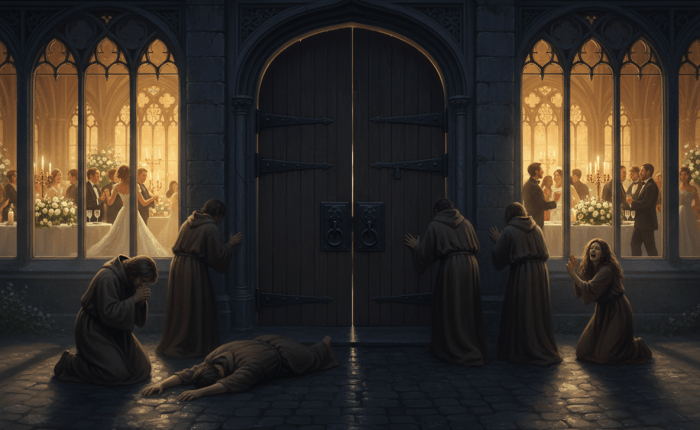
Pip: And it closes with the parable of the ten virgins — five with oil, five without, and a door that shuts. The post’s final word is not condemnation; it is urgency.

Mara: The watchmen have sounded. The question the post leaves open is whether anyone is listening.


Pip: Oil, ancient paths, a door that closes — these are not abstract metaphors. They are a call to close the gap between what we profess and how we actually walk.

Mara: That gap is the territory worth sitting with. More from The Way of the Rabbi next time.

Read the full post here: Walking the Ancient Paths: Preparing Your Lamp for His Coming

Walking the Ancient Paths: Preparing Your Lamp for His Coming

Walking the Ancient Paths: Preparing Your Lamp for His Coming

Do you have enough oil in your lamp? Gas prices are on the rise because the supply is down. War has caused a blockade resulting in shortages in available oil. The world is in turmoil and has been in a tumultuous state for some time. Does this mean we are near the end, is the world at a tipping point? Surely it has been like this before. History reveals wars and famines and great natural calamity. What makes this time different? Try having this conversation with a non-believer or a general skeptic and you will find them saying, “Where is the promise of His coming?”

Peter writes this very thing. In 2 Peter 3:3-4 he writes; “Knowing this first, that there shall come in the last days scoffers, walking after their own lusts, And saying, ‘Where is the promise of his coming? for since the fathers fell asleep, all things continue as they were from the beginning of the creation.‘” Are we living in the time of scoffers? Haven’t scoffers always been around?

Ecclesiastes 1:9 says it best; “What has been will be again, what has been done will be done again; there is nothing new under the sun.” Does this mean that time is just one giant loop with no end? John who writes Revelation tells us there is coming a time of great struggle and calamity, the likes of which have never been seen before. A world wide catastrophic sequence of events. How does one prepare for such a time? Do you have enough oil to see you through the darkest time in history?

Luckily, the oil being talked about here isn’t found in the ground, it isn’t suffering from shortages, nor effected by blockades. War will not defeat it nor skeptics denials hinder it. The oil is available in abundance for everyone but few seek the source. Many claim to seek the source but they don’t want the commitment so they say it with their mouths but their hearts are far from. Yahoshua said, “These people honor Me with their lips, but their hearts are far from Me. They worship me in vain; their teachings are merely human rules.” (Matthew 15:8-9)

The passage Yahoshua is drawing from is Isaiah 29:13 – “And YHWH said: “Because this people draw near with their mouth and honor Me with their lips, while their hearts are far from Me, and their fear of Me is a commandment taught by men.” Where is the disconnect? Why the contempt for the Way of Yahoshua, who we are told to imitate. This would include keeping the Sabbaths as He did, the Feasts of YHWH as He did, the Commandments and Statutes of the Father . . . as He did.

Jeremiah prophesied of a time such as this when he recorded the words of YHWH. “This is what YHWH says, “Stand at the crossroads and look. Ask for the ancient paths: ‘Where is the good way?’ Then walk in it, and you will find rest for your souls.” Still even after YHWH says this He tells us the response of the people. “But they said, ‘We will not walk in it!’” How is it that the modern church has lost its discernment for the ways of Elohim? How have they fallen so far into their own traditions of men? Why do they cry out every Sunday, “We will not walk in it!?

YHWH continues speaking through Jeremiah, “I appointed watchmen over you and said, ‘Listen for the sound of the ram’s horn.’” Currently as I write this we are in the midst of the Fall Feasts, Yom Teruah has passed and Yom Kippur is a few days away. The Trumpets called us to attention, reflection and repentance, the atonement for our sins IS conditional upon our repentance and acceptance of the promise of forgiveness and new life in Messiah. IF we live as He lived. Not in our own strength or perfection or righteousness but through the power of the Holy Spirit who causes us to walk out the Covenant with Elohim the Father. Yet still as YHWH spoke through Jeremiah, “But they answered, ‘We will not listen!’

We who follow the ancient paths are not earning our salvation by keeping the Commands of Elohim. We are not earning but responding in love to the Creator of all things, “Yes, and Amen, to Your Ways, by Your grace, You have made away for us. Help us to walk the ancient paths that we might honor You, Adonai our King.”

It is time to wake up, it is time to hear the trumpets call, to go and buy oil for your lamps. For the groom is approaching and it is time for the bride to make herself ready. Do not ignore the call and find yourself unprepared.

“But at midnight there was a cry, ‘Here is the bridegroom! Come out to meet him. ’Then all those virgins rose and trimmed their lamps. And the foolish said to the wise, ‘Give us some of your oil, for our lamps are going out. ’But the wise answered, saying, ‘Since there will not be enough for us and for you, go rather to the dealers and buy for yourselves. ’And while they were going to buy, the bridegroom came, and those who were ready went in with him to the marriage feast, and the door was shut. Afterward the other virgins came also, saying, ‘Adonai, Adonai, open to us.’ But he answered, ‘Truly, I say to you, I do not know you.’ Watch therefore, for you know neither the day nor the hour.” Matthew 25:6-13

You are loved,
cj

Podcast Episode: Understanding Rosh Hashanah: A Guide to Yom Teruah

Podcast Episode: Understanding Rosh Hashanah: A Guide to Yom Teruah

Pip: The Jewish new year falls in the seventh month. If that sounds like a scheduling conflict, you might be exactly the audience cj is writing for on The Way of the Rabbi.

Mara: This episode follows one extended meditation on Rosh Hashanah — what the Torah actually calls Yom Teruah, what that name means, and why the gap between biblical instruction and modern practice matters more than it might first appear.

Pip: Let’s start with the feast itself — the trumpets, the timing, and what gets lost when the calendar drifts.

Understanding Rosh Hashanah: Yom Teruah and the Call to Return

Mara: The post opens with a distinction that sets the whole argument in motion: Rosh Hashanah, as modern Judaism observes it, is not quite what the Torah prescribes. The biblical feast is Yom Teruah — placed in the seventh month, not the first.

Pip: And the name carries the weight. The post explains that “Teruah, in Hebrew means to cry-out, Shout loudly, and sound the trumpet. It is a call to attention!”

Mara: So the upshot is this: the feast isn’t primarily about a new year — it’s an alarm. Ten days before Yom Kippur, the Day of Atonement, the trumpet blast is meant to wake people up to the need for repentance. The calendar drift softens that urgency.

Pip: The post then takes a long step sideways into 1 Samuel 8, and it’s not actually a detour. The people demand a king; God tells Samuel they haven’t rejected Samuel — they’ve rejected God. It’s the same pattern being traced across millennia.

Mara: And the lesson doesn’t stop at the demand. A few chapters later, in 1 Samuel 10, the people receive exactly the king they asked for and are still dissatisfied. The post draws the parallel plainly: we pray for answers, get them, and remain unhappy.

Pip: Which is a fairly precise description of asking God to move the feast days to more convenient dates.

Mara: The post names that directly. Modern Judaism adjusted the timing. The modern church, the post argues, went further — replacing Passover with Easter, and celebrating the Feast of Tabernacles under the name Christmas, without recognizing what they’re doing.

Pip: The scriptural anchor for why this matters is Daniel 7:25 — the lawless one “intending to change the appointed times and laws.” Drifting calendars aren’t a minor administrative matter in this framework.

Mara: The post closes with the actual Torah instructions from Leviticus 23 and Numbers 29 — a sacred assembly, no regular work, trumpet blasts — and then pivots to the feast’s forward significance. The spring feasts were fulfilled through the death and resurrection of Messiah; the fall feasts, including this one, point to his return.

Pip: First Thessalonians 4 and First Corinthians 15 both land on the same image: a trumpet sounds, the dead rise, and everything changes in the twinkling of an eye.

Mara: The post’s final word is that these are not Jewish feasts or Christian feasts — they are Elohim’s feasts, for Israel and for the foreigner grafted in alike. The instruction is simple: take up the Word and keep them.

Pip: A trumpet as an alarm clock for the whole household — that’s the image the post leaves you with, and it’s hard to shake.


Mara: The thread running through all of this is the gap between what was given and what we’ve made of it — and the cost of not noticing.

Pip: The trumpet is still sounding. Next time, we’ll see what else the calendar has to say.

Read the entire post here: Understanding Rosh Hashanah: A Guide to Yom Teruah

Understanding Rosh Hashanah: A Guide to Yom Teruah

Understanding Rosh Hashanah: A Guide to Yom Teruah

Today on the modern Jewish calendar marks, Rosh Hashanah. The Jewish new year. They have incorporated it into Yom Teruah, the Feast of Trumpets. It is the only Biblical Feast that does not have a known day or hour as it is marked by the sighting of the first sliver of the moon or the waxing crescent. Teruah, in Hebrew means to cry-out, Shout loudly, and sound the trumpet. It is a call to attention! The fall Feast days have arrived and it begins with a call to attention, and a focus on repentance until the day of atonement, Yom Kippur, now 10 days away. Modern Judaism has removed the waiting and marked a generally close proximity start to Rosh Hashanah.

Rosh Hashanah, or Head of the Year. They call it the new year even though quite clearly the Torah calls this Feast Yom Teruah, and places it in the seventh month. Pesach, or Passover, is in Nisan which is the first month of the year according to Torah. They still use it to call in a time of reflection to begin the (spiritual) new year with repentance but obedience is found in the little things. And it is easy, if one isn’t paying attention to lose sight of the little things and thereby missing the entire thing altogether.

In my daily reading of Scripture I am in 1 Samuel. In chapter eight verses six through nine the people ask for a king and Elohim responds to their request by telling Samuel, “But when they said, ‘Give us a king to judge us,’ their demand was displeasing in the sight of Samuel; so he prayed to YHWH. And YHWH said to Samuel, “Listen to the voice of the people in all that they say to you. For it is not you they have rejected, but they have rejected Me as their King. Just as they have done from the day I brought them up out of Egypt until this day, forsaking Me and serving other gods, so they are doing to you. Now listen to their voice; but you must solemnly warn them and show them the manner of the king who will reign over them.”

When I began waking up to Torah and to Faith in Yahoshua as well as obedience to the commandments of Elohim. As Revelation 14:12 says: “Here is a call for the endurance of the saints, those who keep the commandments of God and their faith in Yahoshua (Jesus).” I started by reading and reading and reading the Torah. What is the history being told. When you understand its history and the arch of faith the people of Israel were on you can better understand that the modern church is essentially on this same arch. We have brushed aside the commands of God for the traditions of men. We have demanded our own way and by so doing have rejected God, the one who has brought us out of spiritual bondage.

And even still we are unhappy. Look at the rest of the lesson found in 1 Samuel. Just a few chapters later, ten verse twenty-seven we read: “But some worthless men said, ‘How can this man save us?’ So they despised him and brought him no gifts; but Saul remained silent about it.” God gave them the king they demanded and still they were not happy. Are we not often of the same mind. We pray and pray for answers, and when the answer is given we are still unhappy with the answer.

God has told us in His Word when the Feasts are and what they are meant to accomplish. Yet, modern Judaism has changed their meanings and essentially the timing. The modern church has thrown them out entirely for man made traditions of Christmas, the celebration of Jesus’ birth and coming to dwell with us. Which is the very celebration of the Feast of Booths or Feast of Tabernacles, the last of the Fall Feasts. They have chosen Easter over Passover discarding the very meal they claim to take in remembrance of Him.

Both of these are marks of a rebellious spirit of which we are warned of in Scripture multiple times. Daniel 7:25 says; “He will speak out against the Most High and oppress the saints of the Most High, intending to change the appointed times and laws; and the saints will be given into his hand for a time, and times, and half a time.” ‘He’ who Daniel is referring to is the lawless one, the Anti-Messiah or Anti-Christ. The coming of the lawless one, as we read in 2 Thessalonians 2:9-12 is marked by, well lawlessness, which is to say without Torah.

“The coming of the lawless one will be accompanied by the working of Satan, with every kind of power, sign, and false wonder, and with every wicked deception directed against those who are perishing, because they refused the love of the truth that would have saved them. For this reason God will send them a powerful delusion so that they believe the lie, in order that judgment may come upon all who have disbelieved the truth and delighted in wickedness.” What is the TRUTH, God’s Word is Truth. John 17:17 – “Set them apart for holiness by means of the truth – Your Word is TRUTH.” These are the words Yahoshua prayed before being hung on a tree. And wickedness which they delight are the very acts committed outside of Torah.

Here is the stated instruction for the Feast of Trumpets or Yom Teruah in Leviticus 23:23-25 – “YHWH Adonai also said to Moses, “Speak to the Israelites and say, ‘On the first day of the seventh month you are to have a day of rest, a sacred assembly announced by trumpet blasts. You must not do any regular work, but you are to present a food offering to YHWH.’” Later in Numbers 29:1-6 we read:

“On the first day of the seventh month, you are to hold a sacred assembly, and you must not do any regular work. This will be a day for you to sound the trumpets. As a pleasing aroma to YHWH, you are to present a burnt offering of one young bull, one ram, and seven male lambs a year old, all unblemished, together with their grain offerings of fine flour mixed with oil—three-tenths of an ephah with the bull, two-tenths of an ephah with the ram, and a tenth of an ephah with each of the seven male lambs. Include one male goat as a sin offering to make atonement for you. These are in addition to the monthly and daily burnt offerings with their prescribed grain offerings and drink offerings. They are a pleasing aroma, a food offering to YHWH.”

There are other references throughout the Tenakh of Yom Teruah or the Feast of Trumpets as well. Ezra 3:1-6 and Nehemiah 8:1-12 and a poetic reference in Psalm 81:3. There is also a coming significance to the Feast of Trumpets. Just as Adonai fulfilled the Spring Feasts through the Death and Resurrection of our Messiah Yahoshua, so the Fall Feasts will mark His coming again. This time not as suffering servant but as Adonai and King!

1 Thessalonians 4:16-17
“For Adonai Himself will descend from heaven with a loud command, with the voice of an archangel, and with the trumpet of God, and the dead in Messiah will be the first to rise. After that, we who are alive and remain will be caught up together with them in the clouds to meet Adonai in the air. And so we will always be with Adonai.”

1 Corinthians 15:51-53
“Listen, I tell you a mystery: We will not all sleep, but we will all be changed— in an instant, in the twinkling of an eye, at the last trumpet. For the trumpet will sound, the dead will be raised imperishable, and we will be changed. For the perishable must be clothed with the imperishable, and the mortal with immortality.“

These are not Jewish Feasts, these are Biblical Feasts, they are indeed Elohim’s Feasts and they are for both the Israelite and the foreigner who dwells among them. Those who call on the name of Yahoshua are grafted into the root and that roots foundation is Elohim’s Word which taken in its entirety is not an unbearable yoke but freedom from sin and death.

Take up the Word of Truth and discover all that it has for you in keeping the Feasts of Elohim.

You are loved,
cj

Podcast Episode: Historical Events Modern Application: Joshua and the Battle of Jericho

Podcast Episode: Historical Events Modern Application: Joshua and the Battle of Jericho

Pip: There is a battle strategy in the Hebrew scriptures that involves walking in circles and shouting, and somehow it works — which raises the obvious question of what exactly is going on beneath the surface of that story.

Mara: That question is exactly where cj takes us on The Way of the Rabbi — into the Battle of Jericho, and what obedience and covenant actually mean when you read the text closely. Let’s start with the walls, and what had to happen before they fell.

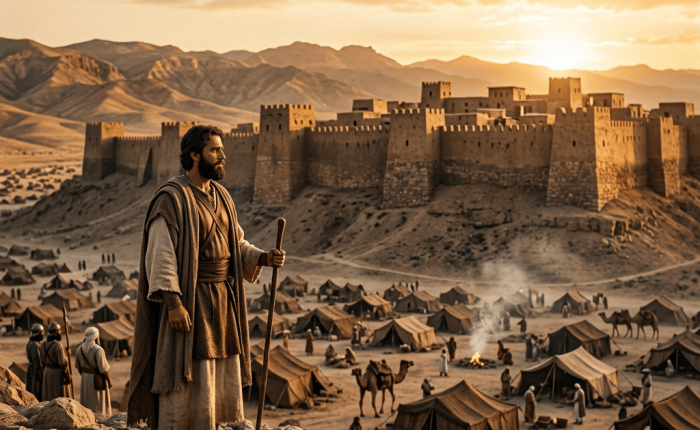
Historical Events Modern Application: Joshua and the Battle of Jericho

Pip: The post opens with a military strategy that, on its face, makes no sense — march around a city for six days, then seven laps on day seven, blow some trumpets, shout, and the city falls. The real argument, though, is about what happened the night before any of that, in the chapter break most readers skip right over.

Mara: The setup is Joshua 5, where Joshua encounters a figure with a drawn sword. The post reads the commander’s reply to “Are you on our side or on the side of our enemies?” as something more conditional than a flat no: “Nought, but I am the commander of Adonai’s army.”

Pip: And that word — nought — is doing a lot of work. In early English it means nothing, zero, but also whether or otherwise. So the commander is not saying he is neutral. He is stating a condition: if you obey, I fight for you; if not, I stand aside.

Mara: The post makes the grammar explicit: “If you will obey Adonai, you will defeat the enemy and will enter the promise land. The Commander wasn’t saying, ‘No, I am neither here for you nor them.’ He was saying in a poetic way which Joshua, a Hebrew would have understood, ‘If you obey, than I have been commanded to fight for you, but if not than I have been commanded to standby.'”

Pip: So obedience is not a tactic — it is the condition that determines whether divine backing is even in play. Which makes the Achan episode immediately after Jericho the proof of concept.

Mara: Achan takes from the devoted spoils, and Israel is routed at Ai. Adonai’s explanation to Joshua is direct: “Israel has sinned; they have transgressed My covenant that I commanded them, and they have taken some of what was devoted to destruction. Indeed, they have stolen and lied, and they have put these things with their own possessions. This is why the Israelites cannot stand against their enemies.”

Pip: One person’s disobedience, and the whole army loses its footing. The stakes are not abstract.

Mara: The post then draws the line into the New Covenant — the punishment has changed, death is not the sentence for those in Messiah, but the covenant itself is not void. Confession and repentance replace the death sentence Achan faced, but the call to walk in obedience remains. As the post puts it, grace saves us to walk in the commands, not away from them.

Pip: The modern church has, apparently, run the logic backward — decided that if obedience is work, and works are bad, then disobedience must somehow be grace. The post calls that out pretty directly.

Mara: It closes with Paul’s line to Timothy — “ALL of Scripture is profitable for instruction, for conviction, for correction, and for training in righteousness” — and frames every good work as obedience to God’s instruction. The challenge issued to the reader mirrors Joshua’s challenge to Israel: choose this day whom you will serve.

Pip: Covenant, obedience, consequence — the walls of Jericho are just where the story gets concrete enough to see all three at once.


Mara: What stays with me is the chapter-break problem — meaning hidden in the seam between two passages most readers treat as separate.

Pip: Read the whole thing. The walls are still falling.

Read the entire post here: Historical Events Modern Application: Joshua and the Battle of Jericho

Historical Events Modern Application: Joshua and the Battle of Jericho

Historical Events Modern Application: Joshua and the Battle of Jericho

One of my favorite historical events in Scripture is the ‘Battle of Jericho‘. It has always sparked interest into the idea of what it truly means to follow the instruction of God. Joshua, was instructed to lead Israel into battle against the city of Jericho. However, the military tactic employed seems a bit suspect. Joshua 6 is where we read the instructions for battle. Circle the city once a day for six days then on the seventh day circle it seven times. At which point instruct the priests to blow the trumpets, the people to shout, and in this there will be victory? I am no military expert but this doesn’t seem like a winning strategy. Often there are historical accounts that leave humanity scratching their heads. This is one of them. What I think is often missed by many, due to the arbitrary barriers set up to make our Bibles more easily navigable, is what preceded the instruction we read in Joshua 6.

Obedience or disobedience is the trigger. At the end of Joshua 5. Israel had just crossed the Jordan River and were healing from circumcision. They were now also preparing to battle Jericho. “One day, when Joshua was there by Jericho, he raised his eyes and looked; and in front of him stood a man with his drawn sword in his hand. Joshua went over to him and asked him, ‘Are you on our side or on the side of our enemies?’ ‘No,’ he replied, ‘but I am the commander of Adonai’s army; I have come just now.‘” Here is an interaction with an intriguing question. Joshua asks, “Are you on our side or on the side of our enemies?”

Depending on your translation the response from the Commander of Yah’s Army is; ‘Neither’, ‘No’, ‘Nay’, or ‘Truly’. The word being translated is the Hebrew word לֹא – lôʼ – or לֹה lôh; an easy pronunciation is ‘low’. In Hebrew, Aramaic and other poetic languages, word order changes the definition, causing meaning to alter. Sometimes slightly and other times dramatically. In this instance if we look at the variables there are a few defining words that are being overlooked. Those words being, otherwise, whether, and nought. Each of these possibilities relay a message to the question at hand, which is or was, “Are you on our side or on the side of our enemies?” The word I find most fascinating is nought.

His response, “Nought, but I am the commander of Adonai’s army . . .” This is easily glanced over because the chapter comes to a close and in our trained minds we close the chapter and enter the next. Connect, yes, but separate, new thoughts enter and because the poetic nature of the original language is lost we lose the deeper meaning. Even if it is subtly there in the shadows. Nought, from early English, means nothing, a zero sum. However, it is also, whether or otherwise. In this defining moment the Commander of God’s Army is there to instruct and now the variable ‘IF’ comes into play.

Somewhere along the way the modern church has taken walking in obedience to works. And in that definition has labeled work as bad, grace as good, and if obedience is work, then disobedience must by reason mean grace. Can you imagine what would have happen if Joshua had the same modern understanding to God’s instruction? Joshua would have went back to the people of Israel and said, “Ok, the plan is we do nothing because obedience is work and works are bad, so we will be disobedient because disobedience is grace.” Yikes, Jericho doesn’t fall and Israel continues to wander the desert.

You see Nought, Otherwise, Whether; these words tell a story. If you will obey Adonai, you will defeat the enemy and will enter the promise land. The Commander wasn’t say, “No, I am neither here for you nor them.” He was saying in a poetic way which Joshua, a Hebrew would have understood, “If you obey, than I have been commanded to fight for you, but if not than I have been commanded to standby.” Neither for or against but an observer.

Let’s draw on another story which occurs after Jericho has fallen. Joshua is obedient, relays the instruction of Adonai to the people. The people follow the instruction. The Commander of Elohim’s Army, deployed his troops, the walls of Jericho come crumbling down. Israel is victorious. However, one Israelite, Achan, of the tribe of Judah, disobey’s the fullness of the command. He takes from the bounty Adonai said not to. Now when the Israelites go up against Ai they are pushed back and defeated. What happen? Adonai tells Joshua this in the 7th Chapter . . .

“But Adonai said to Joshua, “Stand up! Why have you fallen on your face? Israel has sinned; they have transgressed My covenant that I commanded them, and they have taken some of what was devoted to destruction. Indeed, they have stolen and lied, and they have put these things with their own possessions. This is why the Israelites cannot stand against their enemies.“

Clearly, we see what is at stake when it comes to being obedient to the commandments of God and remaining in covenant with Him. The importance is not lost in the New Covenant found in Jeremiah and Ezekiel, and later quoted in Hebrews. What has changed is the punishment for disobedience. What was the punishment Achan suffered? Well, after he confesses his sin Achan is put to death.

“So Joshua said to Achan, ‘My son, give glory to Adonai, the God of Israel, and make a confession to Him. I urge you to tell me what you have done; do not hide it from me. “It is true,” Achan replied, “I have sinned against Yahweh, the God of Israel. This is what I did: When I saw among the spoils a beautiful cloak from Shinar, two hundred shekels of silver, and a bar of gold weighing fifty shekels, I coveted them and took them. They are hidden in the ground inside my tent, with the silver underneath.’”

Today under the New Covenant, we are no longer under the penalty of sin if we are in Messiah Yahoshua. Instead we are under the Covenant of Grace. Our penalty is paid, but this doesn’t render the Covenant void, by NO MEANS! Rather, by grace we have been saved to walk in the covenant, the commands, ordinances and statutes of Adonai without the fear of death, when we brake His commandments. You see, when we sin, we confess and are forgiven under the new covenant but under the old covenant confession did not lead to a commuting of the death sentence as we read in the account of Achan.

“So Joshua sent messengers who ran to the tent, and there it all was, hidden in his tent, with the silver underneath. They took the things from inside the tent, brought them to Joshua and all the Israelites, and spread them out before Adonai.Then Joshua, together with all Israel, took Achan son of Zerah, the silver, the cloak, the bar of gold, his sons and daughters, his oxen and donkeys and sheep, his tent, and everything else he owned, and brought them to the Valley of Achor. “Why have you brought this trouble upon us?” said Joshua. “Today Adonai will bring trouble upon you!” And all Israel stoned him to death. Then they stoned the others and burned their bodies. And they heaped over Achan a large pile of rocks that remains to this day. So Adonai turned from His burning anger. Therefore that place is called the Valley of Achor to this day.”

Praise be to Adonai that through Yahoshua Messiah we have the forgiveness of sin. Not that we are free to live in sin. But that we walk in freedom, knowing that if we sin trying to walk out obedience, we remain under grace. We only need to repent from our sin, and return to Gods way, return to His instruction, His Torah.

Don’t listen to me but the Word. My hope is that my letters lead you to study the Word not man. Put down the commentary, the latest book by your favorite preacher/teacher and get into the Word. Learn languages, not that you have to become bilingual or multilingual but study its grammar, structure, meanings, to discover the poetic nature of Gods writings so that you can grow in understanding. “Knowing that ALL of Scripture is profitable for instruction, for conviction, for correction, and for training in righteousness, so that the man of God may be complete, fully equipped for every good work.” As Paul writes to Timothy. And know that “every good work”, IS obedience to Gods instruction.

As Joshua challenged Israel so I also challenge you today: “Now, therefore, fear Yahweh and serve Him in sincerity and truth; cast aside the gods your fathers served beyond the Euphrates and in Egypt, and serve Adonai. But if it is unpleasing in your sight to serve Yahweh, then choose for yourselves this day whom you will serve, whether the gods your fathers served beyond the Euphrates, or the gods of the Amorites in whose land you are living. As for me and my house, we will serve Adonai!”

To make this challenge modern and fitting for today I say: Now, therefore, love Adonai our Heavenly Father and serve Him in sincerity and truth; cast aside the gods your fathers served and the traditions of men, and serve Adonai. But if it is unpleasing in your sight to serve God by obeying His Word, then choose for yourselves this day whom you will serve, whether the gods of the land you now dwell or the traditions of man regardless of there basis. As for me and my house, we will serve Adonai, observing all that Yahoshua has taught including keeping the commands of the Father as Revelation 14:12 says: “Here is a call for the perseverance of the saints, who keep the commandments of God and the faith of Yahoshua.”

You are loved,
cj