Podcast Episode: Samhain, Halloween and the Church: Testing Tradition by Scripture

Podcast Episode: Samhain, Halloween and the Church: Testing Tradition by Scripture

Pip: Every October, the church faces the same annual identity crisis: candy corn, carved pumpkins, and a theological question nobody quite wants to answer out loud. cj, writing for The Way of the Rabbi, decided to answer it anyway.

Mara: This episode follows that argument — where Halloween’s roots lead when you trace them through Scripture, and what the Bible actually says about borrowing from pagan tradition.

Pip: Let’s start with Samhain, All Saints Day, and the case for testing everything against the text.

Samhain, Halloween and the Church: Testing Tradition by Scripture

Mara: The central tension here is straightforward: when the church adopts a cultural practice to reach people, is it being missional — or is it assimilating into something Scripture explicitly warns against?

Pip: The post opens with the Berean standard as its benchmark, and then drops this from Acts 17:11: “Now the people here in Berea were of nobler character than the ones in Thessalonica; they early welcomed the message, checking the Tanakh every day to see if the things Paul was saying were true.”

Mara: The upshot is that no tradition — not even one sanctioned by a church council — gets a pass from that test. The post is asking readers to apply that same standard to Halloween itself.

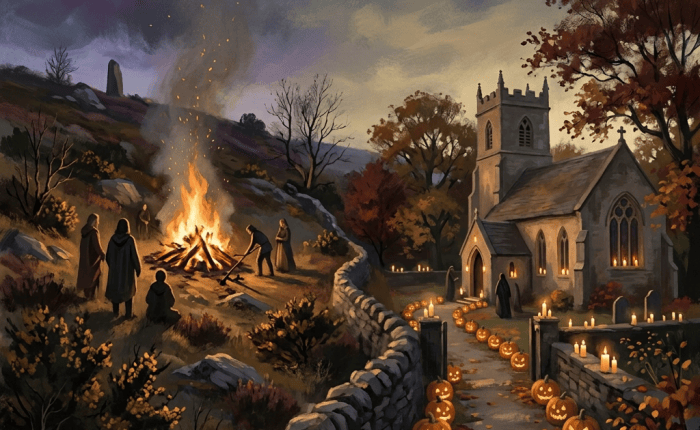
Pip: And when you do apply it, the historical record gets uncomfortable fast. All Saints Day was originally a May festival, moved by papal decree to October 31st specifically to overlay the Celtic observance of Samhain — the night pagans believed the veil between the living and dead grew thin.

Mara: The post is direct about what Scripture says in response. Deuteronomy 12:30 reads: “be careful not to be ensnared by their ways after they have been destroyed before you. Do not inquire about their gods, asking, ‘How do these nations serve their gods? I will do likewise.'”

Pip: So the argument isn’t “Halloween is spooky, therefore bad.” It’s that the mechanism — coopting a pagan observance to make it Christian — has no scriptural warrant, and the text runs the other direction entirely.

Mara: Paul’s instruction to the Thessalonians reinforces it: “Abstain from every form of evil.” The post also points out that Scripture already provides harvest celebrations — the biblical feasts — so the need to borrow from outside isn’t obvious to begin with.

Pip: There’s a prayer request quoted in the post that stops the argument cold — someone writing that they want to leave Halloween behind and finding it genuinely hard to do. That’s not a theological abstraction.

Mara: Right. The post draws a parallel to 2 Chronicles 30, where Hezekiah called Israel back to Passover and the people laughed the couriers out of town. The suggestion is that the dynamic inside the modern church isn’t entirely different.

Pip: Tradition is a powerful current, and ridicule is apparently a timeless crowd management tool.

Mara: The post closes by redirecting toward the biblical feasts — Passover, First Fruits, Pentecost — as the framework already given for marking death, resurrection, and the Spirit. The argument is that the replacement was already there.


Mara: The thread running through all of this is a single question: who gets to define the terms of worship — inherited tradition, or the text itself?

Pip: Apparently that question gets asked every October, and every October most people are busy buying candy. Next time, we’ll see what else is on the table.

Read the post in its entirety here: Samhain, Halloween and the Church: Testing Tradition by Scripture
Understanding False Teachings in Today’s Church

Understanding False Teachings in Today’s Church

Jeremiah 5:31
“The prophets prophesy falsely, and the priests rule by their own power; And My people love to have it that way. But what will you do in the end?”

Have you ever wondered about the state of the church? There are many self proclaimed prophets out there and many pastors operating in their own authority. Yet, they have hundreds of thousands of followers, books for sale, conventions and schools. They lead a people, that although have access to the Word, fail to read it. They are not like the Berean’s, searching the Scriptures daily to see if what they are being taught lines up, or even adds up. No, they swallow it whole and regurgitate the falsehoods. Where are the Jeremiah’s, the Isaiah’s, the Ezekiel’s, the Enoch’s? Where are the Peter’s, Paul’s, and John’s?

Instead we have TikTok prophets, unschooled and unlearned babblers in pulpits. The blind leading the blind. They read a book from a false prophet and are now spewing the same falsehoods in ignorance. But what does the Word say? They don’t care, they will take one verse out of context and shout you down with it. They are weak willed individuals with no discernment. How can i be so harsh? Who am i to say such things? What gives me the right? i am not the one saying it, Jeremiah is: “The prophets prophesy falsely, and the priest rule by their own power; And My (Elohim’s) people love to have it that way. But what will you do in the end?”

“Behold, you are trusting in deceptive words to no avail. Will you steal, murder, and commit adultery and swear falsely, and offer sacrifices to Baal and walk after other gods that you have known, then come and stand before Me in this house, which is called by My name, and say, ‘We are delivered!’ – that you may do all these abominations? Has this house, which is called by My name, become a den of robbers in your sight”? Behold, I, even I, have seen it,” declares Yahweh.” Jeremiah 7:8-11

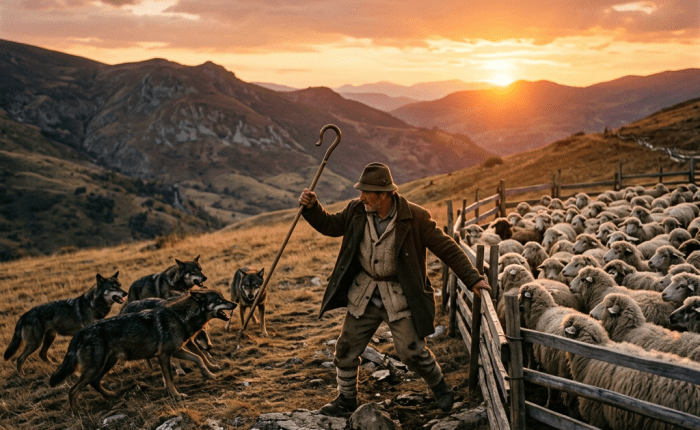
What is a false prophet? What is considered false teachings? Yahoshua (Jesus) tells us through Matthew’s writing: “Beware of the false prophets, who come to you in sheep’s clothing, but inwardly are ravenous wolves. you will know them by their fruits. Grapes are not gathered from thorn bushes nor figs form thistles, are they? So every good tree bears good fruit, but the bad tree bears bad fruit. A good tree cannot produce bad fruit, nor can a bad tree produce good fruit. Every tree that does not bear good fruit is cut down and thrown into the fire. So then, you will know them by their fruits. Not everyone who says to Me, ‘Adonai, Adonai,’ will enter the kingdom of heaven, but he who does the will of My Father who is in heaven will enter. Many will say to Me on that day, ‘Adonai, Adonai, did we not prophesy in Your name, and in Your name cast out demons, and in Your name perform many miracles?’ And then I will declare to them, ‘I never knew you; Depart from Me, You who PRACTICE LAWLESSNESS (TORAHLESSNESS).'” Matthew 7:15-23

When Yahoshua is teaching on false prophets He was drawing on the Word, the Torah. Where it teaches about false prophets. He also throughout His ministry challenged those teaching the commandments of men rather than the Commandments of the Father. Let’s look at Deuteronomy 13:1-4.

“If a prophet or a dreamer of dreams arises among you and gives you a sign of a wonder, and the sign or the wonder comes true, concerning which he spoke to you, saying, ‘Let us go after other gods (whom you have not known) and let us serve them,’ you shall not listen to the words of that prophet or that dreamer of dreams; for Yahweh your Elohim is testing you to find out if you love Yahweh your Elohim with all your hear and with all your soul. You shall follow Yahweh your Elohim and fear Him; and you shall KEEP HIS COMMANDMENTS, LISTEN TO HIS VOICE, SERVE HIM, and CLING TO HIM.”

Anytime that we do mans commandments over Elohim’s commandments we are essentially following other gods. If a prophet teaches us to obey other commands than he is a false prophet, and that would include the Greco-Roman Jesus. But Yahoshua never taught a different way, in fact He said, “I am the Way, the Truth, and the Life.” He was the very unchanging Word of Elohim made flesh. To do away with the commandments of God would have been to do away with Himself.

No, He said, “Do not think that I came to abolish the Law or the Prophets; I did not come to abolish but to fulfill (Bring fullness or clarity to). For truly I say to you, until heaven and earth pass away, not the smallest letter or stroke shall pass from the Law (Torah) until all is accomplished. (Note, heaven and earth have yet to pass away. See Revelation 21) Whoever then annuls one of the least of these commandments, and teaches others to do the same, shall be called least in the kingdom of heaven; but whoever keeps and teaches them, he shall be called great in the kingdom of heaven. For I say to you that unless your righteousness surpasses that of the scribes and the Pharisees, you will not enter the kingdom of heaven.” Matthew 7:17-20.

Many will say that we cannot be more righteous than the Scribe or the Pharisees and therefore Jesus meant we actually didn’t have to. However, that isn’t at all what Yahoshua was getting at! For time and time again He challenged the Pharisees that they were teaching the commandments of men rather than the commandments of God. And by definition righteousness is “the things commanded by God to be obeyed by man.” Therefore righteousness is obedience to God’s Torah. It is that simple. The Torah is not a burden, mans tradition is the burden. God is not a yoke that we cannot bear and to say so means you lack understanding.

Time is drawing short. Even if you live to be 90 before Yahoshua returns. Why? Because, deception is growing. Hearts are growing cold, sound doctrine is drying up, the wheat and the tares are being separated. What pile do you want to find yourself in? As Jeremiah said, “But, what will you do in the end?”

You are loved,
cj