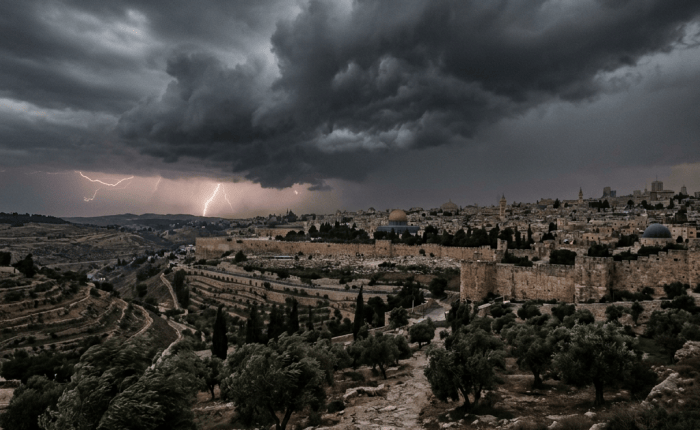
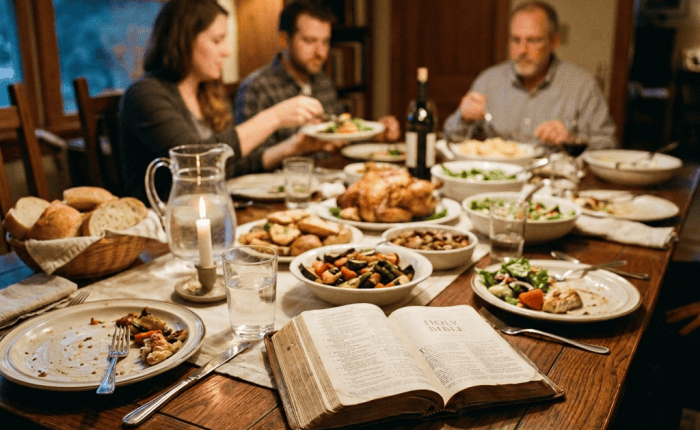
Podcast Episode – Eschatology Explained: Will Believers Face the Anti-Christ?

Podcast Episode – Eschatology Explained: Will Believers Face the Anti-Christ?

Pip: If you have ever wanted someone to walk you through the end times with the calm urgency of a person who has genuinely thought this through, cj at The Way of the Rabbi has been doing exactly that.

Mara: This episode follows one extended argument about eschatology — specifically, whether believers will be present when the final Anti-Christ arrives, and what Scripture actually says about that moment.

Pip: Let’s start with the question of who exactly is still on earth when things get very, very bad.

Will Believers Face the Final Anti-Christ?

Mara: The central tension here is timing — specifically, whether the Church will be present during the tribulation period, or whether a pre-tribulation rapture removes believers before the worst of it unfolds.

Pip: And the post goes straight to the source, opening with Matthew 24 and the disciples asking Yahoshua directly about the signs of the end. The audience for that teaching matters enormously to the argument.

Mara: The post sets up the key passage this way — Yahoshua is speaking privately to His disciples, and here is what He says: “So when YOU SEE, the abomination of desolation spoken of by the prophet Daniel, standing in the holy place, then let those who are in Judea flee to the mountains. For then there will be great tribulation, such as has not been from the beginning of the world until now, no, and never will be.”

Pip: The word “you” is doing a lot of heavy lifting there, and the post leans on it hard. If Yahoshua is warning His disciples to flee, the pre-tribulation reading has to explain who exactly He thought He was talking to.

Mara: Right, and the post addresses that directly. The pre-tribulation response is that the disciples were Jewish, not the Church. The rebuttal offered is pointed: were they not Messianic Jews, and are Messianic Jews not worthy of the rapture?

Pip: There is also the nursing-infants problem — which is the kind of scriptural detail that quietly dismantles a tidy theological system.

Mara: Exactly. The post asks why Yahoshua would say “woe to the pregnant women and for those who are nursing infants” if infants are raptured. It is a concrete, textual inconsistency the pre-tribulation reading has to account for.

Mara: The stakes the post names are pastoral, not just theological. The concern is that believers shaped by pre-tribulation teaching may be spiritually unprepared to resist the final Anti-Christ — and the post is direct: “I fear if they are not ready to stand against the final Anti-Christ, they will end up standing with him.”

Pip: That is the real weight of the argument. It is not a debate about timelines — it is a warning about readiness.

Mara: And the post closes by reading Matthew 24:29-31 alongside 1 Thessalonians 4:16-18 and asking the listener to notice how much they sound like the same event. The gathering of the elect, the trumpet, the clouds — the post invites the comparison and lets it sit.

Pip: The eschatology is the stakes. And the stakes are whether you are spiritually braced for what comes next.


Mara: The thread running through all of this is preparation — not fear, but clear-eyed readiness to stand when the pressure is real.

Pip: Next time, we will keep following where the signs point. There is more ground to cover.

For More check out the posts series *Signs Read the entirety of this post here: Will Believers Face the Final Anti-Christ?

Signs 1, Signs 2, Signs 3, Signs 4

Podcast Episode: Understanding God’s Covenant: Written on Our Hearts

Podcast Episode: Understanding God’s Covenant: Written on Our Hearts

Pip: There is a corner of the internet telling you not to be afraid — 365 times a year, apparently — and then there is cj, writing for The Way of the Rabbi, who would like a word about what the fear of God actually means.

Mara: This episode goes deep into Hebrews 10 — covenant, Torah, sacrifice, and what it means to have God’s instruction written on your heart rather than carved in stone.

Pip: Let’s start with the covenant itself.

Understanding God’s Covenant: Written on Our Hearts

Mara: The post opens with a tension the internet tends to flatten: the difference between “fear not” as comfort and the fear of God as the beginning of wisdom. Both live in Hebrews 10, and the post argues the church has traded one for the other at its own cost.

Pip: The anchor quote comes early, and it does not ease you in. “It is a terrifying thing to fall into the hands of the living God.” That is Hebrews 10:31, and it is not a metaphor being softened anywhere in this piece.

Mara: What that verse is doing is framing the whole chapter. Hebrews 10 opens as a commentary on Psalm 40, arguing that the Torah’s yearly sacrifices were a shadow — not the substance. The substance is Messiah’s offering, which accomplished what the shadow could only gesture toward: the exchange of sin for righteousness.

Pip: So the yearly sacrifice covered. The one offering exchanged. That is a meaningful distinction — covering versus exchange is not just a theological nicety, it is the hinge the rest of the argument swings on.

Mara: And the post brings that home through Jeremiah 31, quoted in Hebrews 10. “This is the covenant that I will make with them after those days, says YHWH: I will put My Torah upon their heart, and on their mind I will write them.”

Pip: Which raises the honest question the post actually asks out loud: if Torah is abolished, why write it on anyone’s heart?

Mara: The answer the post gives is precise. What Messiah’s blood removes is the law of sin and its consequence — death. Not the call to walk in obedience. The covenant written on the heart beckons toward the throne of grace, not away from instruction.

Pip: Holiness as destination, not as the price of entry. That reframe is doing a lot of work quietly.

Mara: It lands in Hebrews 10:19-25 — the “let us” passage. Draw near, hold fast, spur one another on. And then the warning: willful sin after receiving the truth leaves no remaining sacrifice. The post closes on Revelation 14:12 — “the perseverance of the saints who keep the commandments of God and their faith in Yahoshua.”

Pip: Fear and confidence, written on the same heart.


Mara: The thread running through all of this is covenant as living obligation — not abolished, not optional, written inward.

Pip: Next time, we will see where that obligation leads when it walks out the door and into the world.

Read the full post: Understanding God’s Covenant: Written on our Hearts

Understanding God’s Covenant: Written on Our Hearts

Understanding God’s Covenant: Written on Our Hearts

It is a terrifying thing to fall into the hands of the living God.” Hebrews 10:31

There are many meme’s and TicToc posts that will tell you to “fear not”. They will claim that “fear not”, is quoted 365 times in Scripture. And although this is a great comfort to many and there is some truth behind its sentiment, the reality remains, “The fear of God is the beginning of wisdom.” As found in Proverbs 1:7 and 9:10.

Now before you jump on me saying that these are not the same thing, I know, but I want to draw a line of comparison. The Church has gone from reverent fear of God, to a flippant cursory reading and understanding of His Word. Which has lead to misunderstandings and false teachings of what God calls His followers to.

Let’s dive into Hebrews 10 where we will discover both, security–fear not, and fear– the beginning of wisdom. Hebrews 10 opens up as a commentary on Psalm 40:6-8. There is a lot that is being said here. It begins talking about the Law, ‘Torah’, being only a shadow of things to come and not the very form of things. The writer says, this “can never, by the same sacrifices which they offer continually year by year, make perfect those who draw near.” The shadow is not the fullness. Where the yearly sacrifice stated in the Law brought a covering for sin. The fullness of what was to come in Messiah, was the exchange our sin for His righteousness.

Which brings to light the importance of Passover and why holding to all of the Feasts, as memorial stones, is so important. We see the permanence of Messiahs offering and the victory won for those who are found in Him.

Now continuing in Hebrews 10 what is the conclusion drawn by the author on the significance of Messiah’s offering over the yearly sacrifice? “Otherwise, would they not have ceased to be offered, because the worshippers, having once been cleansed, would no longer have had consciousness of sins?” The writer now draws directly on Psalm 40; “Sacrifice and offering you have not desired, but a body you have prepared for Me; In whole burnt offerings and sacrifices for sin You have taken no pleasure. Then I said, ‘Behold, I have come (In the scroll of the Book it is written of Me) To do Your will, O God.'” Interestingly the author leaves off the last line of verse eight, “Your Law is within My heart.” Which is done on purpose as the author will shortly bring this idea home.

We who are in Messiah Yahoshua (Jesus), can rest in knowing that our sins have been exchanged for the righteousness of the Son of God, once and for all. “But He, having offered one sacrifice for sins for all time, sat down at the right hand of God, waiting from that time onward until his enemies be made a footstool for His feet. For by one offering He has perfected for all time those who are sanctified.” No longer are we bound by the early restrictions of a brick and mortar temple and beholden to priests to offer sacrifice. We now can come boldly to the throne of grace having written on our hearts the Law of God. His Holy Instruction, the Torah.

And the Holy Spirit also testifies to us; for after saying, ‘This is the covenant that I will amen with them after those days, says YHWH: I will put My Torah upon their heart, and on their mind I will write them,’ He then says, ‘And their sins and their lawless (Torahless) deeds I will remember no more.‘” Here the author of Hebrews quotes Jeremiah 31.

Honest question if the Torah is done away with, why then would He write it on our hearts? When in true understanding we see that what is done away with by the blood of Messiah is the law of sin and its conclusion, death. Not the need to walk in obedience of the Fathers instruction. In Messiah, we are not free to sin or to walk according to our own desires, but to walk according to what has been written on our hearts.

We have a new boldness in Messiah on how we ought to walk and conduct ourselves, in love and kindness, and in obedience to the Fathers instruction found in the very scrolls, that the author of Hebrews is quoting.

Therefore, brothers, since we have confidence to enter the Most Holy Place by the blood of Yahoshua, by the new and living way opened for us through the curtain of His body, and since we have a Great Priest (Yahoshua) over the house of God, let us draw near with a sincere heart in full assurance of faith, having our hearts sprinkled to cleanse us from a guilty conscience and our bodies washed with pure water. Let us hold resolutely to the hope we profess, for He who promised is faithful. And let us consider how to spur one another on to love and good works. Let us not neglect meeting together, as some have made a habit, but let us encourage one another, and all the more as you see the Day approaching.” Hebrews 10:19-25

To what are we encouraging one another on to? It is in the conduct of those set apart for good works. Are we to make the sacrifice of Messiah to no effect by living as the world? The author of Hebrews says NO! “For if we go on sinning willfully after receiving the knowledge of the truth, there no longer remains a sacrifice for sins, but a terrifying expectation of judgment and the fury of a fire which will consume the adversaries.”

You have been called to holiness, you have been called to return to Gods instruction. We are no longer bound by sin unto death by the blood of Messiah but we are still bound by a covenant that is written on our hearts and on our minds. It beckons us onward towards the throne of grace. In the presence of the saints who encourage us to keep the faith, to keep the promises, to keep the instruction. “Here is the perseverance of the saints who keep the commandments of God and their faith in Yahoshua.” Revelation 14:12.

Anyone who rejected the law of Moses died without mercy on the testimony of two or three witnesses. How much more severely do you think one deserves to be punished who has trampled on the Son of God, profaned the blood of the covenant that sanctified him, and insulted the Spirit of grace?” Do you honestly believe that we insult the Spirit of Grace by seeking to honor the covenant written on our hearts? The very covenant God said, “I WILL put MY TORAH upon their HEARTS, and on their MIND I WILL write them.”

“For we know Him who said, ‘Vengeance is Mine, I will repay.’ And again, ‘YHWH will judge His people.’ It is a terrifying thing to fall into the hands of the living God.” Hebrews 10:30-31

I encourage you to read God’s Word daily, make it a practice to know Him and His instruction. Desire to know that covenant has He or wants to write on your heart and on your mind. Seek Him, seek truth.

You are loved,
cj

Podcast Episode: Gluttons of Grace: The Spiritual Dangers of Gluttony

Podcast Episode: Gluttons of Grace: The Spiritual Dangers of Gluttony

Pip: There’s a spiritual danger hiding in plain sight — and it’s not the one the church usually wants to talk about at the potluck.

Mara: cj’s latest post on The Way of the Rabbi takes on gluttony — not just the physical kind, but what the piece calls “gluttony of grace,” the habit of treating God’s patience as a license to keep sinning. Let’s start with what that actually means and why it matters.

Gluttons of Grace: The Spiritual Dangers of Gluttony

Pip: The post opens with a disarmingly ordinary scene — a fast food order, a one-dollar add-on, and a question: is that gluttony? But that small moment is a doorway into something much larger, the idea that we overindulge spiritually the same way we overindulge at the counter.

Mara: The post grounds the argument in Ephesians 2:10, setting up the kind of life we’re actually called to: “For we are God’s workmanship, created in Messiah Yahoshua to do good works, which God prepared in advance as our way of life.”

Pip: So the stakes here aren’t just dietary. The argument is that grace was never meant to be a standing permission slip — it was meant to launch us into something, a life shaped by the Father’s instruction, the Torah.

Mara: Right, and the post is careful to separate that from works-based salvation. The point isn’t that obedience earns anything. It’s that continuing deliberately in sin while claiming grace is its own kind of excess — the “gluttony of grace” the title names.

Pip: The church’s reluctance to preach on gluttony gets a dry observation here — that it hits too close to home and is harder to hide than most sins. Which is a fair point. Gluttony is the one vice you can’t keep in a private browser tab.

Mara: The post invokes Ezekiel 36:26-27 to answer the objection that Torah-keeping is simply impossible: “I will put My Spirit within you and cause you to walk in My statutes, and you will keep My judgments and do them.” The Spirit, not willpower, is the mechanism.

Pip: And then Paul — the one, as the post puts it, “in whom so many twist to justify their sinful natures” — gets quoted directly against that very use. Shall we continue in sin so grace may increase? Certainly not.

Mara: The post closes on Matthew 7, the sobering passage where Yahoshua tells those who performed miracles in his name: “I never knew you; depart from Me, you workers of lawlessness.” That’s the endpoint of gluttony of grace taken to its conclusion.

Pip: And the landing is Proverbs 23 — a father’s plea to a son to guide his heart on the right course. The frame shifts from warning to invitation.

Mara: Which is really the post’s whole posture. Not condemnation, but a call to search out truth and walk in it — a heart of flesh instead of stone.


Pip: Grace as a floor rather than a ceiling — that reframe does a lot of quiet work.

Mara: It does. The question underneath all of it is what we’re actually being saved toward, not just saved from. Worth sitting with until next time.

Read the full post: Gluttons of Grace: The Spiritual Dangers of Gluttony

Gluttons of Grace: The Spiritual Dangers of Gluttony

Gluttons of Grace: The Spiritual Dangers of Gluttony

The other night I ate out. It was fast food so nothing fancy and I brought it home so is that actually eating out, technically? The place I chose had a special menu option of a one dollar item. So I added it to my order. However, I didn’t take anything away from what I was already ordering. Therefore, in the end I over ate. Is this the definition of gluttony?

What is the definition of gluttony? The definition is quite simple, gluttony is “excessive eating and drinking.” It is also numbered among the often spoken of, seven deadly sins. Side note here the seven deadly sins although can be found separately within Scripture they do not appear as a list. It is believed that the seven deadly sins was coined by Pope Gregory I. Now gluttony in Hebrew can also be translated as, to be vile, to be worthless, to be insignificant. Based on these definitions, being glutinous, doesn’t sound so appealing.

The church doesn’t like to talk much about gluttony. If you ask me it is because this one hits way too close to home and is far harder to hide. Everyone has their struggles so I am not trying to be insensitive just pointing out an observation. There is plenty that I have had to overcome and others I am still battling, to that I say fight the good fight.

One issue I see abounding in the church today is, gluttony of grace. Taking advantage of Elohim’s patience. Without a doubt I have fallen into this trap as well. However, once one begins to realize that Yahoshua (Jesus) kept and taught the Torah and that He used it to teach, it cannot be denied or swept away.

In John eight Yahoshua makes a statement that many ignore or give it a cursory glance. In being brought the woman caught in adultery at the end of the encounter He says to the woman; “Neither do I condemn you: go, and sin no more.” Rather than take this verse as a statement of fact, many treat it as an invitation to change. Although they are partly correct they are missing the bigger picture. We are called to abound in good works.

Not a works based salvation but good works because we are saved. Abounding in the good works prepared for us before the foundation of the world. “For we are God’s workmanship, created in Messiah Yahoshua to do good works, which God prepared in advance as our way of life.” (Ephesians 2:10 Berean Study Bible). What are these good works? Some would say they are the fruit of the Spirit found in Galatians five. “But the fruit of the Spirit is love, joy, peace, longsuffering, kindness, goodness, faithfulness, gentleness, self-control. Against such there is no law. And those who are in Messiah have crucified the flesh with its passions and desires. If we live in the Spirit, let us also walk in the Spirit.

Again this isn’t a wrong belief it is simply incomplete. The good works involve keeping that which the Father established for His people. His instruction, the Torah, as we walk in the light of His Truth. The problem is that we see a list of rules and say it is impossible. Rather than holding to the promise that the Holy Spirit brings in fulfillment of Ezekiels prophecy. Ezekiel 36:26-27 says, “I will give you a new heart and put a new spirit within you; I will take the heart of stone out of your flesh and give you a heart of flesh. I will put My Spirit within you and cause you to walk in My statutes, and you will keep My judgments and do them.

Paul himself, the one in whom so many twist to justify their sinful natures, said, “What then shall we say? Shall we continue in sin so that grace may increase? Certainly not! How can we who died to sin live in it any longer? Or aren’t you aware that all of us who were baptized into Messiah Yahoshua were baptized into His death? We were therefore buried with Him through baptism into death, in order that, just as Messiah was raised from the dead through the glory of the Father, we too may walk in newness of life.”

Newness of life is not to continue to sin. Essentially becoming gluttons of grace. Then in the end finding out the one we claim to know, never knew us. Yahoshua said, “Not everyone who says to Me, ‘Adonai, Adonai,’ will enter the kingdom of heaven, but only he who does the will of My Father in heaven. Many will say to Me on that day, ‘Adonai, Adonai, did we not prophesy in Your name, and in Your name drive out demons and perform many miracles?’ Then I will tell them plainly, ‘I never knew you; depart from Me, you workers of lawlessness! Matthew 7:21-23.

Imagine finding out that we are vile, worthless, or insignificant. Because, instead of putting on the newness of life we walked as gluttons. Continuing in the traditions of man rather than searching out truth and living according to the Fathers instruction. Proverbs 23:15-19 is a good place to wrap things up. “My son, if your heart is wise, My own heart will indeed rejoice. My inmost being will rejoice  when your lips speak what is right. Do not let your heart envy sinners, but always continue in the fear of the YHWH. For surely there is a future, and your hope will not be cut off. Listen, my son, and be wise, and guide your heart on the right course.”

May we all seek for a heart of flesh from the Father. This is the Way of the Rabbi.

You are loved,
cj

Transforming Lives: Conforming vs. Standing Out

Transforming Lives: Conforming vs. Standing Out

When I was kid I had a green tank top that was my absolute favorite shirt. I wore that shirt every chance I got. I not only liked the style, but the image on the front, I found especially amusing. It had a picture of a chimpanzee, sitting on a toilet, eating a banana. Most people found the shirt tolerable, my parents surprisingly did. Especially given their usual apprehension to such things, on religious objections.

My mormon friends down the street did not find it at all amusing. In fact, I was not allowed in their home if I was wearing the shirt. I would have to go home and change, which wasn’t too bad, as I just lived a few houses down the street. A small price to pay for my favorite shirt.

I loved it so much that one Christmas season, at my schools Christmas program, I attempted to wear it. You see my second grade class was instructed to wear green. Well, I only owned two pieces of green clothing. My green chimpanzee tank top and a pair of green corduroy pants. I also wore those pants often, never with the tank top, but often enough that they were faded, worn, and never looked clean, even, fresh out of the laundry.

You should have seen the look on my mother’s face when I came out of my room. I announced, “Okay, I am ready to go.” To which my mother said, “You are not wearing that to your Christmas showcase.” “But Mom, we have to wear green and this is all the green I have.” I rebutted. She glared down at me, “Go put on your suit, you are going to look nice.” There was some more back and forth, but there was no winning and eventually I conceded, my mother victorious again. I went back to my room and pulled out my chocolate brown suit with creme colored shirt. The suit was three pieces, slacks, vest, blazer, accented with my creme colored shirt and a brown tie that had a gold weave. It matched the brown shoes with gold buckle. No doubt I looked very nice, but it wasn’t green, and I knew I was in for it, when I walked into my classroom.

Sure enough, the click clack of my dress shoes on the tile floor of the school, echoed down the halls, announcing my arrival. I stepped into the glass and my friends gasped and then as good friends do began pointing and laughing. “You were supposed to wear green!” They said. “I know!” I snapped back. Mrs Michaels my second grade teacher, who already disdained my very existence, walked over to me shaking her head. She asked if my parents were here and I said yes. She then surprisingly turned around to address another issue and I thought, “wow, that’s it? That wasn’t bad at all.”

Soon after Mrs Michaels called the class to the front and told us to get into our stage places to rehearse our two or three songs. I don’t recall the exact number but the one song that stands out in my core memory, “O Christmas Tree.” During all the other rehearsals I was set in the back row, stage right. Tonight in a sea of green Mrs Michaels would get a scarring blow, “CJ, you come down here in front, you are going to be the trunk of our tree. This way you won’t stand out as much.” To which even my second grade brain thought, ‘Not stand out? I am right in the middle up front . . . it will be like I am the only one on the stage!’ It would have been far less noticeable had I been able to stand in the back wearing my worn out green corduroy pants and chimpanzee tank.

Romans 12:1-8 says:
Therefore I urge you, brothers, on account of God’s mercy, to offer your bodies as living sacrifices, holy and pleasing to God, which is your spiritual service of worship. Do not be conformed to this world, but be transformed by the renewing of your mind. Then you will be able to test and approve what is the good, pleasing, and perfect will of God.”

For by the grace given me I say to every one of you: Do not think of yourself more highly than you ought, but think of yourself with sober judgment, according to the measure of faith God has given you. Just as each of us has one body with many members, and not all members have the same function, so in Messiah we who are many are one body, and each member belongs to one another.

We have different gifts according to the grace given us. If one’s gift is prophecy, let him use it in proportion to his faith; if it is serving, let him serve; if it is teaching, let him teach; if it is encouraging, let him encourage; if it is giving, let him give generously; if it is leading, let him lead with diligence; if it is showing mercy, let him do it cheerfully.

I have told that story many times before, illustrating our need as believers in Messiah, to stand out, not blend in. We are called to be different. That although we live in the world, we are not of the world. We were once partakers in sin and disfunction but now we are called to a new life. We are now Ambassadors of the Kingdom. We are now clothed in righteousness and the world should know it. We should stick out. This doesn’t mean driving around with a sticker on your bumper, or posting Bible verses on your social media pages. It isn’t about attending church every week or going to Bible studies.

Now, none of those things are necessarily bad. However, what does your lifestyle say of you. When you say no words what do your actions say? When you are at work, what does your production say? When you are out with friends, what do your habits say? Are you wearing the lifestyle of the King? Have you taken the mantle, are you carrying your cross? This doesn’t mean perfection, we all make mistakes, we allow our flesh to win sometimes. The question is, was that win an upset, or was sin favored to win?

Walking in righteousness is a struggle, walking in the spirit is a struggle. Yahoshua, never said life in Him would be easy. He said, “you will be hated for my names sake.” That isn’t blending in, that is standing out. Does it mean you can’t find favor in the eyes of others? Absolutely not. The early believers in Acts, “praising God and finding favor with all the people.” Yet, still as the day of Adonai approaches He did say that our obedience would become a suffering point. Unfortunately, too many are comfortable with the culture that they don’t realize that the pot is beginning to boil.

The ground is being shaken and we are being called to the front. We are called to represent the King by standing on the roots, bringing the message of life to the masses. We are called to be a brown suit standing in a sea of green tee’s. We are called to be set apart from the world, not to participate in its lawlessness. We must discover what it means to be an heir in the Kingdom.

What did the Father mean when He gave Micah these words; “He has shown you O’man what is good and what does Elohim require of you, to act justly, to love mercy, and to walk humbly with your Elohim.” He wasn’t changing His ideals or His message for the Father spoke through Moses saying; “And now, O Israel, what does YHWH your God ask of you but to fear YHWH your God by walking in all His ways, to love Him, to serve YHWH your God with all your heart and with all your soul, and to keep the commandments and statutes of YHWH that I am giving you this day for your own good.

What did the Father mean when He inspired Paul to pen these words; “Do not be conformed to this world, but be transformed by the renewing of your mind. Then you will be able to test and approve what is the good, pleasing, and perfect will of God.” We are called to stand out and be different. We are called to honor our Heavenly Father. We are called to walk according to the Son, our Messiah Yahoshua.

We must learn the way of THE Rabbi, Yahoshua, and walk and do according to His instruction. Which is the Father’s instruction written out for us. Do not get wrapped in mans tradition, and twisted theologies, but rather study to show yourself approved. His Spirit will lead us into all truth if we diligently seek Him with our whole heart, soul, mind and strength. Will you earnestly seek Him? Then join me and subscribe.

You are loved,
cj

Reflecting on the Past: The Journey of Growth in Truth

Reflecting on the Past: The Journey of Growth in Truth

Another year older and i would like to think that i am at least a bit wiser. Although, every year at this time i can’t help but think what my life would be like if certain things could be undone. Statements like, “i should have done this . . .”, “i could have done this . . .”, and “i would have done this . . .”, circle my mind. The shoulda, coulda, woulda’s of life. In my opinion they aren’t completely without merit, although they can become problematic.

Yahoshua said, “And no one after drinking old wine wants new, for he says, ‘The old is better.’” He was making a specific point about instructing His disciples but the idea is transferable. You have probably thought it yourself at some point, “It was better when I was a kid.” Wishing for another time in the past, hoping things will return. I hate to be the bearer of bad news but they won’t. In fact things are only going to get increasingly worse overall. At least until Yahoshua returns.

When He does return He will restore things, but to what? We have only the word but no experience in what is to come. This is why there are so many opinions. Everyone who reads it has a slightly different idea and all of them will say, “God, revealed to me in a dream . . .” Who do you trust, who do you listen to? You probably have your teacher favorites based on your doctrinal upbringing. And through that lens you will fit your understanding of Scripture. Regardless if it makes any sense or not because one simply says, “For now we know in part, seeing things through a mirror dimly.” “There are many mysteries that will be revealed in the end.” Etc.

Although, this is true it does not justify ignorance on the matters of truth. What is TRUTH? His, God’s Word, is Truth. Yahoshua said, “No one who puts his hand to the plow and then looks back is fit for the kingdom of God.” Did He mean never look back? Obviously not, or Hebrews 11 would be unreadable. So what can one gain from looking back at one’s life and reflecting?

Learning from past mistakes, is clearly a good idea. Looking at times you were forgiven, in order to forgive others, is a worthy endeavor. Pondering what you have learned in order to understand truth, without a doubt, is a good idea. After all, Paul tells Timothy, “Study to show yourself approved, a workman, who rightly handles the word of truth.”

Be a student of life. Be willing to learn from your mistakes and the mistakes of others. Learning what not to do is as important as learning what to do. Both are equally beneficial if treated correctly. Those previous experiences can be motivation for future decisions, and they should be, with healthy perspective.

God has spoken to us through His word. There is no guessing if you read it for yourself. Part of the ‘New Covenant’ is that His Spirit will guide us. John says, “And as for you, the anointing you received from Him remains in you, and you do not need anyone to teach you. But just as His true and genuine anointing teaches you about all things, so remain in Him as you have been taught.”

The New Covenant is written on our hearts. It is the Instruction of God and it includes the history of His people. All of it. The good, the bad, the indifferent. All of the shoulda, coulda, woulda’s. The writer of Hebrews quotes Jeremiah when he writes, “For this is the covenant I will make with the house of Israel after those days, declares Adonai. I will put My Torah in their minds and inscribe them on their hearts. And I will be their God, and they will be My people.”

Paul writes to the Romans, “Indeed, when Gentiles, who do not have the Torah, do by nature what the Torah requires, they are a Torah to themselves, even though they do not have the Torah. So they show that the work of the Torah is written on their hearts, their consciences also bearing witness, and their thoughts either accusing or defending them on the day when God will judge men’s secrets through Messiah Yahoshua, as proclaimed by my gospel.”

The problem many run into is that they don’t like to admit to their mistakes. Instead they blame others for their misfortunes. Pride becomes an issue. Even if it is equal parts their own doing and that of someone else, it is a default to blame the other entirely. We need to own our own. In that we discover truth. It is said that we are the sum of our mistakes. That is half true. We are the sum of our choices, good, bad, indifferent. Therefore it should stand to reason that we should desire to make choices, from this moment forward, that reflect faith, hope, and love. Right?

Yahoshua said, “Blessed rather are those who hear the word of God and obey it.” Let us be willing to learn from our past mistakes. Study the word with a desire to be changed by the word. In order that we might walk in newness of life, within the ‘New Covenant’, given to those who put their faith in Messiah. The past is the past. Learn from it. Grow from it. But do not be chained by it.

You are loved,
cj

Breaking Free from Legalism: Embracing Messiah’s Love

Breaking Free from Legalism: Embracing Messiah’s Love

When taking your relationship with Messiah from a religion to a relationship, one by necessity strips off the man made traditions. This is an important first step. One then begins to learn to walk in relationship with Messiah. However, in our humanity we still make this about ourselves, our comforts, our desires, our feelings, me, me me, I and me again. We look at all that Yahoshua (Jesus) did for us, how he suffered the most horrific torturous death imaginable. Then we say to ourselves, “He did this so that I don’t have to keep the law.” Say that out-loud and tell me it doesn’t sound like you are in an abusive relationship. Now look deeper into it and tell me who is the abuser?

I do not reject God’s gracious gift; for if the way in which one attains righteousness is through legalism, then the Messiah’s death was pointless.

You stupid Galatians! Who has put you under a spell? Before your very eyes Yahoshua the Messiah was clearly portrayed as having been put to death as a criminal! I want to know from you just this one thing: did you receive the Spirit by legalistic observance of Torah commands or by trusting in what you heard and being faithful to it? Are you that stupid? Having begun with the Spirit’s power, do you think you can reach the goal under your own power?  Have you suffered so much for nothing? If that’s the way you think, your suffering certainly will have been for nothing!  What about God, who supplies you with the Spirit and works miracles among you — does he do it because of your legalistic observance of Torah commands or because you trust in what you heard and are faithful to it?

It was the same with Abraham: “He trusted in God and was faithful to him, and that was credited to his account as righteousness.”  Be assured, then, that it is those who live by trusting and being faithful who are really children of Abraham. (Galatians 2:21-3:7)

When talking about following the commands of God, especially after coming out of religion, many will cry, ‘legalism!’ And they will use Galatians as a point of reference. Followed by something along the lines of, “See, it is about a relationship, not legalistic religion.” And they would be half right. Abraham trusted that what God said, He would do. And based on that trust, that faith, Abraham was obedient to all that God commanded. Paul in his letter to the Galatians goes so far as to call them stupid. Why? Because they began to focus on the observance of Torah outside of trusting in what they had heard and then being faithful to it. You see they were making it about something, rather than someone, and separating the two.

How do I know this? Paul himself tells the Romans this in 6:1-2. “What then shall we say? Shall we continue in sin so that grace may increase? Certainly not! How can we who died to sin live in it any longer?” What is sin? As we have looked at time and time again 1 John 3:4 tells us exactly what sin is: “Everyone who practices sin practices lawlessness as well. Indeed, sin is lawlessness.” That is to say that sin is being outside of Torah. There is no way around it.

So what is it then that saves us? It is the blood of Messiah, His death has taken away the sin of those who put their faith in Him. His righteousness is given to us and undeservedly so. However, sin is still sin and Abraham shows us that trusting in God is shown through obedience to Him, and that is counted to him as righteousness. So the message Paul is writing to the Galatians and also to the Romans is the same. Now that we have put our faith and trust in Messiah, we should no longer walk in the former sins that we knew. For there is a more excellent way! It is the Way of the Rabbi. It is taking on His lifestyle. Going from religion to relationship to a lifestyle that mirrors that of Messiah.

Who was obedient to the Father even to death. Yahoshua set the example of Faith in the promise of His resurrection that we who believe will also be raised up with Him in newness of life. That we no longer walk according to the ways of man, but that like Messiah we do as the Father has instructed. We build on the relationship with His Son Yahoshua, our groom to be at the marriage supper of the Lamb. “So Yahoshua replied, “Truly, truly, I tell you, the Son can do nothing by Himself, unless He sees the Father doing it. For whatever the Father does, the Son also does.“” John 5:19. We should be so like minded. What pleases the Father? Psalm 51 reveals, “The sacrifices of God are a broken spirit; a broken and a contrite heart, O God, You will not despise.”

If you ask those who have been married for a long time what is their secret you will hear a common theme. That is that each one sought to do for the other more than themselves. In a two-sided relationship where both participants are seeking to honor the other more than themselves you find not only longevity but happiness, peace, joy, love, and satisfaction. It is a lifestyle that becomes the focal point in a relationship, a choice to love the other as they receive love. That is how our Messiah loved and loves us and that is how we ought to love Him in return. And when we love Him we are loving the Father.

Create in me a clean heart, O God, and renew a right spirit within me. Cast me not away from Your presence; take not Your Holy Spirit from me. Restore to me the joy of Your salvation, and sustain me with a willing spirit. Then I will teach transgressors Your ways, and sinners will return to You. Deliver me from bloodguilt, O God, the God of my salvation, and my tongue will sing of Your righteousness. O Adonai, open my lips, and my mouth will declare Your praise.” Psalm 51:10-1

Finally, here in Psalm 51 David writes, “I will teach transgressors Your ways, and sinners will return to You.” This has always been the point of coming to Messiah. Learning the ways of the Father and doing them. Taking on the heavenly lifestyle and leaving the lawless lifestyle of humanity behind. For the ruler of this world is lawless, he is without Torah, without instruction. And the lawless one is coming to deceive many into a lifestyle of lawlessness, of sin. Are you walking in the light of the Fathers instruction by faith in Messiah? For in the end both are required, Revelation 14:12 says: “Here is a call for the perseverance of the saints, who keep the commandments of God and the faith of Yahoshua.

Choose this day whom you will serve, the lawless one parading around as the gods of this world or the maker of Heaven and Earth? As for me, i will serve my Father YHWH, in faith of Messiah Yahoshua, by the power of the Holy Spirit.

You are loved,
cj

Podcast Episode: Living a Lifestyle of Prayer: Lessons from David and Messiah

Podcast Episode: Living a Lifestyle of Prayer: Lessons from David and Messiah

Pip: If you have ever felt like the world is pulling you in every direction except the one that matters, cj at The Way of the Rabbi has a psalm and a prayer that might reorient your morning.

Mara: This episode follows one sustained thread — what it actually looks like to build a life around prayer and imitation of Messiah, drawing from David's Psalm 5 and Yahoshua's prayer in John 17.

Pip: Let's start with what a lifestyle of prayer looks like in practice.

Living a Lifestyle of Prayer: Lessons from David and Messiah

Mara: The central question here is how the phrase "a lifestyle, not a religion" becomes something real and practiced rather than just a slogan — and the post answers it by looking at how both David and Messiah actually lived.

Pip: The anchor is Paul's line in First Corinthians, but the post moves quickly to Psalm 5 as the concrete illustration. David opens with a direct, unguarded address to God — and the post quotes it plainly: "Give ear to my words, Adonai, consider my inmost thoughts."

Mara: What that means in practice is full transparency before God — the post says, "Hide nothing, for nothing in the end is hid from Him." This isn't a posture of performance; it's a posture of relationship.

Pip: And then the pattern sharpens. David doesn't just pray once — he declares, "in the morning you WILL hear my voice." The post draws a direct line from that to Mark 1:35, where Yahoshua rises early, slips away from the crowds, and goes to a solitary place. Morning prayer isn't incidental; it's the architecture of the day.

Mara: The post also works through the contrast David builds in the middle verses of Psalm 5 — God does not take pleasure in wickedness, evil cannot remain with Him. But the post is careful to note this isn't a detour. David is framing why the posture of the righteous matters: those who walk in God's instruction enter His house because "God is rich in mercy, grace, and love."

Pip: Grateful entry leads to the next move — "I will bow down toward Your holy Temple in reverence for You." Reverence follows mercy, not the other way around. That's a sequence worth sitting with.

Mara: The post also unpacks the Hebrew behind David's request to be led in righteousness — the word tsᵉdâqâh, meaning right actions. David is asking to be led in God's right actions, which the post reads as walking in the light of Torah.

Pip: So the whole arc — Psalm 5, Yahoshua's John 17 prayer, Paul's call to imitation — lands in one place: being set apart not as an abstraction but as a lived pattern, daily, morning by morning.

Mara: Yahoshua's own words from John 17 close the loop: "On their behalf I am setting Myself apart for holiness, so that they too may be set apart for holiness by means of the truth." The invitation is to the same kind of life He lived.

Pip: Which makes the question less "do I have a religion" and more "does my morning look anything like His."


Mara: What stays with me is the dailiness of it — David's morning voice, Yahoshua's solitary place before dawn. Holiness as habit, not event.

Pip: More on what that looks like in practice, next time.

Living a Lifestyle of Prayer: Lessons from David and Messiah

Living a Lifestyle of Prayer: Lessons from David and Messiah

When the world has you living and doing and being everything but what God ordained in His Word, a lifestyle based on Messiah becomes blurred. How then does the statement, ‘a lifestyle not a religion,’ become more than an idea? In 1 Corinthians Paul writes, “Imitate me, just as I imitate Messiah.” This is a call to study the life of Messiah as presented in the Gospels. How did he live and do and be? This is our goal, it does not move, although we are constantly growing.

Let’s look at Psalm 5 which is a song from Davids heart to his God. It is the heart posture we should all have. He begins: “Give ear to my words, Adonai, consider my inmost thoughts.” When desiring to turn your faith into a lifestyle you have to be willing, even desiring, that God would consider your inmost thoughts. Hide nothing, for nothing in the end is hid from Him. David continues, “Listen to my cry for help, my King and my God, for I pray to You. Adonai, in the morning You will hear my voice, in the morning I lay my needs before You and wait expectantly.

The plea of David, “Listen,” isn’t because he doesn’t think Adonai will listen, rather, it is a measured cry of desire. He is revealing his heart for Adonai in a heart felt plea, to his king and his God. This wasn’t a one off prayer it was a pattern it was a lifestyle of prayer as David then says, “in the morning you WILL hear my voice.” How often did our Messiah depart the crowds and even his disciples to get alone and pray? The answer often and usually in the morning. Mark 1:5 records this, “Early in the morning, while it was still dark, Yahoshua (Jesus) got up and went out to a solitary place to pray.” And the prayer was one of expectancy. When we pray, we should do so with a faith filled with expectancy.

David seemingly shifts gears here in the next set of verses. “For You are not a God who takes pleasure in wickedness; evil cannot remain with You. Those who brag cannot stand before Your eyes, You hate all who do evil, You destroy those who tell lies, Adonai detests men of blood and deceivers.” Yet, if we look closely, David is simply drawing a contrast. God still does not take pleasure in wickedness. Adonai still hates evil. Yahoshua, didn’t come to die in order for humanity to practice such things. He came as He declared to Pilate, “For this reason I was born and have come into the world, to testify to the truth. Everyone who belongs to the truth listens to My voice.” In Yahoshua’s prayer in John 17:17 He declares, “Sanctify them by Your Truth, Your Word is Truth.

But I can enter Your house because of Your great grace and love;” David jumps right back into the contrast, those outside of God’s instruction, the wicked are detestable. And those, like David, who have a heart after God’s instruction, enter the house of Adonai because God is rich in mercy, grace, and love; towards those who walk according to His instruction. When those seeking after Gods righteousness enter His presence what does a grateful heart do? “I will bow down toward Your holy Temple in reverence for You.”

The walk isn’t easy. The world is full of distractions and even those with seemingly good intentions can be distractions. Therefore David asks, “Lead me, Adonai, in Your righteousness because of those lying in wait for me; make Your way straight before me. For in their mouths there is nothing sincere, within them are calamities, their throats are open tombs, they flatter with their tongues. God, declare them guilty! Let them fall through their own intrigues, for their many crimes, throw them down; since they have rebelled against You.” The word here for righteousness is צְדָקָה tsᵉdâqâh and it literally means, right actions. So David is saying, ‘Lead me, Adonai, in Your right actions.’ With what David follows up with quiet clearly David is asking God to help him walk in the light of Gods Torah (instruction).

Is David without hope for the lost? Absolutely not. For he closes his Psalm with these words; “But let all who take refuge in You rejoice, let them forever shout for joy! Shelter them; and they will be glad, those who love Your name. For You, Adonai, bless the righteous; You surround them with favor like a shield.” Here David uses the word צַדִּיק tsaddîyq, for righteous. This word means, lawful. David is saying, ‘bless those who are lawful, those keeping Your instruction, who are walking in righteousness, the light of Gods Torah (instruction).

Yahoshua, makes the same plea in His prayer found in John 17. “I made Your name known to the people You gave Me out of the world. They were Yours, You gave them to Me, and they have kept Your word.” What is the Fathers word? It is the Torah, and it is Yahoshua, who is the Word made flesh. Yahoshua didn’t come to contradict the Fathers instruction but to bring it to life through action.

Yahoshua later in this same prayer says; “They do not belong to the world, just as I do not belong to the world. Set them apart for holiness by means of the truth–Your word is truth. Just as You sent me into the world, I have sent them into the world. On their behalf I am setting Myself apart for holiness, so that they too may be set apart for holiness by means of the truth.” Holiness, ἁγιάζω hagiazō, is set apart, sanctified, consecrated for a purpose. Yahoshua is saying He has lived out the instruction of the Father. He set Himself apart from the world, that is living in rebellion, and He is now praying that those who are of the Way. That we also would be set apart to live out the instruction of the Father.

Let me wrap this up with this; “I pray not only for these, but also for those who will trust in Me because of their word, that they may all be one. Just as You, Father, are untied with Me and I with You. I pray that they may be untied with Us, so that the world may believe that You sent Me.” Yahoshua only did what the Father said, He lived out the Torah. He is saying that He wants us, His disciples to live in the same manner. Not living and doing and being as the world but living as a light (examples of Gods instruction), being imitators of Messiah, doing the acts of righteousness found in Gods instruction (Torah). This is the Way of the Rabbi, to follow His instruction. What does that mean? Follow for more or simply peak into the archives if you are wanting to be imitators of Messiah as the Word calls us to be.

You are loved,
cj