“Not many of you should become teachers, my brothers, since you know that we will be judged more severely.” James 3:1
There are so many ‘teachers’ out there today it is hard to believe that this verse even exists. Then again, perhaps that’s why the verse is there in the first place, to warn us. Who are you listening to? Who are you allowing to influence your understanding of Scripture? According to James that circle should be very, very, small. In my writing to you it isn’t my goal to teach you but to encourage you, to encourage you to search the Scriptures daily to see whether or not what you are being taught is true. To be Berean, and to meditate on the Word, in order to absorb it into every fiber of your being.
Acts 17:11 “Now the people here in Berea were of nobler character than the ones in Thessalonica; they early welcomed the message, checking the Tanakh (Scriptures) every day to see if the things Paul was saying were true.”
Psalm 1:1-3 “How blessed are those who reject the advice of the wicked, don’t stand on the way of sinners or sit where scoffers sit! Their delight is in Adonai’s Instruction; on His Torah they meditate day and night. They are like trees planted by streams – they bear their fruit in season, their leaves never wither, everything they do succeeds.”
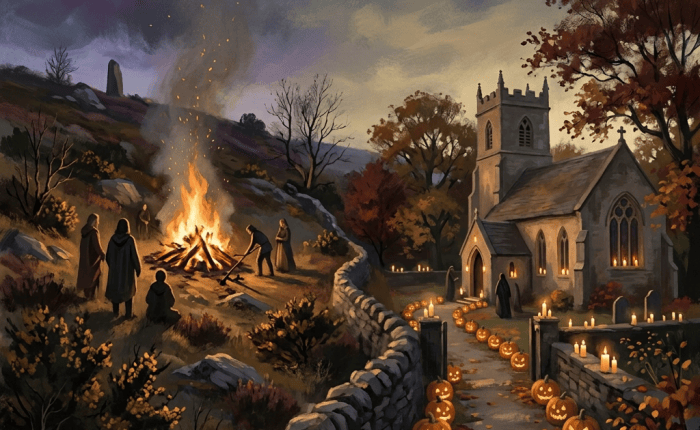
We are on the doorstep of a once prominent Catholic/Christian holiday called All Saints Day. It was established to celebrate and acknowledge saints and martyrs. Originally, it was a festival decreed by the Pope back in 609AD but in the month of May. Later through various Papal decrees it was moved to the Celtic day of Samhain October 31-November 1st in order to Christianize a pagan holiday. Samhain, in pagan tradition and belief is the time of year the veil between the living and the dead is the thinnest and therefore marks the crossing of souls into the afterlife.
Sounds like a good idea right? Honoring saints and martyrs of Christendom, while attempting to convert pagans by co-opting their holiday. But tradition and reason aside what does the Bible say, you know, Scripture, the Torah, the Tanakh, and what have the writers of the new Testament have to say? The answer may surprise many because many ‘Teachers’ teach that you can redeem pagan things and practices.
Unfortunately, there is no evidence of this found in Scripture. Actually, the opposite is true. Those who follow Yahweh are called to separate themselves from the worldly culture or pagan practices and influences that surround them. Lest they fall into the temptation of practicing such things. John in his writing of Revelation says, “Come out of her my people.” Speaking of Mystery Babylon, but why? He explains; “She has become a home for demons and a haunt for every evil spirit, a haunt for every unclean and detestable bird.” What happens if we ignore the warning? “so that you will not share in her sins, so that you will not receive any of her plagues; for her sins are piled up to heaven, and God has remembered her crimes.” Revelation 18 goes into greater detail, detail you should understand.
We are called to avoid evil. Paul writes to the Thessalonians, “Abstain from every form of evil.” (1 Thessalonians 5:22)
Deuteronomy 12:30 – “be careful not to be ensnared by their ways after they have been destroyed before you. Do not inquire about their gods, asking, “How do these nations serve their gods? I will do likewise.” This is in reference to assimilating into or allowing pagan influences into the practice of Worshiping Yahweh.
Deuteronomy 18:9 – “When you enter the land the Adonai your Elohim is giving you, do not imitate the detestable customs of those nations.”
I am not sure how much clearer things can be spelled out. God is not honored by His people when they practice any culture other than the one He gave them. Does this mean we cannot have or celebrate culture? Absolutely not! However, it does call us to question motive and tradition. We are called to be separate from not unmistakably conformed to worldly practices and traditions.
What about harvest festivals? Well, traditionally in Scripture there already are Feasts, in which we are called, to a celebration of the harvest. In fact there are Feasts within Scripture to honor the death and resurrection of our Messiah Yahoshua. It is not Easter, but Passover. The ultimate martyr and victor over sin and death. His resurrection was on First Fruits, which is celebrated and marked by a priest waving a sheaf of the first barley harvest. Pentecost, the day we remember the giving of the Holy Spirit, also lines up with the giving of the Torah on Mount Sinai.
Why does the church try so hard to manipulate God’s instruction for its own traditions? We cannot make things clean or unclean of ourselves of which God Himself has already declared to be true. If you are planning or perhaps already have started your celebration of Halloween or All-Saints-Day, it is my desire that you look into Scripture for your answer. Not the tradition of man, even that of the Pope. Be careful, be diligent, be purposeful, in your walk with Elohim. You cannot be a follower of Yahoshua (Jesus) and not obey His instruction. Yahoshua, is the Word made flesh.
When coming out of mans tradition and an assimilation into pagan culture one can find it challenging. Especially, when the church you attend is throwing a harvest festival with non-scary costumes of Hollywood, and folklore demigods. A prayer request I came across on a prayer platform read: “I want to stop with the horror and Halloween stuff and I’m having a very hard time doing so. My 12-year-old niece is the same. It’s my fault.” This request grabbed my heart. For so long I was part of that culture of compromise and now that my eyes have been open I see the snare set by the enemy so many willingly walk into and then find it hard to get out.
When stepping out of pagan culture whether you are there intentionally or not is difficult at best. In 2 Chronicles 30 there is a history lesson to be learned. Hezekiah, the King of Judah, was a man who sought God and His ways. He realized that they should have been celebrating the Passover and so he sent out a decree to the tribes of Israel saying:
“O people of Israel, return to Yahweh, the God of Abraham, Isaac, and Israel, that He may turn again to the remnant of you who have escaped from the hand of the kings of Assyria. 7 Do not be like your fathers and your brothers, who were faithless to Yahweh Elohim of their fathers, so that He made them a desolation, as you see. 8 Do not now be stiff-necked as your fathers were, but yield yourselves to Yahweh and come to His sanctuary, which He has consecrated forever, and serve Yahweh your God, that His fierce anger may turn away from you. 9 For if you return to Yahweh, your brothers and your children will find compassion with their captors and return to this land. For Yahweh your God is gracious and merciful and will not turn away His face from you, if you return to Him.”
But the people for the most part were stuck in their ways. The response to King Hezekiah’s decree was one of doubt and ridicule, in fact it says that most of the people laughed. 2 Chronicles 30:10 says: “So the couriers went from city to city through the country of Ephraim and Manasseh, and as far as Zebulun, but they laughed them to scorn and mocked them.” The church is the same today. Pastors will teach compromise in the spirit of outreach. But that is never prescribed as an avenue of outreach. But what is, is unity, one heart, one mind and the people desired what was being blessed. Besides the ‘Pastor’ of the church will ridicule you, even laugh at you for wanting to honor God the way He instructed us through His Word. The way Yahoshua taught. Not mans traditions but the Fathers instructions.
There is so much more I could write and perhaps I will write on this but unfortunately most have already stopped reading at this point. Our attention spans have grown short and few desire to read. Rather choosing to be entertained by two minute videos on TicToc that mainly rot one’s brain.
Wake up Church! Time is ticking away, you are not promised tomorrow so live for Messiah today! “Come out of her My People!”
You are loved,
cj