
Repetition and Retention: Wisdom from Proverbs

Repetition and Retention: Wisdom from Proverbs

Paul wrote to the Philippians, “Finally, my brothers, rejoice in the Adonai. Writing the same things to you again is no trouble for me. For it is repetition that is a good instructor.” Studies show that repetition is necessary to retain information. Even basic retention of simple contextual ideas require 3 to 7 times of hearing the information. While more complex ideas may require 6 to 20 times. Of course emotionally charged or high-stakes information can be retained almost instantly. This has been my motivation over the past few months. Perhaps, presenting it in different lights for slightly different audiences, nevertheless, it is the same concept repeated. It is in this vain that write to you today.

Behold, days are coming,” declares Elohim,  “when I will send a famine on the land. Not a famine of bread or a thirst for water, but rather for hearing the words of ADONAI.” Amos 8:11

Are we living in the days of famine prophesied by Amos? It sure seems so. No one wants to hear the idea that faith is more than a prayer and Sunday attendance. Reformations and Church splits happen, not because people want things to be more difficult. No, they happen because people want to find the easiest path forward. It is human nature after all to seek ease and comfort. New technologies emerge daily with that simplistic goal in mind, to make life simpler.

Proverbs is a book of wisdom, a collection of thoughts and instruction. It is also laced with warning and a call to obedience, to the instructions of Yahweh. Proverbs chapter one is full of riches. “To know wisdom and instruction, to understand words of insight, to receive instruction in wise dealing, in righteousness, justice, and equity; to give prudence to the simple, knowledge and discretion to the youth– Let the wise hear and increase in learning, and the one who understands obtain guidance, to understand a proverb and a saying, the words of the wise and their riddles. The fear of Yahweh is the beginning of knowledge; fools despise wisdom and instruction.” (1:2-7)

Some definitions that I think will be helpful. Instruction can mean Torah for Torah is Elohim’s instruction. Righteousness in Greek is dikaiosynē which means, the things commanded by God to be obeyed by man. In other words, righteousness is an act of obedience to God. In Hebrew the word is ṣeḏeq which means pretty much the exact same thing. Solomon who is the author of Proverbs was asked by God what he wanted. Solomon responded, “wisdom.” He wanted to be wise. A wise man seeks instruction and obeys without exception those things commanded by God. For this obedience it is counted to him as righteousness.

Proverbs chapter one continues in verse twenty-two, “How long, O simple ones, will you love being simple? How long will scoffers delight in their scoffing and fools hate knowledge?” This ties into Amos’ prophecy perfectly. You see the simple today want simpler. They don’t want to be challenged. They will scream grace, grace, but condemn the sinner. They will say, “I am free from the law.” And brush away verses like James 1:22, “But be doers of the word, and not hearers only, deceiving yourselves.”

Yahoshua (Jesus), declared, “I am the way, the truth and the life. No one comes to the Father but by Me. John describes Yahoshua as “. . . the Word made flesh . . . ” He is the living Torah scroll now emblazoned on our hearts and minds. This is the exact description of the New Covenant. It isn’t new instruction, it is new placement, new empowerment. The penalty of death is gone for the one who has faith in Yahoshua. This does not however give one license to keep on sinning. Paul emphasizes this point by asking the question, “Do we then keep on sinning so that grace may abound? By no means!” What is sin, if not transgression of the Torah (law)? John writes, “Everyone who makes a practice of sinning also practices Torahlessness (lawlessness); sin is Torahlessness (lawlessness).”

Yahoshua during the parable of the persistent widow, asks a stinging question at the end. He asks, “Nevertheless, when the Son of Man comes, will He find faith on earth?” Faith as defined by itself in Scripture is action and activity of the things of Elohim (God). It is fidelity to the truth, what is truth? God’s Word is Truth, the Torah, and Yahoshua the Word made flesh. Yahoshua asks another question, “Why do you call me Adonai, Adonai, and not do as I ask?” There is one final statement many will hear on the last day. What is it? “Depart from Me you who practice lawlessness (Torahlessness).”

How is one to know what to do if one doesn’t study the Word? The whole Word. The Word the Apostles referred to every single time they say, ‘the Word”, is the Torah. Yet, so many today don’t have any desire to pick up and read it. In the end are they condemning themselves? For the Word says, the very Word of Elohim will judge at the last day. If the Word is the judge shouldn’t one know the Word? This is the Way of the Rabbi.

Will He find Faith?
You are loved,
cj
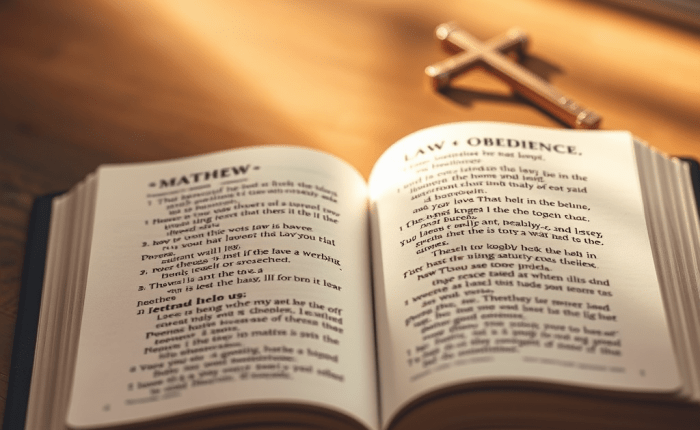
The Importance of Obeying God’s Instructions in Scripture

The Importance of Obeying God’s Instructions in Scripture

A few years back I was watching a YouTube video. The video was made by an admitted atheist. In it he was praising the efforts of someone who admitted to trying to proselytize him. However, there was a remark in it that I found interesting, recently, as I was reminded of this video. He was given a small pocket sized Bible of the New Testament, along with Psalms and Proverbs. He said, “Psalms is in the New Testament right?” I don’t blame him for not knowing, that isn’t what I am getting at. What I am getting at is many believe this idea. Many think the Old Testament is irrelevant. They believe this except when they can find generic support for their life.

It isn’t just the idea of finding passages to draw strength from. It is the fact that they deny the relevance of other passages they don’t. The translators haven’t helped humanity either. For example in Proverbs 28:9 it says: “If one turns away his ear from hearing the law, even his prayer is an abomination.” There are two critical errors in word translation choice that has aided and abetted this idea. First hearing, this is the word שָׁמַע shâmaʻ. This Hebrew word means, intelligent hearing, listening and obeying. This wisdom is telling the reader, don’t turn away from listening to and obeying. What are we the readers not to turn from? The translators would have you think law. Many read this as a bad thing now. “The law is done away with,” they will say. “It has been nailed to the cross,” they will say. Both statements made in illiterate ignorance.

You see the word law is תּוֹרָה tôrâh. The Torah is God’s instruction to His people. So Proverbs 28:9 says: “If one turns his ear from listening to and obeying the Torah, even his prayer is an abomination.” I didn’t say it, Proverbs said it. And the presenters of pocket sized Bibles thought it was important enough to include with the ‘New Testament.’ Which isn’t New, but a retelling of the Old. A call to obedience and a pathway of forgiveness through Yahoshua, (Jesus).

John describes sin in 1 John 3:4. He writes, “Everyone who makes a practice of sinning also practices lawlessness; sin is lawlessness.” Here again translators make an error. But, even if it wasn’t an error, and if law was a good translation, what John is saying should draw one’s attention. He who practices or abides by a different instruction is living in sin. Sin is being outside of God’s instruction, His Way.

Yahoshua says, “Go therefore, and make disciples of all nations. Baptizing them in the name of the Father and of the Son and of the Holy Spirit. Teaching them to observe all that I have commanded you.” Matthew 28:19-20 – What are some things He commanded? Well, how about Matthew 5:17-19? “Do not think that I came to abolish the Law (Torah) or the Prophets. I did not come to abolish but to fulfill (To bring a deeper understanding). For truly I say to you, until heaven and earth pass away, not the smallest letter or stroke shall pass from the Law until all is accomplished. Whoever then annuls one of the least of these commandments, and teaches others to do the same, shall be called least in the kingdom of heaven. But whoever keeps and teaches them, he shall be called great in the kingdom of heaven.”

Many will say that we are incapable of following the whole of the law or Torah. And they would be correct. You see I am not a woman, so I cannot, nor should I, follow the instructions for women. I am also not a Levit so am not part of the Levitical priesthood. That also takes out those instructions. I am not a slave owner, or a king, reducing the instruction further. There is no standing Temple so I am not bound by those instructions either. What am I capable of then? Well, I can eat those things God calls food. I can make the distinction between clean and unclean, holy and unholy. I can honor the Sabbath Day and keep it holy.

In other words, I can certainly keep the 10 Commandments, and the dietary instructions. I can keep His Feast Days and Sabbaths. I then can study the Word daily and learn and grow in my understanding, adjusting my life accordingly. This is the Way of the Rabbi. This is how Paul taught. His instructions do not contradict that which came before because if they did . . . By definition, he would be a false prophet or teacher and we shouldn’t listen to him. However, I don’t believe he was, I simply believe what Peter says about his writings. “And count the patience of our Master as salvation. Just as our beloved brother Paul also wrote to you according to the wisdom given him. As he does in all his letters when he speaks in them of these matters. There are some things in them that are hard to understand. Which the ignorant and unstable twist to their own destruction, as they do the other Scriptures. You therefore, beloved, knowing this beforehand, take care that you are not carried away. Especially, with the error of lawless (Torahless) people and lose your own stability. But grow in the grace and knowledge of our Master and Savior Yahoshua Messiah. To Him be the glory both now and to the day of eternity. Amen.” (2 Peter 3:15-17)

Let me leave you with this statement from Yahoshua (Jesus) to ponder from Matthew 7:21-23. “Not everyone who says to me, ‘Adonai, Adonai,’ will enter the kingdom of heaven. But the one who does the will of my Father who is in heaven. On that day many will say to me, ‘Adonai, Adonai, did we not prophesy in your name, and cast out demons in your name, and do many mighty works in your name?’ And then will I declare to them, ‘I never knew you; depart from me, you workers of lawlessness (Torahlessness).’”

This is the Way of instruction,
You are loved,
cj