The Maccabees and T-Shirt Slogans

The Maccabees and T-Shirt Slogans

When i was a teen growing up in the foothills of Southern California, life was much different than today. The most advanced gaming system was a Nintendo. VCR’s were in competition with Beta Players, and cassette tapes were the method of choice for recording music. We listened to the radio all day hoping they would play our song at least once. Where i lived, life seemed slower, and communal. It wasn’t perfect but it felt like home.

The place i lived was a campground and it had T-Shirts that said, “Follow me to Follows Camp.” We wore them proudly every Friday night. To the skating rink, football games, or wherever a Friday night adventure would take us. We were as a pack of coyotes, loyal to each other, protective even. If one of us was in danger, or needed help, we were there. i remember one time some vandals mistreated a part of the campground. We called it the Little “Chapel of the Canyon.” We came together and we repaired it, good as new. “Follow me” was more than a catchy phrase for the campground it was a rallying cry of the community.

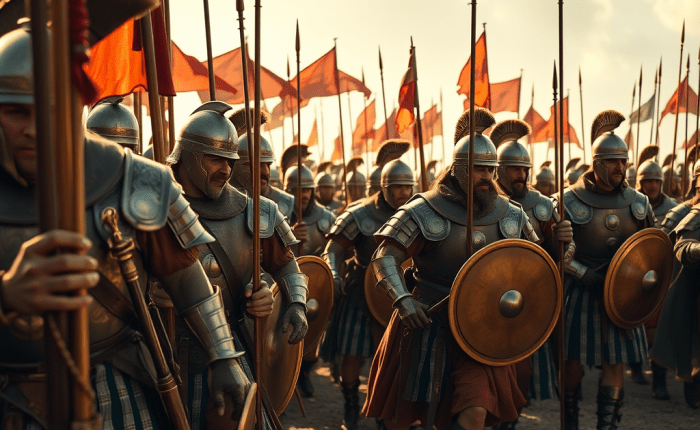
It was 167 B.C. The Maccabees, lead by the Priest Mattathias, and his sons, the main one being Judas, led a revolt. For what reason? Against the decree by King Antiochus IV Epiphanes that band covenant worship of Yahweh. King Antiochus IV, forced Hellenization on all the inhabitants of Jerusalem. Along with the surrounding area, now under the control of the Seleucid Empire. He desecrated the Temple in Jerusalem by sacrificing a pig on the altar. He outlawed, Sabbath observance, eating clean foods, daily sacrifices, essentially anything to do with Torah. Instead, he implemented Greek idol worship and killed any who resisted.

The Maccabees, lead by Judas, an expert in gorilla warfare, put on their “Follow Me,” t-shirts. They led a seven year military campaign for freedom. This is the origin of Hanukkah. Once they took out the Seleucid Empire, they tore down the idols, the pagan altar’s, and restored the Temple. Hanukkah is known as the Feast of Dedication, they rededicated the Temple of Yahweh and restored covenant worship.

In life we need community. We need a pack. We need a cause. In Ephesians we read Elohim’s heart, through Paul’s hand, on the matter. “Therefore remember that formerly you who are Gentiles in the flesh and called uncircumcised by the so-called circumcision. That done in the body by human hands. — Remember that at that time you were separate from Messiah. Alienated from the commonwealth of Israel, and strangers to the covenants of the promise. You were without hope and without Elohim in the world. But now in Messiah Yahoshua you who once were far away have been brought near through the blood of Messiah.” (Ephesians 2:11-13)

Before we come into Messiah we are alienated from the commonwealth and the covenants. But once we enter through Messiah we join ourselves to the people of promise becoming one. As the letter to the Ephesians continues Paul writes about this truth. “There is one body and one Spirit. Just as you were called to one hope when you were called. One Lord, one faith, one baptism; one God and Father of all. Who is over all and through all and in all.” When we enter into fellowship with Messiah, we put on His clothes, His Follow Me t-shirts. As Paul also writes, “Imitate me as I imitate Messiah.”

What does it look like to be part of the covenants of promise? We need to read the Torah to find out. The entire volume of Messianic writings point to the Torah. Just as the Torah points to the Messiah. If you want the full communal experience, you must put on the fullness of truth, His Word is Truth! Unfortunately, not many religious leaders today believe this. Although, they say they believe in Jesus. They follow a misunderstood and twisted understanding of Paul’s writings. They don’t see themselves entering into the covenants of promise. Only that they will receive the promises based on the new covenant. Which if studied clearly say, that the new is simply the old written on the heart. It becomes a desire not a compulsion.

Instead of Hellenization like the Maccabees, it is assimilation. Rather, than standing out, they blend in. Instead of denouncing pagan traditions they sprinkle them into the churches. Instead of calling folks back to the covenants of promise, they tantalize people with empty promises. Why empty? Because the promises come in covenant. They come in obedience.

When the angel came to Mary to tell her she had been chosen her response teaches us a great truth. Belief is displayed in obedience. Luke records this encounter in which Gabriel, an angel of Yahweh, tells her she will give birth to the Messiah. Mary at first is frightened and confused but in the end she says, “I am the Lord’s servant,” Mary answered. “May it happen to me according to your word.” Yahoshua, Jesus, is birthed from the covenant of promise, and calls us back to it. “Yahoshua went on to say, ‘You neatly set aside the command of God to maintain your own tradition.'”

What traditions are in focus for you? Are you even seeking the Way? Yahoshua says to us, “Come and See,” He says to us, “Follow Me.” Who are you following? As for me, i will follow Yahoshua, the Way, the Truth, the Life, as He declared. The Word made flesh. Did you know that the Torah is known as The Way, Path, and Instruction? Did you know that the Torah, Elohim’s Word is called the Truth? Did you know that Life comes through every Word of Elohim? This is the Way of the Rabbi.

You are loved,
cj

From Israel to the Ekklesia: Embracing Our Holy Identity

History is full. i often look back on my life. i wonder what it would have been like if i had taken a different path. It was my Jr. Year of High School and i wanted to be a history teacher. i have always liked history. i can watch biographies and historical accounts without getting board. I enjoy reading history too. recently I have been studying Antiochus IV, often referred to as Antiochus Epiphanies. Antiochus was the King of Syria and captured Jerusalem in 167 B.C. He set a monument to Zeus in the Temple and slaughtered a pig on it. He persecuted the Jews living in his Kingdom mercilessly. He banned any Torah observance in stead making laws that required the breaking of Torah. In other words, as the Torah taught to honor the Sabbath, Antiochus required everyone to work on the Sabbath. The Torah taught to not eat unclean animals, Antiochus required the eating of pig and other unclean animals. The Torah taught to honor the Feast Days, Antiochus outlawed them. Antiochus banned Torah study, circumcision, and Jewish life essentially. Forcing Hellenization, the assimilation of Greek culture within Judaism.

These events lead to the Maccabean revolt which allowed for the re-dedication of the Temple in Jerusalem. It also led to a period of Jewish self-rule. It is the foundation for modern day Hanukkah, known during the time of Yahoshua as the Feast of Dedication. Something mentioned in Scripture recorded by the Apostle John (10:22-23). “Then came the Festival of Dedication at Jerusalem. It was winter, and Yahoshua was in the temple courts walking in Solomon’s Colonnade.

The purpose of the Torah, is that it serves as the contract of the covenant made with Israel. (Exodus 19:5-6) “Now if you obey Me fully. Keeping My covenant, then out of all nations you will be my treasured possession. Although the whole earth is Mine, you will be for Me a kingdom of priests and a holy nation.” The purpose of Israel was to be a nation of Priests to the nations. A light in the world. A set-apart people of Elohim to point the nations to Elohim.

In what we call the New Testament, gentiles are grafted into Israel and as a whole we are called priests. The Apostle Peter writes, “But you are a chosen people, a royal priesthood, a holy nation, Elohim’s special possession. That you may declare the praises of Him who called you out of darkness into His wonderful light. Once you were not a people, but now you are the people of Elohim. Once you had not received mercy, but now you have received mercy.” The idea that believers in Yahoshua are now a royal priesthood, a holy nation, should call us to action. Yahoshua said, “If you love Me, keep My commandments.” What commandments? Yahoshua, is the Word, that is the Torah, made flesh. He is the fullness of the commandments. We are to be like Him. This is the Way of the Rabbi.

Early followers of Yahoshua weren’t called Christians, but Followers of the Way. Although, there is reference to the Ekklesia being called Christians in the book of Acts, it was a derogatory term. A word however used often by the Ekklesia to refer to Followers of the Way is saint. Unfortunately the term has been hijacked and turned into an honor only achievable by the most pious of people. The word derives from the Hebrew word Qodeshim. This is from Qadosh and Qadash. Remember from a couple weeks ago: Qadash means clean, consecrated, dedicated, pure, and sanctified. It also means set apart. For I am (Qadosh) Elohim, Holy-One, Sanctuary. So what does Qodeshim mean? It means ‘The Set-Apart Ones’. This isn’t a pious term this is a sign, a mark, a title.

We are the Qodeshim of Elohim, The Set-Apart Ones. We are called to be set-apart. We are a chosen people, a holy (Qadash) nation. A royal priesthood, Elohim’s special possession. If this is true, why would we want to assimilate into the culture around us. To mimic Greek culture in our worship practices? We are called to workout our own salvation with fear and trembling, take the narrow way. We are to be Qodeshim, set-apart from mans tradition, the Apostle Matthew records in his Gospel. “They worship Me in vain; their teachings are merely human rules, man made traditions.” Why do we want to follow the ways of Antiochus? To follow his decrees and his laws for the Jews of his time. Why do we want to follow the ways of Constantine, who wrote letters following the Nicene council. In which he attempted to separate from Torah. Something the early Ekklesia never did. Peter writes of Paul, “He writes the same way in all his letters, speaking in them of these matters. His letters contain some things that are hard to understand. Which ignorant and unstable people distort, as they do the other Scriptures, to their own destruction.

Paul himself writes, “What shall we say, then? Is the Torah sinful? Certainly not! Nevertheless, I would not have known what sin was had it not been for the Torah.” He goes on to say, “So then, the Torah is holy, and the commandment is holy, righteous and good.” It is in fact the Torah that marks us as being Set Apart, Qodeshim. We are the Ekklesia, the gathering of the saints. The Qadash people of a Qadosh Elohim. We are to be a light to the world around us. “Come out of her My people!” That is to come out of the ways of the world and the mystery religions of the pagan nations. To be holy. To be Set-Apart. To be royal priests. To be a chosen people. To no longer live by the ways of the nations around us but by the way of the Kingdom. “Your will be done on earth as it is in Heaven.” Be Qodeshim, be apart of “The Set-Apart Ones,” of Elohim.

This is the Way of the Rabbi,

You are loved,
cj