Exploring Feast Days vs Holidays: A Scriptural Perspective

Exploring Feast Days vs Holidays: A Scriptural Perspective

i have thought about this series for some time. How do i share my understanding in a way that leads you, the reader, into curiosity? To inspire a deeper look into Scripture. To light a fire within you to be like the people of Berea. Who received with joy, the words being taught to them. But then went and searched the Scriptures to see whether or not it was true. There are plenty of posts you can go over in which i will have touched on these ideas presented here. Although, not so succinctly as i will try in this series of posts. i will present the options and then give my ‘why’s’ trying to be fair to both sides in the end. These are the topics i will present over the next few days. Yahoshua or Jesus (see post); Rabbi or Teacher (see post); Adonai Elohim or Lord God (see post); Feast Days or Holidays (Current Post); Sabbath or Sunday. In the end it will be my goal to have persuaded you to begin to evaluate your ‘why’s’. To ask the question of yourself, “Am I using mans justification or Elohim’s Word, to determine my beliefs?” Let’s continue.

Feast Days or Holidays
This will be a day for you to remember and celebrate as a festival to Adonai! From generation to generation you are to celebrate it by a perpetual regulation.” Exodus 12:14

If a foreigner staying with you wants to observe Adonai’s Pesach, all his males must be circumcised. Then he may take part and observe it; he will be like a citizen of the land. But no uncircumcised person is to eat it. The same teaching is to apply equally to the citizen and to the foreigner living among you.” Exodus 12:48-49

You are to keep the festival of Sukkot for seven days after you have gathered the produce of your threshing-floor and wine press. Rejoice at your festival — you, your sons and daughters, your male and female slaves, the Levite, and the foreigners, orphans and widows living among you. Seven days you are to keep the festival for Adonai your Elohim in the place Adonai your Elohim will choose, because Adonai your Elohim will bless you in all your crops and in all your work, so you are to be full of joy!” Deuteronomy 16:13-15

For Paul had determined to sail by Ephesus , because he would not spend the time in Asia. For he hasted, if it were possible for him, to be at Jerusalem for the Feast of Weeks, (Pentecost).” Acts 20:16

Be careful, after they have been destroyed ahead of you, not to be trapped into following them; so that you inquire after their gods and ask, ‘How did these nations serve their gods? I want to do the same.’ You must not do this to Adonai your Elohim! For they have done to their gods all the abominations that Adonai hates! They even burn up their sons and daughters in the fire for their gods!” Deuteronomy 12:30-31

 But if some of the branches were broken off, and you — a wild olive — were grafted in among them and have become equal sharers in the rich root of the olive tree, then don’t boast as if you were better than the branches! However, if you do boast, remember that you are not supporting the root, the root is supporting you.” Romans 11:11-31

Let me encourage you to go and read the passages above in fullness. Read the chapter, understand its richness. In the highlighted verses above look at who is being addressed. When you see the word foreigner, it is equivalent to the word gentile. We are joining ourselves to Israel and therefore invited to participate in the Feasts of Yahweh. However, we don’t get special license to celebrate our own way. We are called to observe the Feast as Israel did. Israel was warned not to assimilate into the cultures around them but to be separate from them. To show their separateness they followed Elohim’s ordinances.

Forget for a moment any argument that calls Easter or Christmas pagan holidays. Forget for a moment any debate about their origins. Rather, ask yourself, who celebrates Christmas and Easter? Is it only the Church that observes these holidays? When you are at the tree lot buying your annual Christmas tree, can you tell if you are buying it because that’s what you do at Christmas? Can you see the difference? Is it possible for you to discern from the one celebrating the winter solstice, from yourself? i assure you would be surprised. More over does the Church incorporate worldly influences into its celebrations? Things not rooted in Scripture? What does Elohim think of the ways in which the world honors their gods? How does He desire to be honored? Are we to tell Yahweh what He will accept of us, in how we choose, to honor Him? Are we creating the rules of separation? In reality, do these rules separate us from the world around us or from Elohim who we claim to honor? Does placing the nativity scene next to Santa make Christmas holy? Or does a cross by a bunny at Easter make it less separate from Passover?

What about Halloween? We are told to avoid any forms of evil. Halloween is pretty evil. Yet many will justify their celebrations and say they are redeemable. “You don’t know my heart!” They will say this while dressed as a demigod? Yet Yahweh calls anything of the nations abominations. Is Elohim wrong? Did He change His mind? Is the Bible wrong when it declares that Elohim is the same yesterday, today, and forever? Are we greater than our maker capable of saying what it is that honors Him? Especially, when He has already laid out seven feasts.

Yahweh has ordained seven amazing Feasts to honor and celebrate. They are commemorative. Established with a purpose to draw attention to the faithfulness and goodness of Elohim. To remind us that if we keep His commands and statutes we will live blessed and in safety. First, Passover, it is the beginning of the new year. We celebrate the freedom in Elohim as He leads us out of the bondage of sin and death. Through Yahoshua the Covenant reestablished. Second, the Feast of Unleavened Bread. A reminder that we are to remove sin from our lives. What is sin? John explains that sin is “transgression of the Torah, sin is Torahlessness.” Third, First Fruits, the resurrection of our Adonai Yahoshua from the dead but also the provision of Yahweh. Fourth, Pentecost, the celebration of the receiving of the Ten Commandments at Mt Sinai. Even more now the receiving of the Holy Spirit and the Covenant being written on our hearts and minds.

Fifth, Feast of Trumpets, a day to call ourselves in preparation for the Holiest Day of the Year. To prepare for the Sixth Feast. Sixth, the Day of Atonement. The annual remembrance of how our sin separates us from Elohim. Yet, in His Love and Mercy, through Yahoshua, has Atoned for our sin. Calling us back into relationship or renewing our wedding vows of the covenant. The Seventh and Final one is the Feast of Tabernacles. The Feast we look forward to the Kings return and the millennial reign of King Yahoshua! Each of these amazing Feasts will be celebrated in the millennium. In fact, it says if the men don’t go to Israel at the appointed time. Then, rain will not fall on their land. It is still a big deal. With the exception of the Day of Atonement, these are celebrations, block parties, Feasts of Joy and Proclamation!

Yahoshua, and the Apostles after His ascension to the Father all celebrated these feasts. In fact, Josephus and Augustine both record that the early church celebrated these feasts. It was at the council of Nicaea that it was decided to move away from Passover and to celebrate Easter. In Constantine’s letter sent throughout the territory, he decried the Jewish people. He also called for the separation of the church from Judaism. Which goes directly against Romans 11:11-31. The Way of the Rabbi, the Word (Torah) made flesh, is to walk as Yahoshua walked. He is the Way, the Truth, and the Life.

This is the Way of the Rabbi,
You are loved,
cj
Exploring God’s Titles: Adonai and Elohim

Exploring God’s Titles: Adonai and Elohim

i have thought about this series for some time. How do i share my understanding in a way that leads you, the reader, into curiosity? To inspire a deeper look into Scripture. To light a fire within you to be like the people of Berea. Who received with joy, the words being taught to them. But then went and searched the Scriptures to see whether or not it was true. There are plenty of posts you can go over in which i will have touched on these ideas presented here. Although, not so succinctly as i will try in this series of posts. i will present the options and then give my ‘why’s’ trying to be fair to both sides in the end. These are the topics i will present over the next few days. Yahoshua or Jesus (see post); Rabbi or Teacher (see post); Adonai Elohim or Lord God (current post); Feast Days or Holidays; Sabbath or Sunday. In the end it will be my goal to have persuaded you to begin to evaluate your ‘why’s’. To ask the question of yourself, “Am I using mans justification or Elohim’s Word, to determine my beliefs?” Let’s continue.

Adonai Elohim or Lord God:
Many will say this is simply semantics and word play. However, I will say this, words are important and they carry meaning. It is why there is a saying, “Choose your words wisely.” As we look at definitions, things can get a bit muddled. When words are used to describe other words, it can become confusing. Add in historical context and you have opened up a giant can or worms. Adonai and Lord have overlapping meaning, ‘Master,’ being the primary meaning. Elohim and God essentially mean the exact same thing, Deity, Higher Power, Supreme Being. Elohim, however, does have a slight difference as it is plural by nature. Some will say this is representative of the Trinity, or Father, Son, Holy Spirit. It can also mean Divine Counsel. This is hinted to in the book of Enoch, which is not widely accepted. Whereas, God, is singular in nature. El is the singular vernacular for Elohim. For example, El Shaddai is translated into English ‘God Almighty.’

Lord is translated from Greek however its root is Babylonian, Ba’al, .Ba’al, is also the designation given in Scripture to refer to false gods, and deities, most notably Dagan or Dagon. Dagan was known as the fish god and his priests wore fish type hats. There is a large church based in Rome whose priests also wear hats resembling fish. When titles are used to refer to יהוה‎ YHWH and are not rooted in Hebrew, it becomes easy to generalize. This can minimize His importance. It also lends to syncretism or the blurring of lines. When actors or singers receive an award, they often thank god for their achievement. This could be for a part in a movie or a song that is full of every sort of filth. Which god do you think they are thanking? However, when someone says Adonai Elohim, or El Shaddai, you know that they are referring to the God of Bible.

Words are powerful and they have meaning. Whoever said, “sticks and stones may break my bones but words will never hurt me,” was lying. Words can hurt and that is why Scripture tells us to watch our words. Don’t talk idly or foolishly. We are told to let our yes be yes and our no be no. But perhaps most importantly, the Word says, “All who call upon the Name of Adonai YHWH shall be saved.” This passage in Romans isn’t just saying to know His name but take on His name. It seems to me that satan has a clear motive. He wants to mask or hide the true name and nature of Adonai Elohim YHWH. This makes it all the more important to know and use, to the best of our ability, the Hebrew expressions.

This is the Way of the Rabbi,
You are loved,
cj

Understanding the Role of Rabbi vs Teacher

Understanding the Role of Rabbi vs Teacher

i have thought about this series for some time. How do i share my understanding in a way that leads you, the reader, into curiosity? To inspire a deeper look into Scripture. To light a fire within you to be like the people of Berea. Who received with joy, the words being taught to them. But then went and searched the Scriptures to see whether or not it was true. There are plenty of posts you can go over in which i will have touched on these ideas presented here. Although, not so succinctly as i will try in this series of posts. i will present the options and then give my ‘why’s’ trying to be fair to both sides in the end. These are the topics i will present over the next few days. Yahoshua or Jesus (see last post); Rabbi or Teacher (Current Post); Adonai Elohim or Lord God; Feast Days or Holidays; Sabbath or Sunday. In the end it will be my goal to have persuaded you to begin to evaluate your ‘why’s’. To ask the question of yourself, “Am I using mans justification or Elohim’s Word, to determine my beliefs?” Let’s continue.

Rabbi or Teacher:
This comparison isn’t all that consequential. The point that i want to make with it is the mind set it produces. Let me start with simple definitions from dictionary.com. First, “teacher: a person who teaches or instructs, especially as a profession; instructor.” Second, “rabbi: the chief religious official of a synagogue, trained usually in a theological seminary and duly ordained, who delivers the sermon at a religious service and performs ritualistic, pastoral, educational, and other functions in and related to the role of a spiritual leader of Judaism and the Jewish community.” In most schools, elementary to university, a teacher teaches the student to know information. It is the teachers goal to instruct their student in a way that they become knowledgeable in whatever subject. A Rabbi on the other hand was to make mini versions of themselves. They would instruct their disciples in a manor that reproduced a mirror copy. In other words the disciples goal was to become just like his rabbi.

In Matthew 23:8 Yahoshua says, “But you are not to let yourselves be called ‘Rabbi’. Because you have one Rabbi, and you are all each other’s brothers.” Given the definitions above you can see why this was important to emphasize. If the goal of a Rabbi was to reproduce himself it stands to reason that Yahoshua would warn against it. The goal now is to become like The Rabbi, Yahoshua. For He alone is who we are to be like. Let’s take a look at Philippians 3.

Paul, who was a Pharisee and well learned scholar of Torah said this about his knowledge. As well most likely a mirror copy of his rabbi. “Yes, I gave it all up in order to know Him [Yahoshua Messiah]. That is, to know the power of His resurrection. And the fellowship of His sufferings as I am being conformed to his death. So that somehow I might arrive at being resurrected from the dead.” He was no longer concerned about imitating a man like himself. He wanted to imitate The Rabbi, Messiah Yahoshua. Paul continues his discourse to the Philippians in this way. “It is not that I have already obtained it or already reached the goal — no. I keep pursuing it. In the hope of taking hold of that for which the Messiah Yeshua took hold of me. Brothers, I, for my part, do not think of myself as having yet gotten hold of it. But one thing I do: forgetting what is behind me and straining forward toward what lies ahead, I keep pursuing the goal in order to win the prize offered by Elohim’s upward calling in the Messiah Yahoshua. Therefore, as many of us as are mature, let us keep paying attention to this; and if you are differently minded about anything, Elohim will also reveal this to you. Only let our conduct fit the level we have already reached.”

When Paul later writes about imitating him, he emphasizes the point by saying, “For I imitate Messiah.” The idea is that we become like our Rabbi Yahoshua. To do what He did, say what He said, walk as He walked. Yahoshua said, “These things that you have seen Me do, even greater things will you do when I go to the Father.” Why would they do those things? Because, they were to be like Him, mirror images of Messiah. It is where the term ‘Christian’ comes from. It was a derogatory term that was warn as a badge of honor. To be called a ‘Christian’ meant that you were a mirror image of Messiah. Being called a ‘Christian’ today does not carry the same meaning.

The goal i have now is to be a disciple of Rabbi Yahoshua. To learn from Him and to be like Him in word and deed. There is an expression. It is “to walk in the dust of the rabbi.” It can also be a blessing: “May you be covered in the dust of your rabbi.” It means to walk so closely to Him that you begin to mimic even His mannerisms. For a long time i looked at Jesus as my teacher. He was instructing me and that was sufficient. But as i walked that road i found it easy, wide, and unchallenging. Oh sure i messed up but grace made everything inconsequential. Now with the fuller understanding of the idea of Yahoshua as Rabbi being a ‘Christian’ has a whole new meaning. Sure i don’t always get it right and i am far from perfect. Yet, i strive to be more and more like my Rabbi, Messiah Yahoshua, every moment of every day.

i don’t want to be merely taught by Yahoshua, i want to be like Him. i want to be covered in the dust of my Rabbi. On the flip side, i hope these posts teach you. i hope they stir a longing within you to desire the Way of The Rabbi. May you be covered in the dust of your Rabbi Yahoshua.

This is the Way of the Rabbi,
You are loved,
cj

Preparedness in Faith: Lessons from the Ten Virgins

Preparedness in Faith: Lessons from the Ten Virgins

Throughout Scripture the term “to be sleeping” has meant not necessarily to be asleep. It has meant to be ignorant of a thing or unaware. It has also meant, ‘to be dead’. i recently had a word stand out to me while reading Matthew 25:1-13. This is the parable of the 10 Virgins. i read it, prayed, and read it again, over and over. i just felt that there was something there. This is where it hit me, “They all became drowsy and slept.” They became tired, or bothered, bored perhaps. Then they gave in to neglect, and slept. All of them were asleep until they heard the cry, “Here comes the bridegroom!” It is at this time that we find out that half of the virgins were unprepared. They did not bring enough oil for their lamps. Now oil is symbolic of preparation, anointing, provision, knowledge, understanding and even wealth in some circumstances.

So what can we take from this? First, let us look at the passage in its entirety.
The Kingdom of Heaven at that time will be like ten bridesmaids who took their lamps and went out to meet the groom. Five of them were foolish and five were sensible. The foolish ones took lamps with them but no oil, whereas the others took flasks of oil with their lamps. Now the bridegroom was late, so they all went to sleep. It was the middle of the night when the cry rang out, ‘The bridegroom is here! Go out to meet him!’ The girls all woke up and prepared their lamps for lighting. The foolish ones said to the sensible ones, ‘Give us some of your oil, because our lamps are going out.’ ‘No,’ they replied, ‘there may not be enough for both you and us. Go to the oil dealers and buy some for yourselves.’ But as they were going off to buy, the bridegroom came. Those who were ready went with him to the wedding feast, and the door was shut. Later, the other bridesmaids came. ‘Sir! Sir!’ they cried, ‘Let us in!’ But he answered, ‘Indeed! I tell you, I don’t know you!’ So stay alert, because you know neither the day nor the hour.”

Throughout Scripture Israel, the Hebrew Nation, has been referred to as the Bride. They entered into covenant relationship with Elohim. YHWH, divorces them for their unfaithfulness. Yet, He is constantly wooing them to come home. He even promises to them through Jeremiah restoration. The renewed covenant found in Jeremiah 31, is a beautiful picture of restoration. This restoration reiterates an invitation to the nations, that is, the gentiles. This we read in Paul’s writings, as well, Peter, James and John. Not to be left out we see it in Luke, Mark and Matthew as above. We can also read about this invitation in the Tanakh, it wasn’t a new idea brought by the Messiah. It was simply taught that now is that time, “The Kingdom of Heaven is at hand!” We the gentiles along with those of Israel who know Messiah, form the Ekklesia. We are apart of the New Covenant written of in Hebrews and presented by Messiah Himself. Which means as the ‘Church’ has stated often, we are the bride of Messiah. However, we must enter through the Messiah. So that the fullness of the covenant can now be written on our hearts and minds.

Do you have a hobby? Something you like to do and do regularly? Is there an activity that you do or a group that you like to participate in? Maybe you really enjoy where you work or it is simply spending time with family. In all of these instances, if you begin to tire or take a break from it, neglect can creep in. You can become bothered or even bored with what you are doing. Like marriage for instance. You love your spouse but there are times you want to be alone. In those moments, guard your hearts. Boredom can set in. You might even notice a bothered spirit about things you once didn’t recognize. Soon, neglect, and the once sacred covenant is broken or hanging by a thread. Once one falls asleep they don’t know until they wake up what a mess things have become. Some don’t realize it at all. When they wake up, they expect someone else to provide them with something to make it right. This is an unattainable expectation. It is the scenario five of the virgins found themselves. They wanted the prepared ones to provide for them rather than take responsibility for themselves.

In the parable of the 10 virgins we read that they became drowsy and slept. The term drowsy and slept has many meanings. One of which is neglectful and forgetful. In other words it could be that they began to neglect the covenant. They may have started to forget portions of the fullness of the covenant, thereby falling asleep. The 10 virgins are symbolic of believers in Yahoshua. They are waiting on Him to bring them to the wedding banquet. As time went on and it appeared that He was late the virgins got tired and fell asleep. All of them! Now there was a shout. They awoke as they now knew the time was coming that they would enter the banquet. Five of the virgins had enough oil in their lamps. Remember oil represents preparation, anointing, provision, knowledge, and understanding. Five awoke from their neglectful ways and were ready for the coming Bridegroom. Five awoke from their neglectfulness and were unprepared. They didn’t have the necessary knowledge or understanding and it was too late!

We all have the Word of Elohim. It is available to every single person in every single language now with AI and smartphones. No one will have an excuse for not being prepared. Unfortunately, wolves have crept into the Ekklesia and have brought a teaching of neglect to Elohim’s Word. They preach a different gospel and because most believers have become bored and lazy they do not know any better. They refuse to search out the scriptures to see if what they are being taught is true. Rather they cling to a few passages to justify their lazy neglectful ways. They sit under pastors who know more quotes from their spiritual heroes, than they know of Scripture itself. They know that Yahoshua is the Word made flesh. However, they fail to realize that the Word is the Torah. The Son of Yahweh is the very expression of Elohim, His Word made flesh. If we know Yahoshua, the Word, then we know Elohim. If we love Yahoshua, we will do as He commanded. We will not be neglectful of the covenant.

What lessons can we take away from the 10 Virgins? First, preparation, we must know that we know what we know. We must have the necessary understanding, study to show yourself approved. Listen and Obey, the Word of Elohim. Yahoshua said, “IF you love Me, you WILL OBEY MY COMMANDMENTS.” Yahoshua said, “Be watchful! Don’t let anyone deceive you.” Don’t get caught in the trap of New vs Old. It is one collection of writings, The WORD of Elohim. The Tanakh and the Apostles writes all point to the Torah. Do not get wrapped up in New vs Old Covenant. It is the same covenant but secured in a permanent way through the blood of Messiah Yahoshua. It is no longer simply written on stone, and it no longer requires the works of the Levitical Priesthood. It is in our hearts and minds. We have the seal of the Holy Spirit.

To dig a little deeper into the “Old Covenant” vs the “New Covenant”, you can read more about this topic. Check out this series of posts on Melchizedek titled Every Wind of Doctrine. i go into more detail on Melchizedek in these two posts: Levitical priesthood < Melchizedek (p2) and The Simplicity of Melchizedek’s Priesthood (P3).

This is the Way of the Rabbi,
You are loved,
cj

The Dangers of Success: Lessons from Jeroboam and Aaron

The Dangers of Success: Lessons from Jeroboam and Aaron

What do Moses, Aaron, Gideon, Samson, Solomon, Elijah, David, the Hebrew Nation, cj, and countless others have in common? When successful, at peace in rest and comfort, a relaxed spirit allowed Satan an opening. Success can lead to a sense of self-righteousness and pride. This happens if one is not careful to remember the One Who brought the success. We can say all day long that: “Every good and perfect gift is from above. Coming down from the Father of the heavenly lights. Who does not change like shifting shadows.” But if we allow our own feelings to interfere, and we say, “Look what I have done!” We crack the door open for the devouring lion. There is much to be proud of. We can say, “Look at what Elohim chose to do through me.”

Success has another ugly head, the one that defies Elohim to maintain its power. We can look at many stories in Scripture to find this to be true. Today, I want us to look at Jeroboam. He was the first King of Israel after the Kingdom was split in two. It was taken from Solomon’s son, Rehoboam. In fact modern Israel is only one of the tribes of Israel, Judah. Jeroboam, in a move to keep his new found Kingship made some terrible decisions. 1 Kings 12:25-33 Tells the story, we will look at parts of it here.

Nevertheless Jeroboam said to himself, “Now the kingship will return to the house of David. For if these people continue going up to offer sacrifices in the house of Adonai in Jerusalem, their hearts will turn back to their lord, Rehoboam king of Judah. Then they will kill me.”

Jeroboam found that his success was in jeopardy. He feared an awakening of the heart to Yahweh which would bring about a reunification of the Kingdom. If the people sought Adonai Elohim they would desire His ways over mans. So to establish his rule he made some changes.

After seeking advice, the king made two calves of gold. He then said to the people, “You have been going up to Jerusalem long enough! Here are your gods, Israel, who brought you out of the land of Egypt!’ He placed one in Beit-El [Bethel] and the other in Dan. The affair became a sin, for the people went to worship before the one [in Beit-El and] all the way to Dan [to worship the other]. He also set up temples on the high places and made priests from among all the people, even though they were not descended from Levi.”

Does this at all ring a bell? Look at what Aaron did at Mt. Sinai while Moses was on the mountain. “When the people saw that Moses was taking a long time to come down from the mountain, they gathered around Aaron and said to him, “Get busy; and make us gods to go ahead of us; because this Moses, the man that brought us up from the land of Egypt — we don’t know what has become of him.” Aaron said to them, “Have your wives, sons and daughters strip off their gold earrings; and bring them to me.” The people stripped off their gold earrings and brought them to Aaron. He received what they gave him, melted it down, and made it into the shape of a calf. They said, “Israel! Here is your god, who brought you up from the land of Egypt!” On seeing this, Aaron built an altar in front of it and proclaimed, “Tomorrow is to be a feast for Adonai.” We are a fickle people.

Coincidentally, Jeroboam, like Aaron instituted his own feast days. “Jeroboam instituted a festival. In the eighth month, on the fifteenth day of the month, similar to the festival held in Jerusalem. He went up to the altar in Beit-El to sacrifice to the calves he had made. He placed in Beit-El the priests he had appointed for the high places. He went up to the altar which he had set up in Beit-El on the fifteenth day of the eighth month, in the month which he had chosen on his own, and instituted a festival for the people of Israel; he went up to the altar to burn incense.”

Sadly mans tradition of creating his own feasts to celebrate and honor Elohim has continued. The church today ignores His appointed feast days. They essentially call Elohim a liar. “Yahweh said, ‘And this day shall be unto you for a memorial; and you shall keep [it] a feast to Yahweh throughout your generations; you shall keep it a feast by an ordinance forever.’” Apparently, forever means, just until I change My mind, except, He is the same yesterday, today and forever. Or they will argue that the Feasts are for Israel. Yet again they ignore two things. First, that the gentiles are grafted into Israel. Second, that the feasts were to be celebrated by those who would join themselves to Israel. Instead, the church has said, “We will celebrate Christmas and Easter. We will call Sunday holy. God will like it because we said so.”

You know who else has this mindset? Yahoshua talks about this in Matthew 15:9 “And in vain they worship Me, teaching as doctrines the precepts of men.” Isaiah wrote something similar, “Therefore the Lord said: “These people draw near to Me with their mouths and honor Me with their lips, but their hearts are far from Me. Their worship of Me is but rules taught by men.” Ezekiel writes, “Her priests do violence to My Torah and profane My holy things. They do not distinguish between the holy and the common. They teach that there is no difference between the unclean and the clean. And they shut their eyes to the keeping of My Sabbaths, so that I am profaned among them.”

What would happen if the church today began to seek Yahweh as His word describes. Isaiah says in 58:13-14 “If you turn back your foot from the Sabbath, from doing your pleasure on My holy day, and call the Sabbath a delight and the holy day of Yahweh honorable; if you honor it, not going your own ways, or seeking your own pleasure, or talking idly; then you shall take delight in Yahweh, and I will make you ride on the heights of the earth, I will feed you with the heritage of Jacob your father, for the mouth of Yahweh has spoken.” Imagine seeking after Elohim as He desires us to, it sounds pretty awesome to me. This is the way of the Rabbi.

Do you think Satan has a hand in the western church? In that he is influencing it to stray just enough off course that they dishonor Elohim. All the while thinking that they are worshiping Him. It’s been done before. Ecclesiastes tells us that there is nothing new under the sun. Paul thought he was doing the will of Yahweh when he was persecuting the followers of Yahoshua. Then he came face to face with Him. He realized then he was fighting the very Elohim he was trying to protect. The Sabbath is important to Elohim. Throughout the Torah and the Prophets He declares it. To the point that Elohim exiled the nation. So why would we think any different today.

Jeremiah writes in chapter 7, Look! You are relying on deceitful words that can’t do you any good. First you steal, murder, commit adultery, swear falsely, offer to Ba‘al and go after other gods that you haven’t known. 10 Then you come and stand before Me in this house that bears My name and say, ‘We are saved’ — so that you can go on doing these abominations! 11 Do you regard this house, which bears My name, as a cave for bandits? I can see for Myself what’s going on,” says Adonai.

The western church has been so successful that pride has crept in. No one wants to admit that they are wrong. They have fallen in love with their traditions that they ignore Elohim’s Feast Days. This is a dangerous practice. And we should be asking the questions. What did Yahoshua mean when He said, “If you love Me, OBEY My commandments”? What are we doing? Who are we honoring? What is truth?

This is the way of the Rabbi,
You are loved,
cj

Understanding ‘Holy’ Through Scripture: A Deep Dive

Understanding ‘Holy’ Through Scripture: A Deep Dive

2 Timothy 3:16-17
All Scripture is from the breath of Elohim. Making it a profitable instrument for instruction, for conviction, for correction, and for training in righteousness. So that the man of Elohim may be complete, fully equipped for every good work.”

Paul writes to a young pastor in Ephesus. He writes to encourage him. He writes to instruct him. He writes to warn him. The root of this letter for me is found in the passage above. Where Paul writes about the importance of Scripture as the foundation for ministry and life. We in the west are spoiled with the written Word. Most homes have a Bible whether it is read or collecting dust on their coffee table. Still many others have one in a box that they forgot is even there. In Timothy’s time the Word was not as available, not even close. For now we are spoiled. We are so accustomed to having the Word even at our fingertips. In fact, everywhere we go whether, on a computer or a smartphone, or the beautiful crinkle of a turning page. Absolutely, no one can use the excuse that they don’t have a Bible. Everyone has access to the Word.

Paul writes to Timothy and to you this instruction. “But as for you, continue in the things you have learned. In which you firmly believed, since you know from whom you have learned them. From infancy you have known the Holy Scriptures. Which are able to make you wise for salvation through faith in Messiah Yahoshua.” Paul writes this just before the passage above. The Scripture is paramount to instruction, conviction, correction and for training in righteousness. It is for our equipping to carryout the work of Elohim set before us.

Peter writes these words in his letter to the remnant of Jewish believers in Messiah. “As obedient children, do not be conformed to the passions of your former ignorance. But as He who called you is Holy, you also be Holy in all your conduct. Since it is written, ‘You shall be Holy, for I am Holy.‘” (1 Peter 1:16) Where does Paul and Peter get such wild ideas? Well from the Torah! Of course. “And Yahweh spoke to Moses. He said, ‘Speak to all the congregation of the people of Israel. Tell them, You shall be holy. For I Yahweh your Elohim am Holy. Every one of you shall revere his mother and his father. You shall keep the Sabbaths. I am Yahweh your Elohim. Do not turn to idols or make for yourselves any gods of cast metal. I am Yahweh your Elohim.‘” This from Leviticus 19:1-4 which isn’t even the more common reference to this quote. Rather Leviticus 11:44-45 is often sited. “For I am Yahweh your Elohim. Consecrate yourselves therefore, and be holy. For I am Holy. You shall not defile yourselves with any swarming thing that crawls on the ground. For I am Yahweh who brought you up out of the land of Egypt to be your Elohim. You shall therefore be holy for I am holy.”

Do you know what the word holy means? If you look it up in a dictionary you will get definitions like, sacred, revered, purity. These are not wrong definitions but they are not whole either. The word Holy in all of these instances comes from the words Qadash and Qadosh. Qadash and Qadosh are Hebrew and they have similar meanings. However, when used together they present a very powerful message. “Be Qadash, for I am Qadosh.” It means this, Be (Qadash) clean, consecrated, dedicated, pure, sanctified, set apart; for I am (Qadosh) Elohim, Holy-One, Sanctuary.

We set ourselves apart when we follow the Way of the Rabbi. Yahoshua, followed Torah, He was after all sinless. He observed the Sabbath. He ate clean. He honored His earthly parents. This intrigue’s me. Here we have our Messiah following the ways of the Father. Later, Paul writes, “imitate me as I also imitate Messiah.” Yet, so many find ways not to. Loophole after loophole because they have found comfort in their way. Yet very clearly we are taught to look to all of Scripture. We are told to live to a standard of Qadash because we serve Yahweh who is Qadosh! Is there grace? Of course there is. Is there forgiveness? Absolutely! Is there still a standard by which we are called to live? Without a doubt.

Hebrews 8 and Jeremiah 11 tell us of the coming renewed covenant. In which Elohim will write the law on our hearts and minds. So many will say that this is for Israel. They would be right. However, Romans 11 puts this in perspective when we read that we are grafted into Israel. This is not replacement theology it is adoption theology. We are adopted into the people of Elohim as Galatians 3 tells us. “You are all sons of Elohim through faith in Messiah Yahoshua. For all of you who were baptized into Messiah have clothed yourselves with Messiah. There is neither Jew nor Greek, slave nor free, male nor female, for you are all one in Messiah Yahoshua. And if you belong to Messiah, then you are Abraham’s seed and heirs according to the promise.”

What was Israel’s sin? Ezekiel writes, “Her priest have done violence to my Torah. They have profaned My holy things. They have made no distinction between the holy and the common. Neither have they taught the difference between the unclean and the clean. They have disregarded My Sabbaths so that I am profaned among them.” This is on Paul’s heart when he writes to the Romans. “I appeal to you therefore, brothers, by the mercies of Elohim. Present your bodies as a living sacrifice, holy (Qadash) and acceptable to Elohim. Which is your spiritual act of Worship. Do not be conformed to this WORLD, but be transformed by the renewal of your mind. That by testing you may discern what is the will of Elohim. What it is that is good and acceptable and perfect.” Later in the same 12th chapter he writes, “Let love be genuine. Abhor what is evil; hold fast to what is good.”

In Isaiah and Ezekiel we read about a time to come and what will be expected. Not just of Israel by blood but also by those grafted into Israel by adoption. Isaiah writes, “If you turn back your foot from the Sabbath. From doing your pleasure on My holy day. Calling the Sabbath a delight and the Holy day of Yahweh honorable. If you honor it, not going your own ways, or seeking your own pleasure talking idly. Then you shall take delight in Yahweh and I will make you ride on the heights of the earth. I will feed you with the heritage of Jacob your father, for the mouth of Yahweh has spoken.” (Isaiah 58:13-14) Ezekiel writes in the 44th chapter this (23-24). “They shall teach my people the difference between the holy and the common. Showing them how to distinguish between the unclean and the clean. In a dispute they shall act as Judges, and they shall judge it according to my judgments. They shall keep My Torah and My statutes and all My appointed feasts, and they shall keep My Sabbaths Holy.”

We are to take on the full counsel of Scripture. The Berean’s were of more noble character. They eagerly received the words of the Apostles. Then, they searched the Scriptures to verify the teachings. This is what we are called to do! What Scriptures are we to search? The same ones that Paul tells Timothy to study. It is the Torah, and the Tanakh. We call it today the Old Testament. It is what Yahoshua quoted from and taught from and lived from. “And the Word became flesh and dwelt among us.” What will you do with the words of Yahweh, “Be Holy (Qadash), for I am Holy (Qadosh)?” May you search the Scriptures for instruction, for conviction, for correction, and for training in righteousness. So that you, a child of Elohim, may be complete, fully equipped for every good work.

This is the Way of the Rabbi,
You are loved,
cj

The Call to Be Ambassadors for Messiah

Ambassador
* a diplomatic official of the highest rank, sent by one sovereign or state to another as its resident representative ambassador extraordinary and plenipotentiary.
* a diplomatic official of the highest rank sent by a government to represent it on a temporary mission, as for negotiating a treaty.
Plenipotentiary
* a person, especially a diplomatic agent, invested with full power or authority to transact business on behalf of another.

The above definitions are taken from Dictionary.com. They represent what the role of an Ambassador is while serving in a foreign land. They do not live in the land permanently. They still hold to the principles of the land that they represent. They can engage in particular aspects of the hosting nation. However, they must hold true to the convictions of the sending nation. Ambassador’s take their instruction from the King or the Governments that they represent. Although, they are individually themselves. They have distinct characteristics, mannerisms, and linguistic styling. Yet, they conduct themselves in a manner worthy of the office, presenting a unified message.

The Ambassador is there on a diplomatic mission, in some cases to restore relations or in others to negotiate treaties. They come with full authority and in place of the sending King or Government. This allows them to conduct business with confidence. The Ambassador also knows that their mission is temporary. That they are not a citizen of the host country but simply passing through. This reminder keeps them balanced and helps them to remember where their allegiance lies.

In 2 Corinthians 5:18-21 we read this:
All this is from Elohim. Who reconciled us to Himself through Messiah and gave us the ministry of reconciliation. That Elohim was reconciling the world to Himself in Messiah, not counting men’s trespasses against them. And He has committed to us the message of reconciliation. Therefore we are ambassadors for Messiah, as though Elohim were making His appeal through us. We implore you on behalf of Messiah: Be reconciled to Elohim. Elohim made Him who knew no sin to be sin on our behalf. So that in Him we might become the righteousness of Elohim.”

It is simply foolishness, naive even, to think that Elohim would make Yahoshua, who knew no sin, to be sin on our behalf, so that He could enable us to live a life of sin. No, He is the same yesterday, today and forever. John writes, “And by this we know that we have come to know Him, if we keep His commandments. Whoever says, ‘I know Him’ but does not keep His commandments is a liar! The truth is not in him. However, whoever keeps His Word, in him is the love of Elohim perfected. By this we may be sure that we are in Him. Moreover, whoever says he abides in Him ought to walk in the same way in which He walked.” Later John writes, “Everyone who makes a practice of sinning also practices Torahlessness, sin is Torahlessness. You know that He appeared to take away sins, and in Him there is no sin. No one who abides in Him keeps on sinning; no one who keeps on sinning has either seen Him or known Him.” (1 John 2:3-6 & 3:4-6)

How can we say that we represent the King, if we don’t do as He says?
How can we say that we represent the Kingdom, if we do not practice its laws?
How can we say that we have become the righteousness of Elohim, if we won’t even follow the instructions of righteousness?

As an ambassador of the Kingdom of Heaven, we live where we live as representatives of the King of Heaven. One day that Kingdom will be here on earth. When Yahoshua our Adonai and King returns in the clouds to rule in Jerusalem. Until then the Kingdom is within us and we as representatives of the King must live as such. We follow the laws of the land because we live in the land. We answer to a higher authority who has instructed as such. We speak truth in love in hopes of reconciling others through Messiah unto Elohim. This gospel message is one of repentance. A turning from the former way of living and following the instruction of the Rabbi.

How can we say that we represent the King? We claim the name of Messiah Yahoshua and His lifestyle. How did He live? “We live not by bread alone, but by every WORD of Elohim.” What word was Yahoshua referring to? His Instruction handed down by the Prophets, those written by Moses, those breathed by Elohim. Did Yahoshua eat meat considered unclean? No, not by definition of Torah. Did Yahoshua break the Sabbath Day or change it? No, not by definition of Torah. Did Yahoshua dismiss the Feast Days? No, not by definition of Torah. Did His death and resurrection somehow negate these things? No, not by definition of Torah, or the teachings of Paul and the other Apostles.

How can we say that we represent the Kingdom? “Your Kingdom come, Your Will be done on earth as it is in Heaven.” The Sabbath will be observed in the millennium and Heaven. The dietary law will be observed in the millennium and Heaven. The Feast Days will be observed in the millennium and Heaven. If we are asking for His Kingdom come, His will be done on earth as in Heaven . . . How can we say this and not do what we know we can do? To follow the Sabbath isn’t too hard or difficult. To follow dietary law isn’t too hard or difficult. To observe the Feast Days isn’t too hard or difficult. To honor Elohim is NOT TOO HARD or DIFFICULT. It is absurd to think that it is too difficult to keep the Sabbath but pretend to keep Sunday. It is absurd to think that it is too difficult to keep the Feast Days. Yet, people celebrate Christmas, Easter, Halloween, Valentine’s, Saint Patrick’s, Fourth of July, Veterans, Memorial, Super Bowl, etc., without hesitation.

How can we say that we have become the righteousness of Elohim? We can say this when we repent and follow Yahoshua. What does it mean to repent? To turn from sin. Literally that is what it means. Not just to be sorry that we are sinning but to do a one-eighty. We repent, we ask for forgiveness, we put on the new self. We enter into covenant relationship. The new covenant is the old covenant but written on our hearts. We can read this in Jeremiah and Hebrews. The difference is simply that now we have the Living Spirit of Elohim. The Ruach Hakodesh (רוח הקודש) empowers us to do so. By this we put on Messiah Yahoshua. His Name, His lifestyle, His Word, His Truth.

If you are a follower of Yahoshua you are an AMBASSADOR! LIVE AS ONE! You are a representative of the KING of kings and the MASTER of masters. He has called you to bare His Name. You are to show His lifestyle. Extend the message of reconciliation to all who will listen. Part of this includes living within the culture yet separate from it at the same time. We are to live set apart, while living among the inhabitants of the community we live. We don’t demand others change. We live in such a way that others see Messiah in us. This stirs a want for change. We live as examples of the Way.

This is the Way of the Rabbi,
You are loved,
cj

Every Wind of Doctrine ~ conclusion

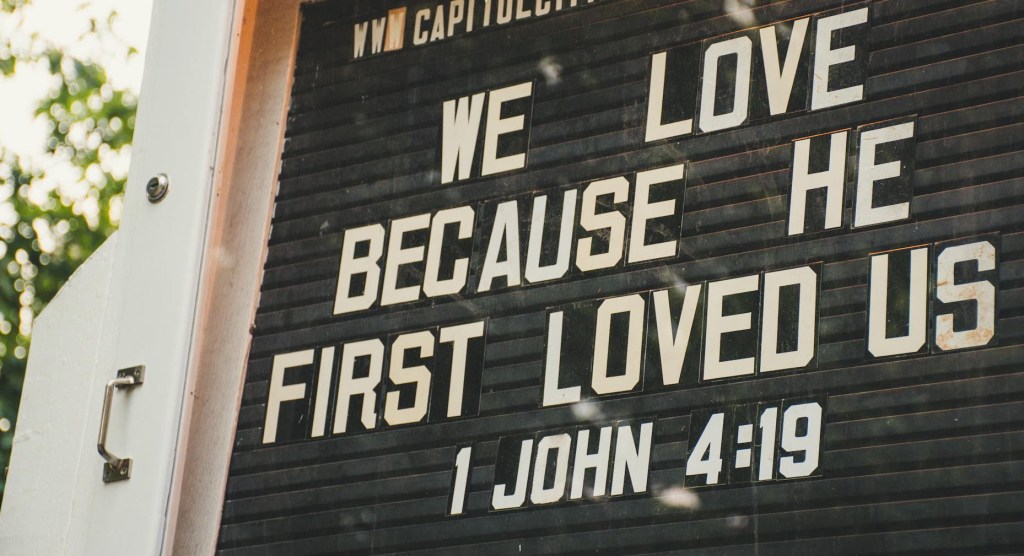
“We love because He first loved us.” 1 John 4:19

You know that He appeared in order to take away sins, and in Him there is no sin. No one who abides in Him keeps on sinning; no one who keeps on sinning has either seen Him or known him. Little children, let no one deceive you. Whoever practices righteousness is righteous, as He is righteous. Whoever makes a practice of sinning is of the devil, for the devil has been sinning from the beginning. The reason the Son of Elohim appeared was to destroy the works of the devil. No one born of Elohim makes a practice of sinning, for Elohim’s seed abides in Him, and he cannot keep on sinning because he has been born of Elohim. By this it is evident who are the children of the devil: whoever does not practice righteousness is not of Elohim, nor is the one who does not love his brother.” 1 John 3:5-10

In all my reading, in all my study, no one i know would disagree with the idea presented here by John. John who was the only one of the twelve to be at the foot of the cross. Yahoshua, as He hung on that stake looks down at him as he stands next to his earthly mother, Mary, and said, “‘Woman, behold, your son!’ Then He said to (John) His disciple, ‘Behold, your mother!’ And from that hour the disciple (John) took her to his own home.” This relationship between Yahoshua and John was a special bond it cannot be denied. Therefore, we should consider his words. Many will say that they do that it is Scripture but proceed to hold the letters of Paul above the letters of John. Mainly because it is easy to interpret Paul as excusing sin. Which Peter himself recognized, Peter another of the twelve writes in one of his letter, “And count the patience of our Adonai as salvation, just as our beloved brother Paul also wrote to you according to the wisdom given him, as he does in all his letters when he speaks in them of these matters. There are some things in them that are hard to understand, which the ignorant and unstable twist to their own destruction, as they do the other Scriptures. You therefore, beloved knowing this beforehand, take care that you are not carried away with the error of lawless people and lose your own stability. But grow in the grace and the knowledge of our Adonai and Savior Yahoshua Messiah.” 2 Peter 3:15-18

Paul himself writes to the Ephesians, “So that we may no longer be children, tossed to and fro by the waves and carried about by every wind of doctrine, by human cunning, by craftiness in deceitful schemes. Rather, speaking the truth in love, we are to grow up in every way into Him who is the head, into Messiah.” Ephesians 4:14-15 — So, therefore let us conclude the matter by defining two words, sin and truth. What is sin and what is truth? In order to not be blown about by every wind of doctrine we must understand what sin is and what truth is . . . Without these definitions the warnings given about following false doctrine become increasingly more dangerous. This is why we cannot expect any definition that is outside of Scripture itself.

To drive this point home lets look at what Paul writes to Timothy a young pastor. “But as for you, continue in what you have learned and have firmly believed, knowing from whom you learned it and how from childhood you have been acquainted with the sacred writings, which are able to make you wise for salvation through faith in Messiah Yahoshua. All Scripture is breathed out by Elohim and profitable for teaching, for reproof, for correction, and for training in righteousness, that the man of Elohim may be complete, equipped for every good work.” The things learned from childhood within the sacred writings is the Torah, the Tanakh, the books of the law and prophets. It is also these books that Paul tells Timothy, “All Scripture . . . Profitable for teaching, for reproof, for correction and for training in righteousness.” He wasn’t referring to his letter or any of his letters for that matter. Do i hold to the teachings in what is known today as the New Testament, Yes, but i hold them in light of the Tanakh, as they point to the same Messiah that is revealed in the sacred writings.

This brings us to the definition of truth as Paul says, “Speaking truth in love.” What is truth? In John 17 we read the Highly Priestly prayer of Yahoshua and He says, “Sanctify them in the truth; Your Word is TRUTH.” Who’s word? Elohim’s word is Truth, Yahoshua was praying that we be set apart by the WORD of TRUTH, the writings of the Torah, and the Prophets. And so then what of sin? Sin is as John writes, “Everyone who makes a practice of sinning also practices lawlessness; sin is lawlessness.” The word law is Torah so the word here is sin is Torahlessness. So if speaking truth is speaking the Torah and living without Torah is lawlessness than the doctrine we are to live by is found in the Torah.

Some will raise the idea that the Jerusalem council, the earliest council, gave the gentiles only a few things to observe. “Abstain from the things polluted by idols, and from sexual immorality, and from what has been strangled, and from blood.” They see this as a final seal of approval on the gentiles. We, however, need to consider the entirety of the meeting. What was going on in its totality. The debate was to put upon them a yoke that they nor their fathers were able to bear. Much of the discussion was on extra things added on by the Priests and Rabbi’s over time. As is summed up by James final statement, “For from ancient generations Moses has had in every city those who proclaim him, for he is read every Sabbath in the synagogues.” (For context you will find the full entry in Acts 15:1-33) — It was assumed, that these new gentile believers would be attending synagogue on the Sabbath. And in deed they did and formed the Sect of the Nazarene. These Nazarene’s were later persecuted, and kicked out of the synagogue because of their belief in Yahoshua as the Messiah. To which they formed house churches that still held to the Sabbath until the 2nd or 3rd century.

Because of this misunderstanding many wrongly say that the Torah is too hard to keep. Well, then Elohim is a liar, “For this commandment I give you today is not too hard for you, neither is it far off.” Deuteronomy 30:11 — And John is a false teacher, “By this we know that we love the children of Elohim, when we love Elohim and obey His commandments. For this is the love of Elohim, that we keep His commandments. And His commandments are not burdensome.” 1 John 5:2-3 —

So what then shall we do as believers in Yahoshua Messiah? “Abstain from the things polluted by idols, and from sexual immorality, and from what has been strangled, and from blood.” As well we should, “For from ancient generations Moses has had in every city those who proclaim him, for he is read every Sabbath in the synagogues.” Attend a church that proclaims the whole of Elohim’s word and holds true to its teachings. You should begin to honor the Sabbath day, to keep it holy. You should begin to look at the difference between man’s tradition and Elohim’s instruction. It is an exciting journey. However, be warned, it is also difficult and narrow but in the end completely worth it.

This is me speaking the truth in love, Love Elohim with your whole heart and do your best to obey His commandments. Grow in grace and knowledge by studying the whole of Elohim’s Word, tear out that dividing page in your Bible that says New Testament on it and read it as one collection of divinely inspired books that point to one Elohim and one Savior Yahoshua Messiah.

You are loved,
cj

The Simplicity of Melchizedek’s Priesthood (P3)

Every Wind of Doctrine . . . Part 3

He has told you, O man, what is good; and what does YHWH require of you but to do justly, and to love mercy, and to walk humbly with your Elohim.” Micah 6:8

The sacrifices of Elohim are a broken spirit; a broken and contrite heart, O Elohim, You will not despise.” Psalm 51:17 — i think it is important to define contrite — “feeling or showing sorrow and remorse for improper or objectionable behavior, actions, etc.” Merriam-Webster

Could it be that walking in line with Yahoshua’s Word, “If you love Me, you will keep my commandments.” (John 14:15) is walking in line with Micah 6:8 and Psalm 51:17? The idea that Paul was getting at in his letter to the Ephesians, “That we may not longer be children, tossed back and forth and carried about with every wind of doctrine, by the trickery of men, in craftiness, after the wiles of error; but speaking truth in love, we may grow up in all things into Him, who is the heard, Messiah.” Is this idea that we are to walk in Messiah, and as Messiah, in that we imitate Him in word, and in action, what fulfilling the law means? Well, of course it is.

You see Messiah Yahoshua, our High Priest in the Order of Melchizedek, walked in the fullness of the Torah, the Instruction of Elohim while at the same time fulfilling that which we were incapable. Not to remove it but in order to write it on our hearts and minds. No longer written only on tablets of stone or parchment, but on the very heart of the believer. On the hearts of those whom, with a contrite heart, do justly, love mercy and walk humbly with Elohim. Not seeking our own will but the will of the Father in Heaven. “Not My will but Yours be done.” “Your Kingdom come, Your will be done on earth as it is in Heaven.”

The counsels and the priesthood had developed their own way, their own will, their own priorities. Yahoshua, as part of His ministry was restoring the simplicity of a broken and contrite heart, that leads to — Act justly, love mercy, and walk humbly with Elohim.

“‘But this is the covenant which I will make with the house of Israel after those days,’ declares YHWH, ‘I will put My law (Torah/Instruction) within them and on their heart I will write it; and I will be their Elohim, and they shall be My people.’” Jeremiah 31:33

‘For this is the covenant that I will make with the house of Israel after those days,’ says YHWH: ‘I will put My law (Torah/Instruction) into their minds, and I will write them on their hearts. And I will be their Elohim, and they shall be My people.’” Hebrews 8:10

In a sermon given circa 1890 by Reverend Louis Albert Banks, he said; “We are each to be what Christ would be if He were in our place. As Dr. Greer of New York said to some young preachers not long since: ‘It is not enough that you preach Jesus Christ. You must be, each in His place and according to his ability, a Jesus Christ.’ And that is not applicable to preachers only, but to every one who has found in Jesus a divine Savior from his sins. Let us thank God we have so high and glorious an ideal. Let nobody say the ideal is too high. It is the very glory of our Christianity that it puts before us this sublime ideal and inspires poor human hearts, whose courage has been broken by sin, to struggle after it in brave and heroic effort.”

This is the contrite heart that seeks after our Messiah. We are to be like Him. We are to be the ones who pray, “Not my will but Yours be done.” We are to cry out, “Your Kingdom come, Your will be done on earth as it is in Heaven.” We are to be like Paul who said, “Imitate me as I imitate Messiah.” And as Abraham, who sought the High Priest and brought his offering to Melchizedek. So too, we should seek after the High Priest in the Order Melchizedek, to offer up our broken and contrite hearts and our lives as living sacrifices for His Kingdom.

You see there is no one good, no not one. We have all sinned and fallen short of the glory of Elohim. But in His (Elohim) infinite love for us made a way for us to become children of Elohim and brothers/sisters of Yahoshua, and joint-heirs with Messiah. We must believe in our hearts (broken and contrite), we must confess with our mouths that Yahoshua is Adonai, and if we truly love Him . . . We will obey His commandments. What does it look like to walk as Yahoshua?

i don’t know fully, but i am gonna dig into it and write again.

You are loved,
cj

Contend for the Faith (Torah)

All Scripture is breathed out by Elohim and profitable for teaching, for reproof, for correction, and for training in righteousness, that the man of Elohim may be complete, equipped for every good work.” 2 Timothy 3:16-17

If Paul was writing to Timothy that all Scripture is profitable for teaching, for reproof, for correction, and for training in righteousness . . . Surely he was also referring to Ezekiel and Ezekiel records this:

Her priests have done violence to My Torah and have profaned My holy things. They have made no distinction between the holy and the common, neither have they taught the difference between the unclean and the clean, and they have disregarded My sabbaths, so that I am profaned among them.” Ezekiel 22:26

The thing i am finding more and more frustrating with modern translations is their separation from Israel, and by this separation the changing of and diluting of Elohim’s word. If you open your modern translation for Ezekiel 22:26 it will read, “Her priests have done violence to my law.” In our westernized, hyper grace way of thinking it is easy to disregard the word ‘law’ as outdated and done away with. However, the word is Torah and it refers to HIS WORD. His written word and if Yahoshua is the WORD made flesh it even sets Him aside.

In the beginning was the WORD, and the WORD was with Elohim, and the WORD was Elohim. He was in the beginning with Elohim. All things were made through Him, and without Him was not any thing made that was made. In Him was life, and the life was the light of men. The light shines in the darkness, and the darkness has not overcome it.” . . . “And the WORD become flesh and dwelt among us, and we have seen His glory, glory as of the only Son from the Father, full of grace and truth.” John 1:1-5,14

Yahoshua, declared, “I and My Father, are one.” “If you have seen Me you have seen the Father.” “I can do nothing of Myself. As I hear, I judge; and My judgment is righteous, because I do not seek My own will but the will of the Father who sent Me.” What is the will of the Father? Well, according to Ezekiel YHWH, the Father, was calling out Israel for what they had allowed to happen among them. Violence towards the Torah, profaning the Holy things of Elohim, neither have they taught the difference between the unclean and the clean, and they have disregarded the sabbaths.

Micah records YHWH saying, “I have told you o’man what is good and what does YHWH require of you, but to act justly, to love mercy, and to walk humbly with your Elohim.” It isn’t so much a set of rules as it is acting justly by following the decrees of Elohim, it is loving mercy, and walking humbly. Not by our own will or understanding but by every word that proceeds out of the mouth of Elohim. Yahoshua is the same yesterday, today, and forever. If He and the Father are one what is the writer of Hebrews saying? Malachi writes, “For I YHWH do not change; therefore you, O children of Jacob, are not consumed.” Isaiah 40:8 says, “The grass withers, the flower fades, but the WORD of our Elohim will stand forever.” Matthew writes, “Heaven and earth will pass away, but My WORDS will not pass away.” John in the book of Revelation records Yahoshua saying, “I am the Alpha and the Omega (Aleph—Tav), the first and the last, the beginning and the end.”

Has the WORD been done away with? Are we now outside of Torah? Are we allowed to live lawlessly? By all means NOT! But Yahoshua, writes the Torah on our hearts and through the Holy Spirit we are empowered to live for Him, not under the punishment of the law but by faith we must be obedient to the WORD made flesh. “Therefore whoever relaxes one of the least of these commandments and teaches others to do the same will be called least in the kingdom of heaven, but whoever does them and teaches them will be called great in the Kingdom of Heaven.” Matthew 5:18-19 — His coming, was the fulfillment of the Torah and the prophets not the dissolving of them. He states that Moses wrote about Him, He reads Isaiah in the Temple and declares, “Today this verse is fulfilled in your eyes.” He is the promised Messiah. In Him is healing and forgiveness, “Behold the Lamb of Elohim who takes away the sin of the world.”

There is coming a separation of the sheep and the goats. The sheep will enter through the narrow gate. “Enter by the narrow gate. For the gate is wide and the way is easy that leads to destruction, and those who enter by it are many. For the gate is narrow and the way is hard that leads to life, and those who find it are few.” Matthew 7:13-14 The idea of being a sheep is a reoccurring theme, in John, Yahoshua is recorded as saying, “And I have other sheep that are not of this fold. I must bring them also, and THEY will listen to My voice. So there will be ONE FLOCK, ONE SHEPHERD.” Messiah is not divided, nor are we two different nations, but we are one people, with one Shepard.

Not everyone who says to Me, ‘Adonai, Adonai,’ will enter the kingdom of heaven, but only he who does the will of My Father in heaven.” Matthew 7:21 —If profaning the sabbath, and treating the holy things of Elohim as common, and putting that which is unclean in place of that which is clean was detestable in the days of Ezekiel, then they are detestable today. Oh yes, thank Adonai for favor, for grace, for forgiveness, but grace does not excuse our lawlessness or better our Tora’lessness. Obedience is righteousness, FAITH drives our obedience.

In a world hell bent on excluding Elohim, we the PEOPLE of Elohim, need to stand up, stand apart, and live our lives in obedience through the power of the Holy Spirit in us. Yahoshua said, “In that day you will know that I am in My Father, and you in Me, and I in you. Whoever has My commandments and keeps them, he it is who loves Me. And he who loves Me will be loved by My Father, and I will love Him and manifest Myself to him.” . . . “If anyone loves Me, he will KEEP MY WORD, and My Father will love him, and we will come to him and make our home with him. Whoever does NOT love me does NOT keep My words. And the word that you hear is not Mine but the Father’s who sent Me.” . . . “But the HELPER, the HOLY SPIRIT, whom the Father will send in My name, He will teach you all things and bring to your remembrance all that I have said to you.” John 14:20-21, 23-24, 26

Many will hear Yahoshua say, “Then I will declare to them solemnly, ‘I never knew you. Depart from Me, you who practice lawlessness.” The Greek “Anomos,” means, “Destitute of Mosaic Law” or Tora’lessness, being without or outside of Torah. Yahoshua is the doorway by which we enter into relationship with Elohim. He is the Way, the Truth, the Life, the very WORD of Elohim, in the flesh.

Time is short—

And if it is evil in your eyes to serve YHWH, choose this day whom you will serve, whether the gods your fathers served in the region beyond the river, or the gods of the Amorites in whose land you dwell. But as for me and my house, we will serve YHWH.” Joshua 24:15

You are loved,
cj